📬 Lung/Head and Neck/Thymoma Intelligence Digest — Week 2026-W44
ESMO 2026 delivers DeLLphi-305 (tarlatamab–durvalumab maintenance, median OS 21.1 vs 12.7 months), SAFFRON (osimertinib–savolitinib post-osimertinib), Krascendo 1 (divarasib head-to-head vs sotorasib/adagrasib), OptiTROP-Lung06, PERSEE, SARON and the final PEARLS/KEYNOTE-091 analysis.
⚡ TL;DR
📄 Publications
- Nivolumab plus relatlimab with platinum-doublet chemotherapy versus nivolumab with platinum-doublet chemotherapy in stage IV or recurrent non-small cell lung cancer: clinical, translational, and patient-reported outcomes results from the phase II RELATIVITY-104 study. — Randomized 1:1 phase II, first-line nivolumab plus relatlimab plus platinum doublet chemotherapy versus nivolumab plus PDCT in stage IV/recurrent NSCLC, primary endpoint ORR by BICR
- Osimertinib–Savolitinib in Advanced NSCLC after Progression during EGFR-TKI Therapy — Of 1746 patients screened, 338 were randomized to osimertinib–savolitinib (171) or platinum–pemetrexed (167), selected by MET overexpression (IHC 3+ in ≥90% of tumor cells) or MET amplification (≥10 gene copies by FISH) after progression on osimertinib
- Tarlatamab–Durvalumab Maintenance for Extensive-Stage Small-Cell Lung Cancer — 563 patients without progression after initial chemoimmunotherapy were randomized to tarlatamab–durvalumab (282) or durvalumab (281)
- Sacituzumab Tirumotecan plus Pembrolizumab in PD-L1–Negative Advanced NSCLC — 455 patients with previously untreated nonsquamous NSCLC without targetable genomic alterations and PD-L1 TPS <1% were randomized to sacituzumab tirumotecan plus pembrolizumab (229) or chemotherapy plus pembrolizumab (226)
- Divarasib as Compared with Sotorasib or Adagrasib in KRAS G12C–Mutated NSCLC — 338 previously treated KRAS G12C-mutated advanced NSCLC patients received divarasib 400 mg daily (167) or control (171; 156 sotorasib, 15 adagrasib), median follow-up 14.3 months
🐦 Twitter / 🦋 Bluesky
- DeLLphi-305: tarlatamab added to durvalumab maintenance nearly doubles overall survival in extensive-stage SCLC, and the fight shifts to access and sequencing — In the phase 3 DeLLphi-305 interim analysis, median overall survival was 21.1 months with tarlatamab–durvalumab maintenance versus 12.7 months with durvalumab alone
- FLAURA2 ctDNA analysis and PACE-LUNG: early EGFR clearance is prognostic, not predictive, so it cannot be used to skip chemotherapy — Week 6 plasma EGFRm clearance was 88% with osimertinib plus chemotherapy versus 89% with osimertinib alone, and the combination's PFS advantage held in both cleared (HR 0.52) and not-cleared (HR 0.40) groups
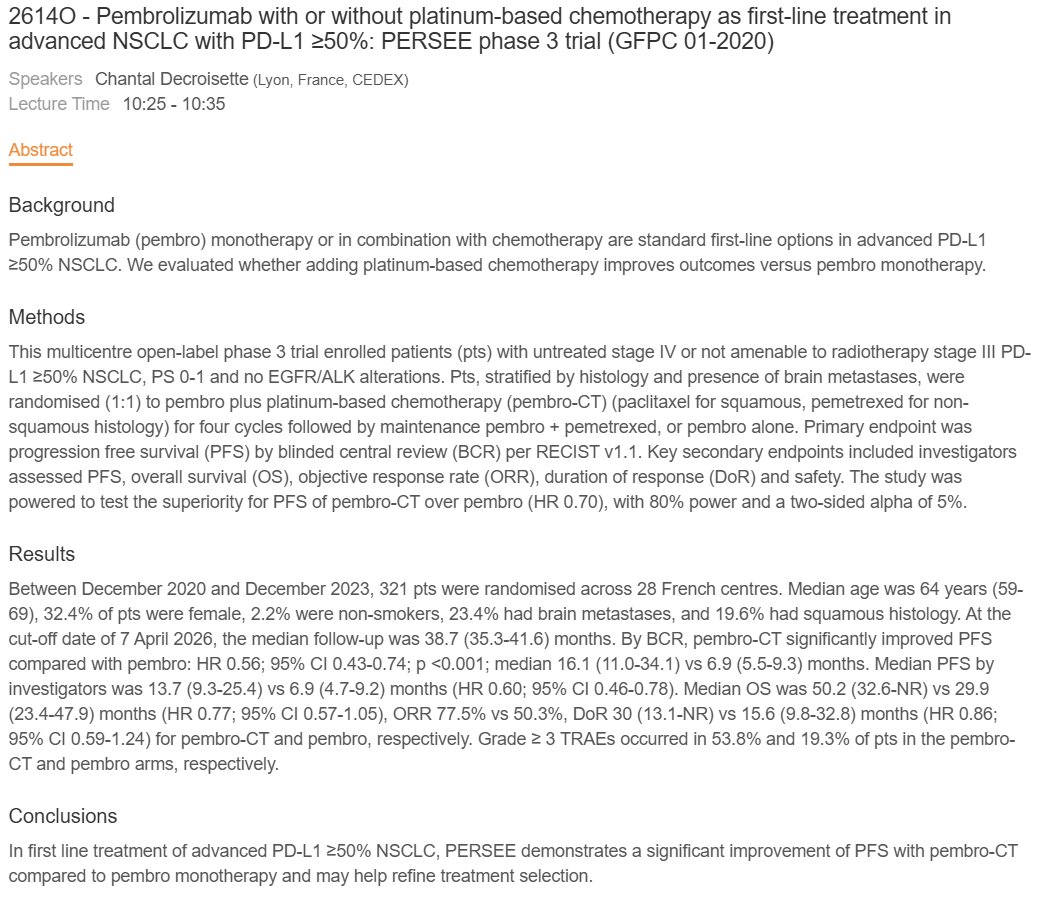
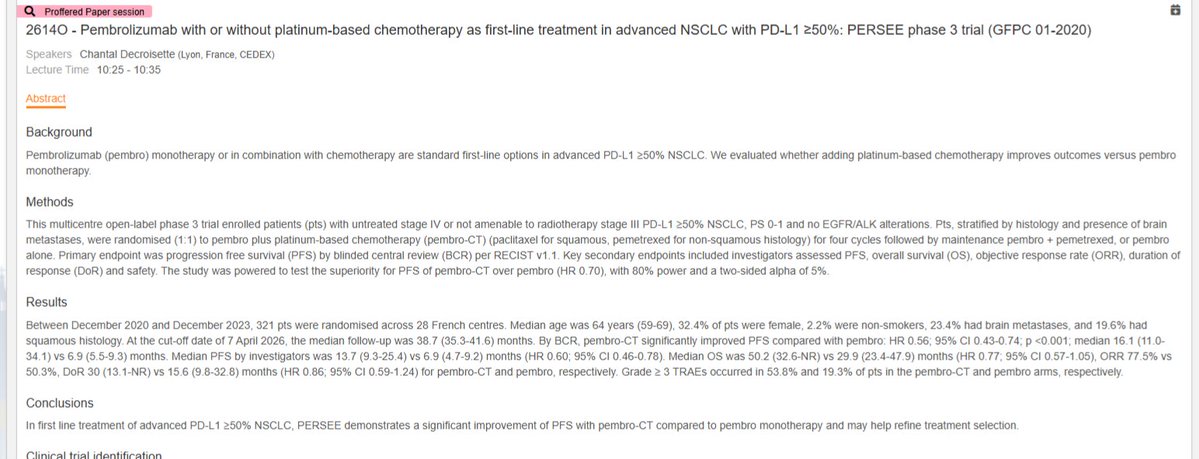
- PERSEE: adding chemotherapy to pembrolizumab in PD-L1 ≥50% NSCLC more than doubles PFS, and reopens whether pembrolizumab monotherapy is a fair control arm — In 321 patients with PD-L1 ≥50% advanced NSCLC, median PFS was 16.1 vs 6.9 months (HR 0.56, 0.43–0.74; p<0.001) and median OS 50.2 vs 29.9 months (HR 0.77, 0.57–1.05)
- New COCOON cohort: lazertinib lead-in plus simplified skin care cuts dermatologic toxicity of subcutaneous amivantamab-lazertinib — The combined approach reduced all-grade dermatologic adverse events with HR 0.31 at 3 months, no grade 2+ cutaneous adverse events at 4 months, and grade 2+ scalp events of just 3%
- SAFFRON makes osimertinib plus savolitinib a chemotherapy-free standard after osimertinib progression in MET-overexpressed/amplified EGFR-mutant NSCLC — In 338 patients, BICR-assessed median PFS was 7.6 vs 5.4 months (HR 0.55) and median OS 17.8 vs 12.9 months (HR 0.68, p=0.010)
Full details below ↓
📄 What's Being Published
Bispecific dual T cell agonist invikafusp alfa in solid tumors: the phase 1/2 START-001 trial. — Sullivan Ryan J et al., Nat Med
Phase 1 dose escalation (n = 34) proceeded through dose levels up to 0.16 mg kg-1 without reaching maximum tolerated dose, and initial phase 2 enrolled 18 participants. At the optimal biological doses the overall objective response rate was 14.8% (4/27), including confirmed partial responses in PD-L1-negative NSCLC and microsatellite stable colorectal cancer. Two participants had reversible dose-limiting toxicities, one each at 0.08 mg kg-1 and 0.16 mg kg-1. Cytokine release syndrome, mainly grades 1 and 2, was the most common treatment-related adverse event, and 0.08 mg kg-1 was selected as the RP2D.
Clinical bottom line: Invikafusp alfa is an early-phase agent with a tolerable cytokine-release profile and a modest response rate in checkpoint-resistant disease, including a PD-L1-negative NSCLC responder. Today it is relevant only as a trial referral, not as practice.
Nivolumab plus relatlimab with platinum-doublet chemotherapy versus nivolumab with platinum-doublet chemotherapy in stage IV or recurrent non-small cell lung cancer: clinical, translational, and patient-reported outcomes results from the phase II RELATIVITY-104 study. — Girard N et al., Ann Oncol
The primary endpoint, ORR by BICR, was not met: 51.3% with nivolumab plus relatlimab plus PDCT versus 45.0% with nivolumab plus PDCT, with a PFS HR of 0.89 (90% CI 0.72 to 1.09). In the PD-L1 ≥1% nonsquamous subgroup, ORR was 58.0% versus 39.6%, PFS HR 0.68 (90% CI 0.46 to 1.01) and OS HR 0.60 (90% CI 0.38 to 0.94).
Clinical bottom line: Adding relatlimab to nivolumab-chemotherapy does not improve outcomes in unselected advanced NSCLC and changes nothing today. The PD-L1 ≥1% nonsquamous signal is hypothesis-generating and now rests entirely on phase III RELATIVITY-1093.
Osimertinib–Savolitinib in Advanced NSCLC after Progression during EGFR-TKI Therapy — Lu S et al., N Engl J Med
Of 1746 patients screened, 338 were randomized to osimertinib–savolitinib (171) or platinum–pemetrexed (167). Progression-free survival favoured the combination (HR 0.55; 95% CI, 0.42 to 0.72; P<0.001), as did overall survival at final analysis (HR 0.68; 95% CI, 0.50 to 0.91; P = 0.01). The 12-month PFS was 36% vs 10% and 12-month OS 70% vs 53%, with grade 3 or higher adverse events in 64% and 63%.
Clinical bottom line: For EGFR-mutant NSCLC progressing on osimertinib with MET overexpression and/or amplification, osimertinib plus savolitinib is a new all-oral standard that beats platinum–pemetrexed on both PFS and OS. It makes MET testing by IHC and FISH at progression mandatory.
Tarlatamab–Durvalumab Maintenance for Extensive-Stage Small-Cell Lung Cancer — Pérol M et al., N Engl J Med
A total of 563 patients without progression after chemoimmunotherapy were randomized to tarlatamab–durvalumab (282) or durvalumab (281). Median overall survival was 21.1 vs 12.7 months (HR 0.42; 95% CI, 0.32 to 0.54; P<0.001) and median PFS 7.4 vs 1.9 months (HR 0.34; 95% CI, 0.28 to 0.42; P<0.001). Grade 3 or higher adverse events occurred in 46.8% vs 40.6%, with mainly grade 1 or 2 cytokine release syndrome in nearly half of tarlatamab–durvalumab patients.
Clinical bottom line: Adding tarlatamab to durvalumab maintenance after chemoimmunotherapy nearly doubles median overall survival in extensive-stage SCLC. It should become standard of care for patients who are progression-free after induction, provided the site can deliver step-up dosing and CRS/ICANS monitoring.
Sacituzumab Tirumotecan plus Pembrolizumab in PD-L1–Negative Advanced NSCLC — Zhou F et al., N Engl J Med
In 455 patients with untreated PD-L1 TPS <1% nonsquamous NSCLC, median PFS was 15.0 vs 5.7 months with sacituzumab tirumotecan plus pembrolizumab versus chemotherapy plus pembrolizumab (HR 0.49; 95% CI, 0.36 to 0.65; P<0.001). Objective response was 50.2% vs 47.3% with median duration of response 13.6 vs 6.8 months; OS was immature with an HR of 0.58 (95% CI, 0.38 to 0.88). Grade 3 or higher adverse events occurred in 47.6% vs 60.6%.
Clinical bottom line: In PD-L1-negative advanced nonsquamous NSCLC, replacing platinum chemotherapy with sacituzumab tirumotecan alongside pembrolizumab nearly triples median PFS with less grade ≥3 toxicity. It is a potential chemotherapy-free first-line standard for this group once OS matures and the regimen is available outside China.
Divarasib as Compared with Sotorasib or Adagrasib in KRAS G12C–Mutated NSCLC — Skoulidis F et al., N Engl J Med
Among 338 previously treated patients, median PFS was 9.8 vs 5.7 months with divarasib versus control (HR 0.58; 95% CI, 0.44 to 0.76; P<0.001), and median OS was 17.7 vs 12.0 months (HR 0.56; 95% CI, 0.41 to 0.78; P<0.001). Confirmed response occurred in 58.4% vs 32.3%. Grade 3 or 4 treatment-related adverse events were lower with divarasib (24.6% vs 34.5%).
Clinical bottom line: Divarasib beats the approved KRAS G12C inhibitors head-to-head on PFS, OS, response and tolerability. It should become the preferred second-line KRAS G12C inhibitor once approved, with the caveat that 91% of the control arm received sotorasib and there was no crossover.
Multi-omics liquid biopsy for leptomeningeal metastases in lung cancer: from molecular mechanisms to precision diagnosis and treatment. — Zhang Ruilong et al., Lung Cancer
In selected NSCLC cohorts with leptomeningeal metastasis, CSF-derived ctDNA detects driver and resistance alterations more frequently than paired plasma. EpCAM-based CSF circulating tumor cell assays reported sensitivities of 76%-100% and specificities of 84%-100%, versus a first-lumbar-puncture sensitivity of 44%-67% for conventional CSF cytology. Higher CSF circulating tumor cell burden is associated with poorer survival.
Clinical bottom line: When leptomeningeal metastasis is suspected and cytology is negative, CSF ctDNA and CSF CTC assays are the higher-yield tests to add. Because the cited performance comes from selected cohorts with heterogeneous reference standards, they supplement rather than replace MRI and cytology.
Serial circulating tumour DNA monitoring in first-line advanced NSCLC (COPE): a randomized, two-arm non-comparative phase II trial. — Tambaoan Candice Francheska B et al., Clin Cancer Res
Of 176 patients, 117 were assigned to serial plasma profiling with a weekly molecular tumor board and 59 to standard management. The 18-month OS was 53.8% (95% CI, 44.3-62.5) versus 65.7% (95% CI, 52.0-76.3), and baseline plasma profiling raised genotyping success from 69% to 97%. ctDNA clearance was associated with higher ORR (83% vs 52%), longer PFS (22.9 vs 5.4 months; P<0.001) and longer OS (not reached vs 17.1 months; P=0.004).
Clinical bottom line: Serial ctDNA with molecular tumor board review is operationally feasible and rescues genotyping when tissue fails, but COPE showed no clinical benefit. Early ctDNA kinetics remain prognostic and research-only until an interventional trial shows otherwise.
Long-Term Outcomes of De-Escalated 30-Gy Elective Irradiation in HPV-Associated Oropharyngeal Cancer. — Safavi Amir H et al., JAMA Oncol
This cohort study reports 5-year outcomes after 30 Gy elective nodal irradiation within 70 Gy concurrent chemoradiotherapy in 276 patients with HPV-related oropharyngeal carcinoma. Locoregional control was 97.0%, OS 90.8%, PFS 85.9% and DMFS 91.2%.
Clinical bottom line: Five-year durability of de-escalated 30-Gy elective nodal irradiation within 70-Gy chemoradiotherapy supports this volume/dose reduction as a defensible way to cut toxicity in HPV-associated oropharyngeal cancer, though it remains single-institution cohort evidence rather than randomized proof.
Response-Adapted Surgery after Neoadjuvant Immunochemotherapy in Locally Advanced Head and Neck Squamous Cell Carcinoma (REMATCH): A Single-Arm Phase II Trial. — Zhang Xiaomeng et al., Clin Cancer Res
Fifty patients with resectable HPV-negative LA-HNSCC completed penpulimab, nab-paclitaxel and cisplatin with an objective response rate of 94% (95% CI, 84%-99%), and 2-year DFS for the per-protocol cohort was 83% at a median follow-up of 34.0 months. The reduced-volume surgery group (n = 42) had 2-year DFS of 90% with 100% laryngeal preservation in laryngeal/hypopharyngeal cancers, versus 20% in the standard-volume group (n = 5). Grade 3 adverse events occurred in 16% related to neoadjuvant therapy and 15% related to surgery, with no grade 4 or 5 events.
Clinical bottom line: Response-adapted reduced-volume surgery after neoadjuvant chemoimmunotherapy is feasible and achieved universal larynx preservation in responders. With only 5 patients in the poor-response arm, it is hypothesis-generating and must stay inside trials until phase III.
🗂 Every paper considered this week, including the ones that didn’t make it →
🗣️ What People Were Discussing This Week
How these are chosen: filtered for clinical relevance, grouped by the new development discussed, then ordered by engagement (bookmarks and reposts).
DeLLphi-305: tarlatamab added to durvalumab maintenance nearly doubles overall survival in extensive-stage SCLC, and the fight shifts to access and sequencing
Clinicians stressed that DeLLphi-305 randomized patients after induction without progression, so overall and progression-free survival gains are a maintenance result; CRS occurred in 49.6% (G3+ 0.4%). Critics pointed out that only 12.2% of the ITT durvalumab arm (34/278) accessed tarlatamab at progression, that OS benefit appeared nullified in those crossing over to second-line DLL3 therapy, and that the trial enrolled ±40% Asian patients with weaker results in the Americas. Patients with planned consolidative chest RT were excluded, leaving thoracic consolidation unanswered. The debate is whether every progression-free patient should receive tarlatamab maintenance or whether it can be held for relapse where second-line attrition is low and monitoring capacity is tight.
Key numbers: mOS 21.1 vs 12.7 mo, HR 0.42 · mPFS 7.4 vs 1.9 mo, HR 0.34 · 12-mo OS 79.4% vs 53.3% · ORR 26.4% vs 4.1% · Grade ≥3 AEs 46.8% vs 40.6%
Discussed by: @christinemphmd, @RManochakian, @g_mountzios, @ErulEnes, @DrChoueiri, @ADesaiMD, @HHorinouchi, @drshieldsmd, @EladSharonMD, @BalazsHalmosMD, @jryckman3, @pistoto2017
Sources cited: Tarlatamab–Durvalumab Maintenance for Extensive-Stage Small-Cell Lung Cancer (N Engl J Med)
FLAURA2 ctDNA analysis and PACE-LUNG: early EGFR clearance is prognostic, not predictive, so it cannot be used to skip chemotherapy
In the exploratory FLAURA2 analysis, EGFRm clearance was prognostic but not predictive: osimertinib plus platinum–pemetrexed outperformed osimertinib alone regardless of clearance status at weeks 1, 2, 3 and 6. Clinicians concluded that clearance does not refine treatment for baseline ctDNA-positive patients, for whom osimertinib plus chemotherapy or amivantamab-lazertinib beats osimertinib alone. Single-arm PACE-LUNG intensified with chemotherapy for persistent ctDNA, reporting mPFS 16.3mo from start of chemotherapy and mOS 29.2mo, with 29% of screened patients ctDNA-persistent but no comparator. The open question is whether baseline or early ctDNA has any role in deciding on added chemotherapy, or whether upfront intensification is now the default.
Key numbers: Week 6 clearance 88% vs 89% · Week 6 PFS HR 0.52 (cleared), 0.40 (not cleared) · Week 6 OS HR 0.73 (cleared), 0.50 (not cleared)
Discussed by: @dplanchard, @JordiRemon, @tnewsomdavis, @StephenVLiu, @GlopesMd, @DrRiyazShah, @Dr_ElvinaA, @HHorinouchi
PERSEE: adding chemotherapy to pembrolizumab in PD-L1 ≥50% NSCLC more than doubles PFS, and reopens whether pembrolizumab monotherapy is a fair control arm
In the open-label phase 3 PERSEE (n=321), chemo-immunotherapy more than doubled median PFS over pembrolizumab alone, while the numerical OS gain was not statistically significant and OS was not the primary endpoint. Trialists called it the only study asking whether combination therapy beats pembrolizumab monotherapy in PD-L1-high patients, and clinicians questioned whether monotherapy remains an acceptable control arm for chemotherapy-eligible patients. The debate is which patients justify the substantially higher grade ≥3 toxicity of upfront chemotherapy without a significant OS difference.
Key numbers: Median PFS 16.1 vs 6.9 mo, HR 0.56 · Median OS 50.2 vs 29.9 mo, HR 0.77 · ORR 77.5% vs 50.3% · Grade ≥3 TRAEs 53.8% vs 19.3%
Discussed by: @dr_yakupergun, @dplanchard, @johanpluvy, @HHorinouchi, @DrRiyazShah, @nataliagandur, @ChandrakanthMv, @Erman_Akkus
Sources cited: Annals of Oncology
New COCOON cohort: lazertinib lead-in plus simplified skin care cuts dermatologic toxicity of subcutaneous amivantamab-lazertinib
The new COCOON cohort of first-line subcutaneous amivantamab plus lazertinib combined oral tetracycline, ceramide cream and oral zinc with lazertinib started before amivantamab, and the lead-in roughly halved grade ≥2 dermatologic events in non-randomized exploratory cohorts. Grade ≥2 dermatologic AEs of interest by week 12 occurred in 34%, with discontinuations of 3%. Clinicians noted the simplified prophylaxis looks comparable to, not better than, the original COCOON regimen, and that PFS data are needed to confirm that delaying amivantamab does not compromise efficacy in the FLAURA2 era.
Key numbers: Grade ≥2 dermatologic AEs 39% vs 18% (standard vs lead-in) · All-grade dermatologic AEs HR 0.31 at 3 months
Discussed by: @tnewsomdavis, @StephenVLiu, @DrRiyazShah, @Tony_Calles, @herbloong, @HHorinouchi
SAFFRON makes osimertinib plus savolitinib a chemotherapy-free standard after osimertinib progression in MET-overexpressed/amplified EGFR-mutant NSCLC
SAFFRON improved PFS, OS and response over platinum–pemetrexed after mandated post-progression re-biopsy, in which 35% of patients evaluable for MET testing had MET overexpression (IHC3+ ≥90%) and/or amplification (FISH 10+). Clinicians called it a new standard and urged MET testing for every EGFR-mutant patient progressing on osimertinib, naming access to the combination as the main barrier; others noted the control arm contained no osimertinib, the MET-amplified subgroup was not formally tested, and peripheral edema reached 49%. The debate is whether every patient should undergo tissue re-biopsy with both IHC and FISH before choosing between osimertinib–savolitinib, an ADC and platinum–pemetrexed.
Key numbers: BICR-PFS 7.6 vs 5.4 mo, HR 0.55 · OS 17.8 vs 12.9 mo, HR 0.68 · ORR 51% vs 27% · mDoR 9.7 vs 5.7 mo · 12-mo OS 70% vs 53%
Discussed by: @RManochakian, @dplanchard, @SuyogCancer, @YGaritaonaindia, @TommyJohn00, @DrMirallas, @ozdogan_md, @EgfrUk
Sources cited: NEJM
Sunvozertinib finally reaches US patients more than a year after FDA approval for EGFR exon 20 insertion NSCLC
Sunvozertinib became available in the US over one year after its FDA approval on July 2, 2025, for previously treated EGFR exon 20 insertion NSCLC based on WU-KONG1B (RR 46%, mDOR 11.1 months), with key AEs of diarrhea (73%) and rash (60%). First-line phase III WU-KONG28 data versus carboplatin/pemetrexed improved PFS, response and response duration but are outside the US label. Clinicians had expected zipalertinib to reach the market first, and patient advocates urged those progressing on amivantamab plus chemotherapy to ask about sunvozertinib and check pharmacy ordering. The open question is where it sits against amivantamab plus chemotherapy and zipalertinib.
Key numbers: WU-KONG28 PFS 10.3 vs 7.5 mo, HR 0.65 · ORR 59% vs 31% · DoR 11.2 vs 7.1 mo
Discussed by: @Latinamd, @StephenVLiu, @lungoncdoc, @drgandara, @BalazsHalmosMD, @RManochakian, @Exon20Group
Sources cited: FDA press release
OptiTROP-Lung04 final OS: sac-TMT extends survival over platinum-pemetrexed after EGFR TKI progression
The final OS analysis of OptiTROP-Lung04 (LBA67) favoured the TROP2 ADC sac-TMT over platinum plus pemetrexed after EGFR-TKI therapy, at 25.9m vs 17.4m (HR 0.69), with greater benefit when first-line therapy had been a third-generation TKI. Commentators said full data on CNS activity, toxicity and quality of life are still needed. The debate is whether a TROP2 ADC now displaces platinum-pemetrexed as the default after third-generation TKI failure, or whether MET-directed therapy comes first when MET is positive.
Discussed by: @StephenVLiu, @DrMirallas, @GlopesMd
KANDLELIT-001 and SUNRAY: next-generation KRAS G12C inhibitors move into first-line combinations with immunotherapy
Calderasib (MK-1084) with pembrolizumab in PD-L1-positive disease and first-line olomorasib with chemoimmunotherapy both showed high response rates, with olomorasib active across PD-L1 levels and reporting no new safety signals. The phase 3 SUNRAY-02 trial of olomorasib plus immunotherapy in resected or unresectable KRAS G12C-mutant NSCLC is now enrolling. Clinicians cautioned that sequencing PD-(L)1 before sotorasib strongly increases grade ≥3 hepatotoxicity with a short washout and that KRAS inhibitor plus immunotherapy toxicity varies markedly by agent, making agent choice and washout the deciding factors for first-line combinations.
Key numbers: Calderasib + pembro ORR 72%, mPFS 28.9 mo · Olomorasib + chemo-IO ORR 61%, mPFS 11.8 mo
Discussed by: @BrunaPellini, @g_mountzios, @HHorinouchi, @weoncologists
Krascendo 1: divarasib beats sotorasib/adagrasib head-to-head on PFS and OS, but the absent crossover and sotorasib-heavy control arm draw fire
Divarasib improved PFS, OS and response over first-generation inhibitors with fewer severe toxicities and discontinuations, and clinicians called it a new second-line standard. However, the control arm was 91% sotorasib, 30% of patients had treated brain metastases, untreated brain metastases were excluded, and Dr. Benjamin Besse called the lack of crossover in a PFS-endpoint trial unjust. The debate is whether the OS advantage reflects a true class advance or partly what control patients could access next.
Key numbers: mPFS 9.8 vs 5.7 mo, HR 0.58 · mOS 17.7 vs 12.0 mo, HR 0.56 · ORR 58.4% vs 32.3% · Grade 3–4 TRAEs 24.6% vs 34.5% · TRAE discontinuation 4.8% vs 11.7%
Discussed by: @StephenVLiu, @CathyEngMD, @YGaritaonaindia, @Latinamd, @NarjustFlorezMD, @AnaVManana, @SuyogCancer, @Dr_Ivanoncologo
OptiTROP-Lung06: sac-TMT plus pembrolizumab triples PFS versus chemo-pembrolizumab in PD-L1-negative nonsquamous NSCLC
OptiTROP-Lung06 roughly tripled PFS with sacituzumab tirumotecan plus pembrolizumab over chemotherapy plus pembrolizumab, with less grade ≥3 toxicity. Clinicians framed it as one of two strategies for the unmet need of first-line PD-L1 <1% NSCLC. The debate is whether a TROP2 ADC plus pembrolizumab is ready to displace platinum-pemetrexed-pembrolizumab while overall survival remains immature.
Key numbers: PFS 15.0 vs 5.7 mo, HR 0.49 · Grade ≥3 AEs 47.6% vs 60.6%
Discussed by: @OncoAlert, @DrMirallas, @GlopesMd, @phsiao4
Sources cited: Sacituzumab Tirumotecan plus Pembrolizumab in PD-L1–Negative Advanced NSCLC (N Engl J Med)
Five-year outcomes published for 30-Gy de-escalated elective nodal irradiation in HPV-associated oropharyngeal cancer
The published cohort reports 5-year outcomes in 276 patients with HPV-related oropharyngeal cancer treated with 30 Gy elective RT within 70 Gy chemoradiotherapy. The approach gives 30 Gy to the elective neck plus a 40 Gy boost to gross disease, omits uninvolved levels 1B and 5 and contralateral RP/RS nodes, and is intended for patients receiving platinum-based chemotherapy, in contrast to traditional 50-60 Gy elective doses that drive much of the toxicity. The debate is whether single-institution five-year durability justifies adoption outside a trial or whether randomized confirmation is needed.
Key numbers: 5-y LRC 97.0% · OS 90.8% · PFS 85.9% · DMFS 91.2%
Discussed by: @safaviaa, @safaviaa, @PierluigiBonomo, @jryckman3
Near-loop versus far-loop EGFR exon 20 insertions differ in TKI sensitivity, raising ultra-precision subtyping
EGFR exon 20 insertions separate into near-loop (A767-P772) and far-loop (H773-R776) groups. Molecular dynamics simulations show near-loop insertions have multiple conformational states and lower transitional energy, producing differential responses and PFS with some TKIs but not all. Clinicians countered that variant-level data remain limited and that sequencing is still driven by patient preference, toxicity and access, leaving open whether insertion position should guide agent choice.
Discussed by: @LeXiuning, @jennifermarksmd
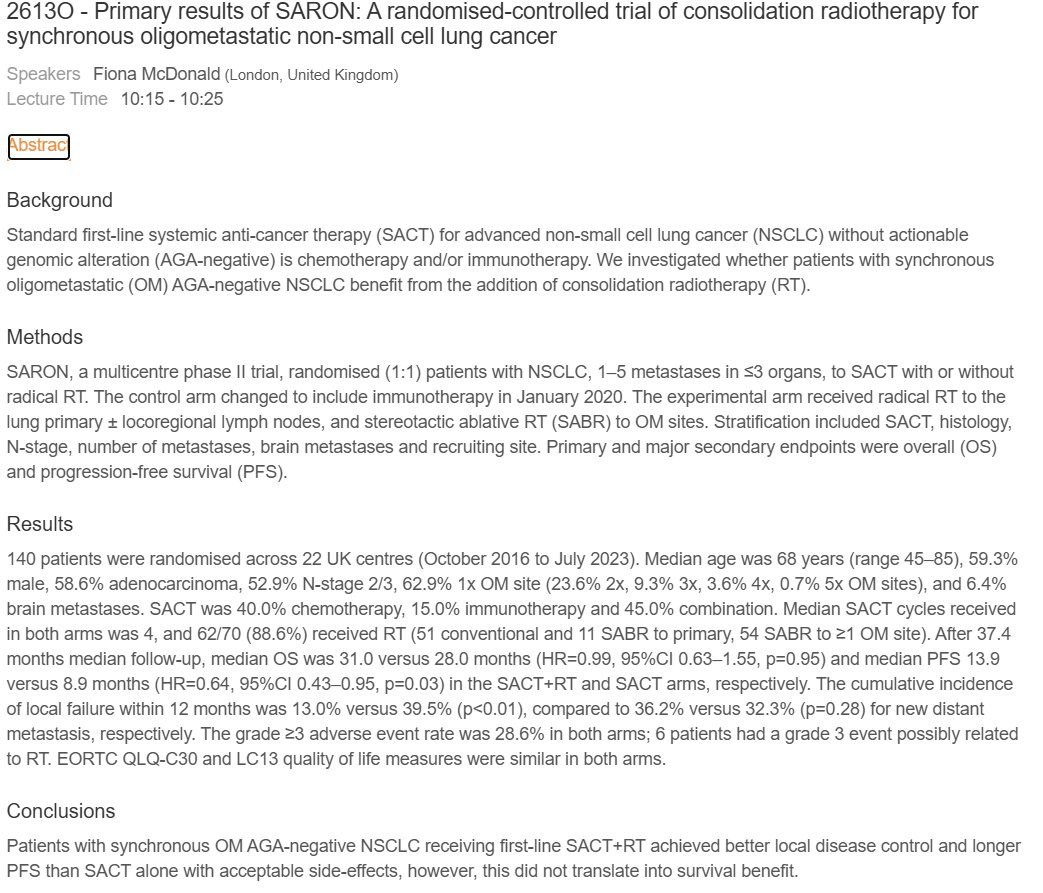
SARON: consolidation radiotherapy in synchronous oligometastatic NSCLC improves PFS and local control but delivers no overall survival benefit
Consolidation radiotherapy added to systemic therapy improved PFS and local control without extending survival, and clinicians concluded that better disease control does not always translate into longer survival in driver-negative oligometastatic NSCLC. Technique drew scrutiny: of 62 patients who received RT, 51 had conventional treatment to the primary and only 11 had primary SABR, and about 53% of the cohort had N2/3 disease. The debate is which patients, and which radiotherapy technique, still justify consolidation.
Key numbers: PFS 13.9 vs 8.9 mo, HR 0.64 · 12-mo local failure 13.0% vs 39.5% · OS 31.0 vs 28.0 mo, HR 0.99 · Grade ≥3 AEs 28.6% in both arms
Discussed by: @jryckman3, @Latinamd, @nataliagandur, @HHorinouchi
CROWN ctDNA analysis: no new on-target ALK resistance mutations with first-line lorlatinib, with bypass pathways and TP53 driving early progression
The CROWN ctDNA analyses, including Guardant Infinity data, found no ALK kinase domain mutations causing acquired resistance to lorlatinib, with bypass RTK/RAS/MAPK pathways driving resistance instead. Early progressors had higher baseline genomic complexity including TP53, TP53 and clearance were prognostic, and inflammatory response was the predominant pathway associated with early progression. The question is whether early progressors should be identified upfront by ctDNA complexity and offered combination strategies rather than a sequential TKI.
Discussed by: @StephenVLiu, @DrRiyazShah, @KSamalaMD, @TommyJohn00, @Tony_Calles, @HHorinouchi
Telisotuzumab adizutecan OS data position a c-MET ADC in pretreated nonsquamous NSCLC, with the biomarker question unresolved
In heavily pretreated nonsquamous NSCLC, telisotuzumab adizutecan showed survival in both EGFR wild-type and EGFR-mutant cohorts, with c-MET expression predicting outcomes in EGFR wild-type but not EGFR-mutant disease. Clinicians questioned whether MET positivity is truly a predictive biomarker in EGFR-mutant disease, whether adding osimertinib raises activity, brain activity, and whether the biomarker is easy to test in daily practice. The debate is whether c-MET IHC is predictive or only prognostic, and whether the high-expression cutoff holds up in practice.
Key numbers: EGFR WT mPFS 6.8m, OS 13.8m · EGFR MUT mPFS 10.9m, OS 16.2m · High c-Met expressers (EGFR WT ≥3+/≥10%) OS 25.2mo
Discussed by: @StephenVLiu, @JordiRemon, @g_mountzios, @TejasPatilMD
Sources cited: Annals of Oncology
ESMO head and neck: EGFR-directed bispecifics and ADCs post response rates near 60-77% in first-line recurrent/metastatic disease
OrigAMI-4 tested amivantamab with pembrolizumab and carboplatin in HPV-unrelated disease, and the EGFR×HER3 bispecific ADC iza-bren was combined with pembrolizumab, both with high response rates. The OX-40 agonist INBRX-106 doubled ORR but carried high toxicity and treatment discontinuation in a population eligible for subcutaneous pembrolizumab alone. The program also featured interest in adding neoadjuvant chemotherapy to perioperative immunotherapy, new KEYNOTE-689 analyses and a surge of ADCs, leaving open whether these agents add enough over pembrolizumab-based therapy and which biomarker should select patients.
Key numbers: OrigAMI-4 ORR 77%, CR 14% · Iza-bren + pembro ORR 58–63%, mDoR 13.6–17.8 months · INBRX-106 ORR 48 vs 26%
Discussed by: @JiaJennyLiu, @PaulJiL, @DrMirallas
Final PEARLS/KEYNOTE-091 analysis: adjuvant pembrolizumab keeps its DFS benefit at 87.7 months but shows no overall survival advantage
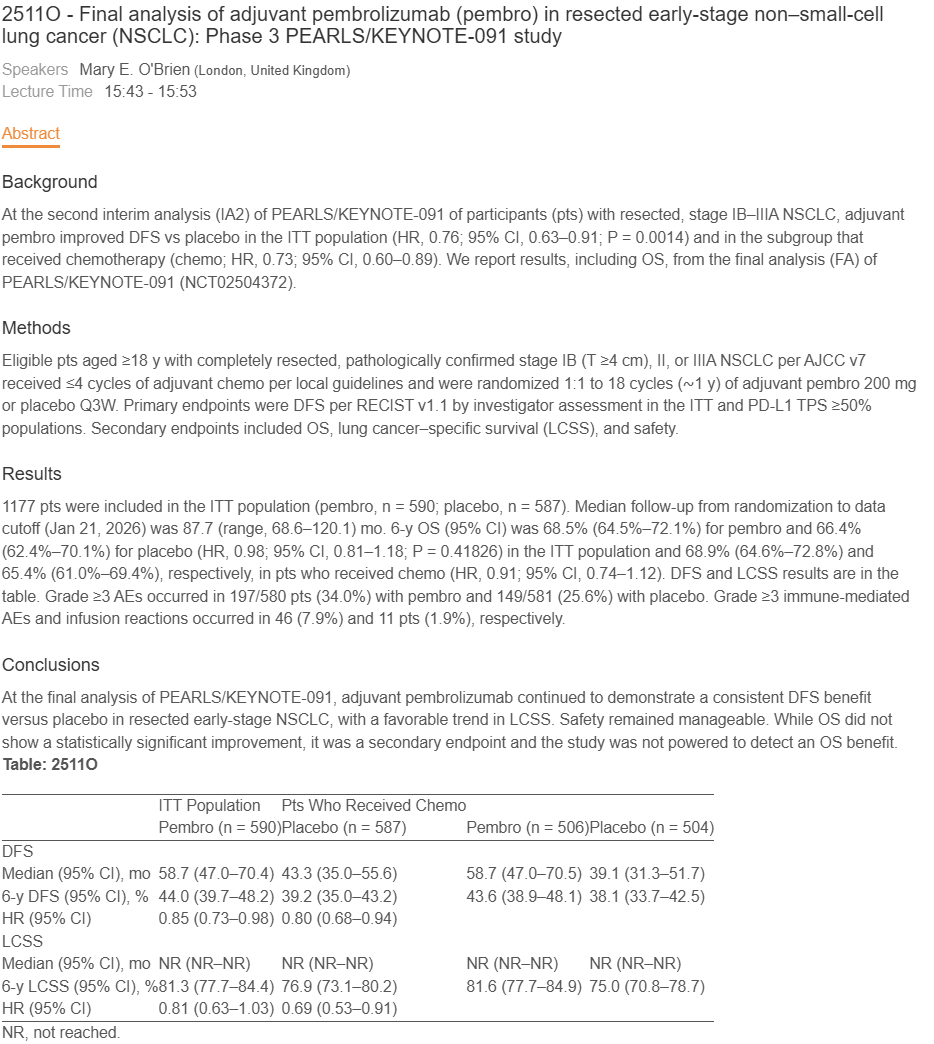
In 1177 patients with resected stage IB–IIIA NSCLC followed for 7.3 years, adjuvant pembrolizumab maintained its DFS benefit with a favourable lung cancer-specific survival trend, but OS was not significantly improved and the study was not powered for OS. Clinicians read the mature data as showing that adjuvant immunotherapy can reduce recurrence risk without a clear population-level OS gain. The debate is which resected patients derive enough absolute DFS benefit to justify a year of pembrolizumab and its added grade ≥3 toxicity.
Key numbers: DFS HR 0.85, median 58.7 vs 43.3 mo · OS HR 0.98, 6-y OS 68.5% vs 66.4% · LCSS HR 0.81 · Grade ≥3 AEs 34.0% vs 25.6%
Discussed by: @ChandrakanthMv, @nataliagandur, @HHorinouchi
🔥 Top Ranked Tweets
OncoAlert @OncoAlert
RT @HHorinouchi: 🆙#ESMO26 Proffered Paper I: #LCSM Mets
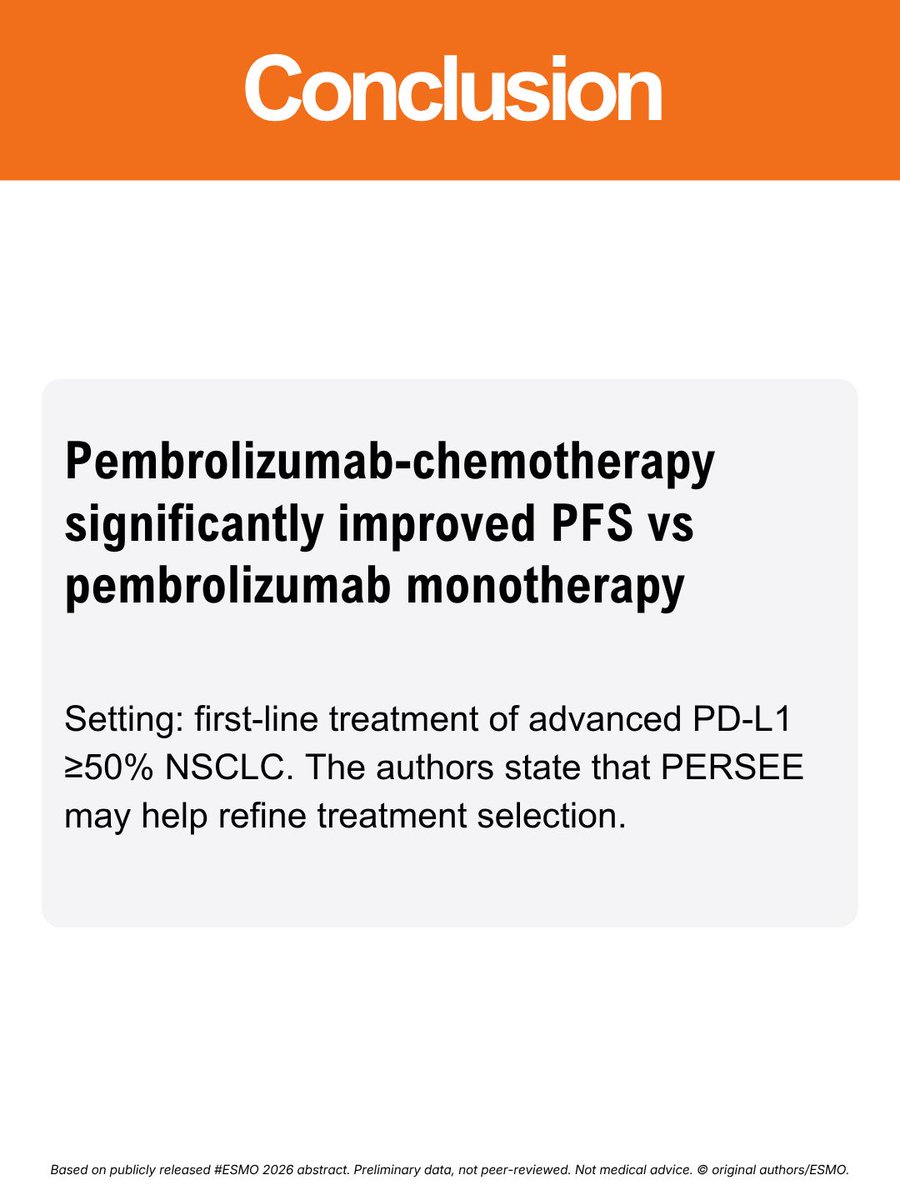
🔥PERSEE (GFPC 01-2020): Pembrolizumab With or Without Platinum-Based Chemotherapy as First-Line Treatment in Advanced NSCLC With PD-L1 ≥50%, Phase 3 Trial
🎙️ @decroisette
🔢2614O
🎯Pembro-Chemo Improved BCR-PFS vs Pembro Alone
🎯PFS HR 0.56, mPFS 16.1 vs 6.9m
🎯OS HR 0.77 not significant; mOS 50.2 vs 29.9mo
🎯Grade≥3 TRAEs 53.8% vs 19.3%
☑️NCT04547504
🔗 https://t.co/uGHKJfiJGo
@OncoAlert @Larvol @myESMO @IASLC
🔖 2 ❤️ 27 🔁 13 👁 2,743
OncoAlert @OncoAlert
OncoAlert 4Sight Abstracts to be Presented at #ESMO26
Pembrolizumab With or Without Platinum-Based Chemotherapy as First-Line Treatment in Advanced NSCLC With PD-L1 ≥50%: PERSEE Phase 3 Trial (GFPC 01-2020)
@decroisette
@BenjaminBesseMD
@LGreillier
@C_Ricordel
@FGuisier
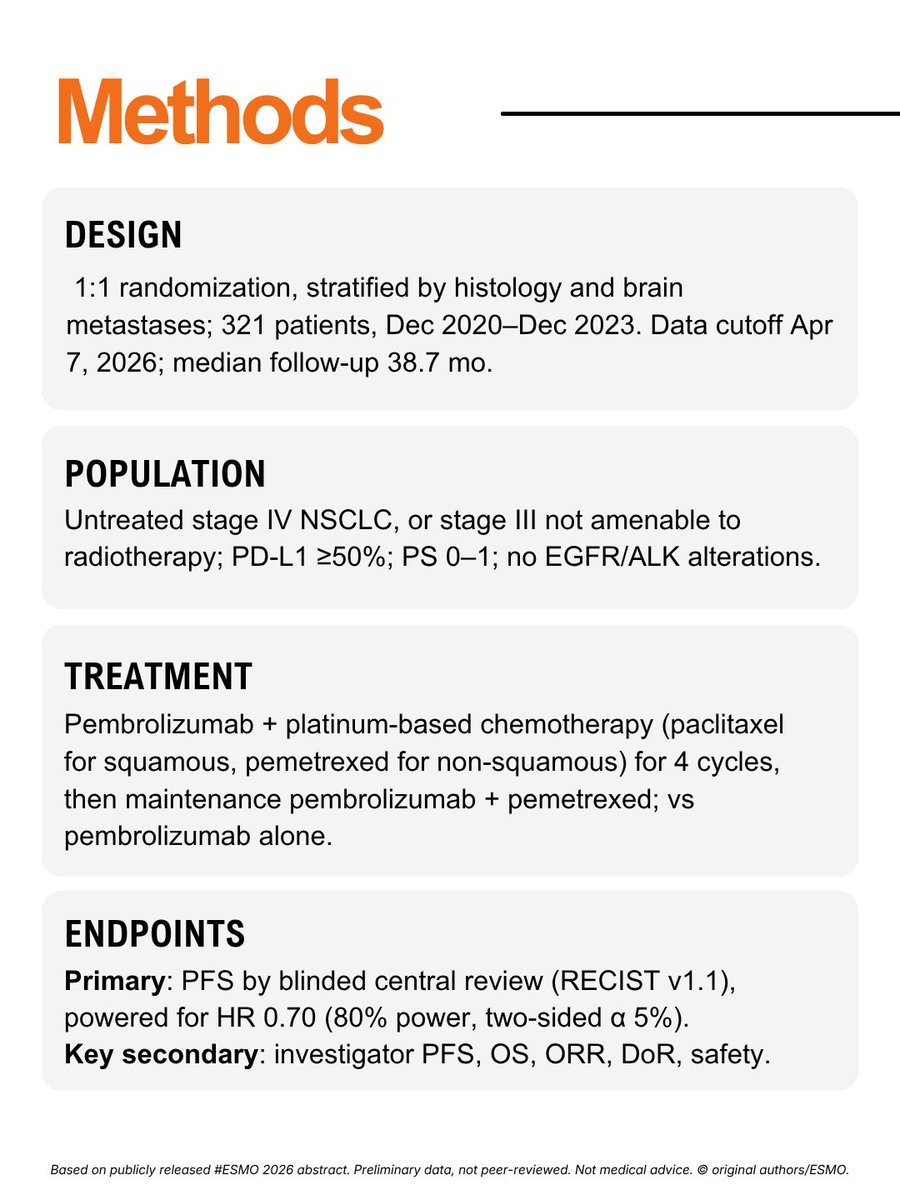
🫁 Phase 3, open-label (n=321): pembrolizumab + platinum-based chemotherapy vs pembrolizumab alone, first-line advanced NSCLC with PD-L1 ≥50%. Primary endpoint: PFS by blinded central review.
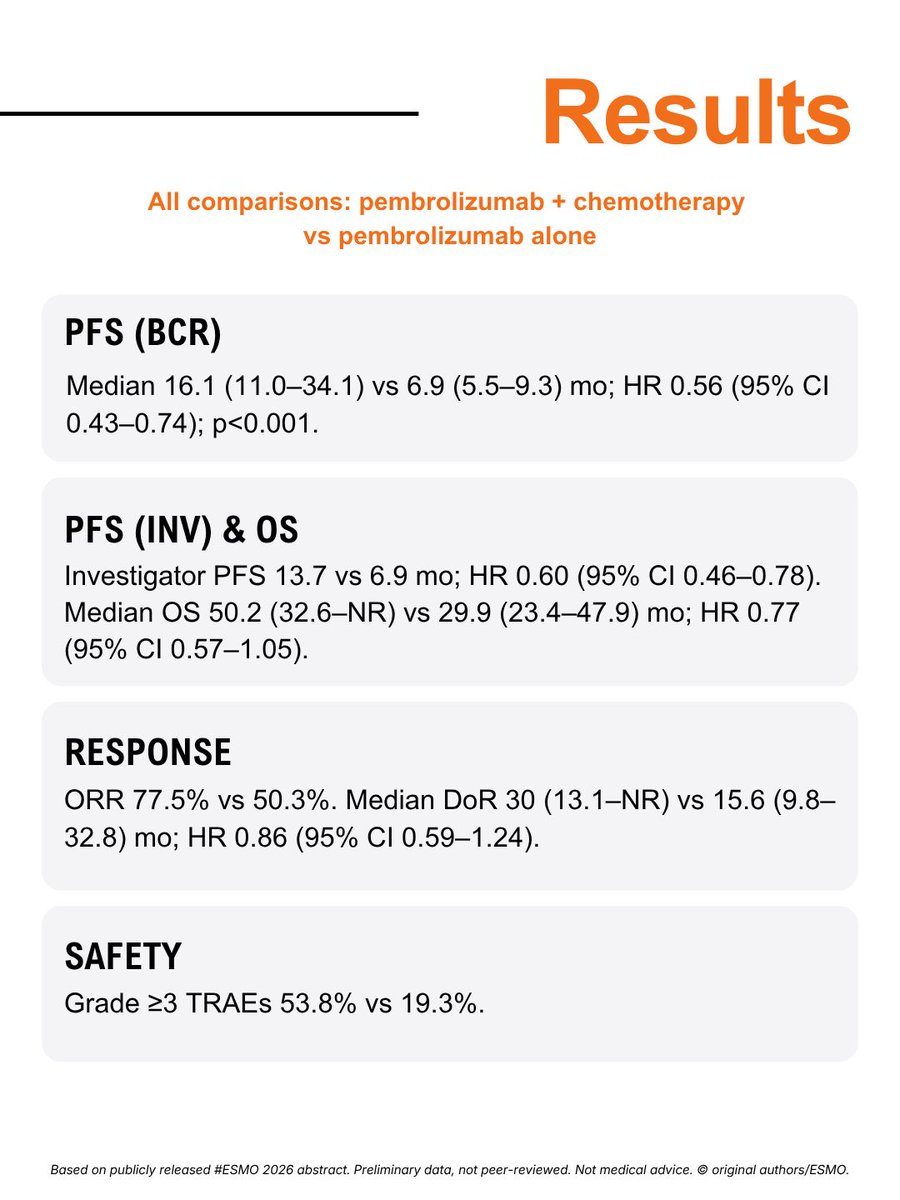
➡️ Median PFS 16.1 vs 6.9 mo; HR 0.56 (0.43–0.74); p<0.001
➡️ Median OS 50.2 vs 29.9 mo; HR 0.77 (0.57–1.05); ORR 77.5% vs 50.3%
➡️ Grade ≥3 TRAEs 53.8% vs 19.3%
✅ Pembrolizumab-chemotherapy significantly improved PFS vs pembrolizumab monotherapy and may help refine treatment selection. #NSCLC #LungCancer
🎙️ Chantal Decroisette
👥 Renaud Descourt · Christos Chouaid · Maurice Pérol · Benjamin Besse · Laurent Greillier · Olivier Bylicki · Charles Ricordel · Florian Guisier · Radj Gervais · Roland Schott · Jean-Bernard Auliac · Gilles Robinet
(4Sight Made from Abstracts publicly available at the ESMO website)
Pinging our OncoAlert Lung Cancer Faculty
@christine_lovly, @GlopesMd, @DrSanjayPopat, @StephenVLiu, @jillfeldman4, @UOzkerim, @DrMirallas, @MartinReck2 , @bmassutis @UmbertoMalapel1 , @CharuAggarwalMD
@peters_solange, @HenningWillers, @HHorinouchi, @BRicciutiMD, @PercyLeeMD, @bensolomon1, @Latinamd, @DrJNaidoo, @barlesi, @VanitaNoronha, @ChristianRolfo @Tony_Calles @s_couraud @marinagarassino @g_mountzios @BairdAM @barlesi @JFreemanDaily @Piuchagarrido @LeciaSequist @bensolomon1 @VanitaNoronha +@alexdrilon @JordiRemon @caliraf @JulienMazieres @TerriConneran
🔖 1 ❤️ 14 🔁 9 👁 1,408
OncoAlert @OncoAlert
RT @HHorinouchi: 🆙#ESMO26 Proffered Paper: #LCSM Non-Mets
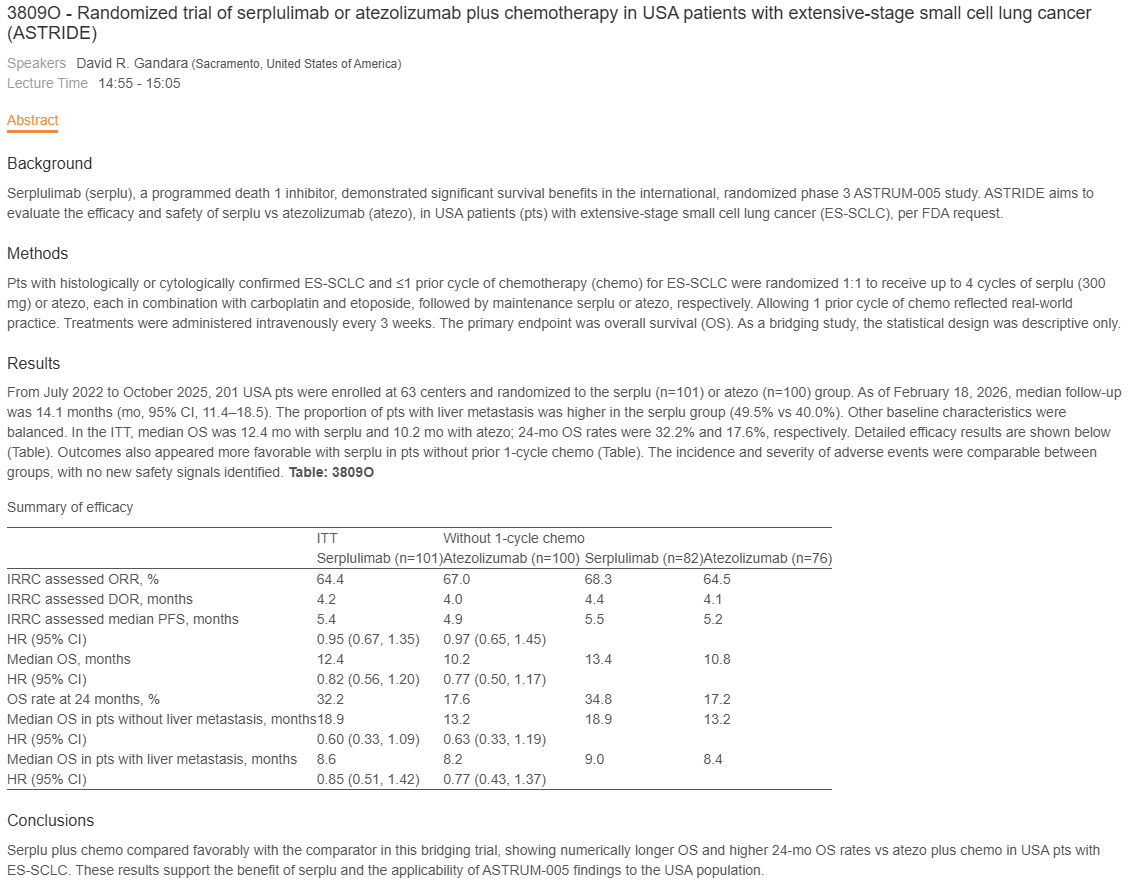
🔥ASTRIDE: Randomized Trial of Serplulimab or Atezolizumab Plus Chemotherapy in USA Patients With Extensive-Stage Small Cell Lung Cancer
🎙️ @drgandara
🔢3809O
🎯Serplulimab Numerically Longer OS vs Atezolizumab
🎯mOS 12.4 vs 10.2m, HR 0.82; 24-Mo OS 32.2% vs 17.6%
☑️NCT05468489
🔗 https://t.co/grEfaUbJVf
@OncoAlert @Larvol @myESMO @IASLC
🔖 3 ❤️ 7 🔁 3 👁 821
OncoAlert @OncoAlert
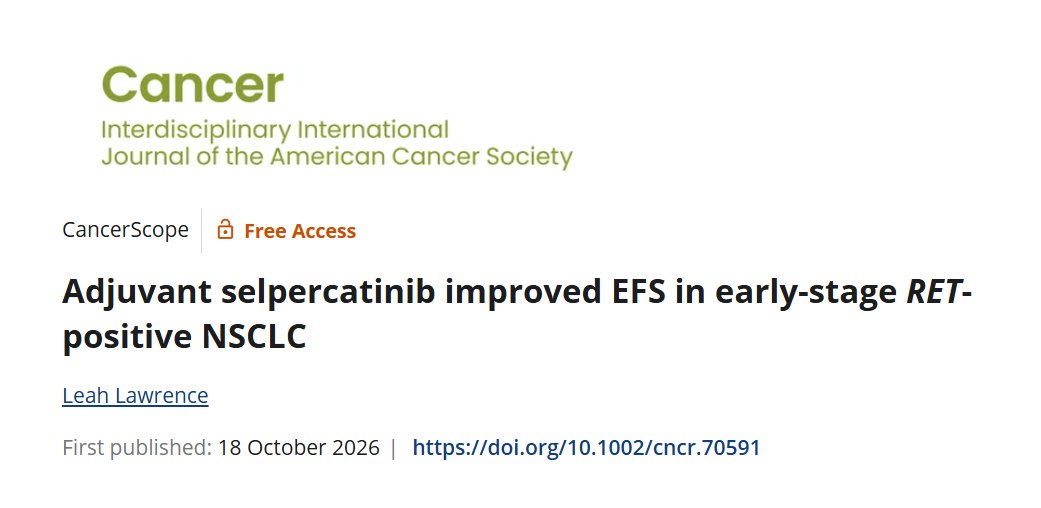
RT @JournalCancer: New in #CancerScope 📗 The RET inhibitor selpercatinib significantly improved EFS in comparison with a placebo for patients with early-stage RET-positive #NSCLC according to results of the LIBRETTO-432 trial.
See our coverage of the findings: https://t.co/ph3txnyvJX
@OncoAlert https://t.co/3T0peql8Eu
🔖 0 ❤️ 4 🔁 3 👁 684
OncoAlert @OncoAlert
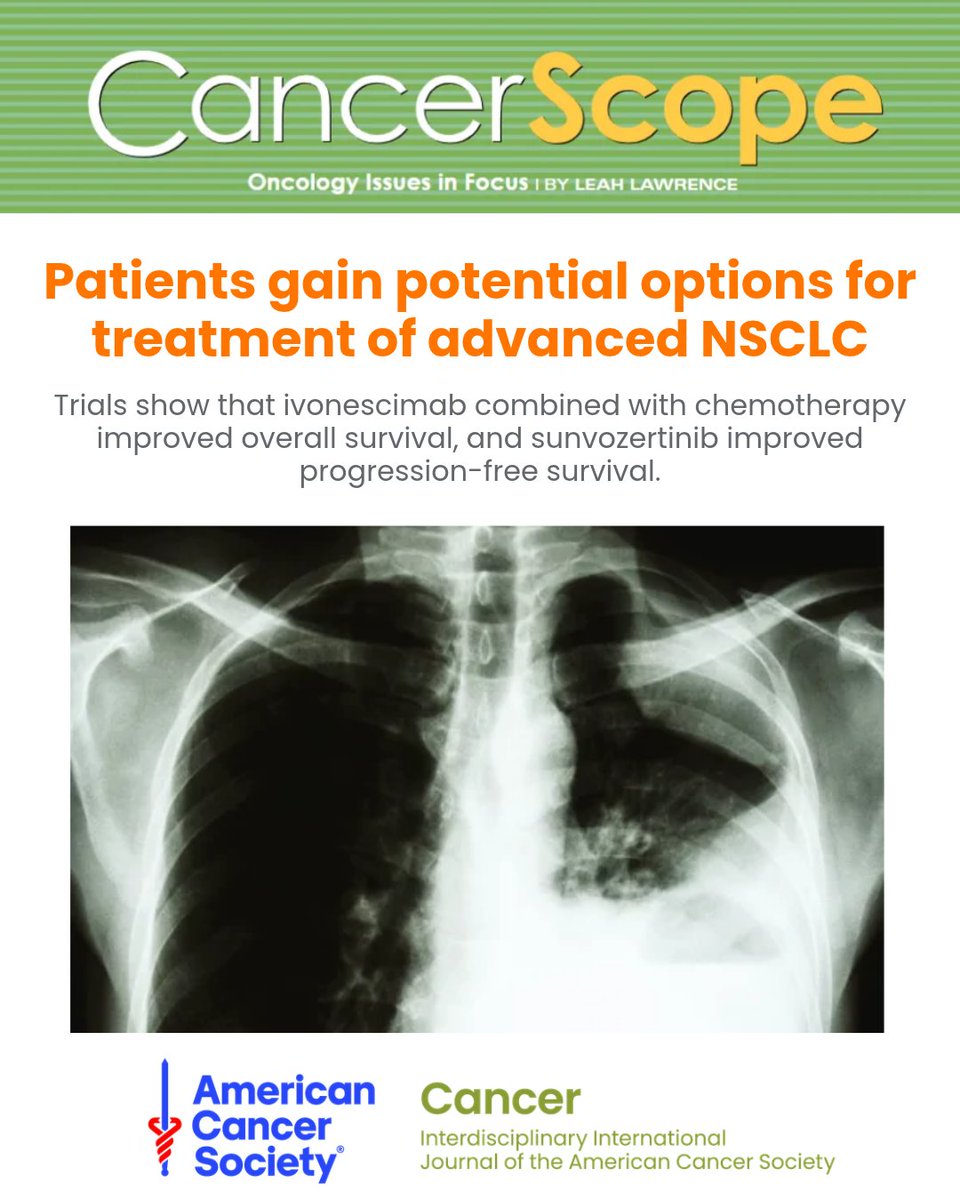
RT @JournalCancer: Results of two late-breaking trials presented at #ASCO26 show that ivonescimab combined with chemotherapy improved overall survival, and sunvozertinib improved progression-free survival, for patients with #NSCLC.
Read our latest #CancerScope: https://t.co/an5LO6JJk9
@OncoAlert https://t.co/X9fB6y06YH
🔖 1 ❤️ 8 🔁 2 👁 784
ACS Journal Cancer @JournalCancer
Results of two late-breaking trials presented at #ASCO26 show that ivonescimab combined with chemotherapy improved overall survival, and sunvozertinib improved progression-free survival, for patients with #NSCLC.
Read our latest #CancerScope: https://t.co/an5LO6JJk9
@OncoAlert https://t.co/X9fB6y06YH
🔖 1 ❤️ 8 🔁 2 👁 784
Miguel Gonzalez Velez, MD @mgonzalezvelMD
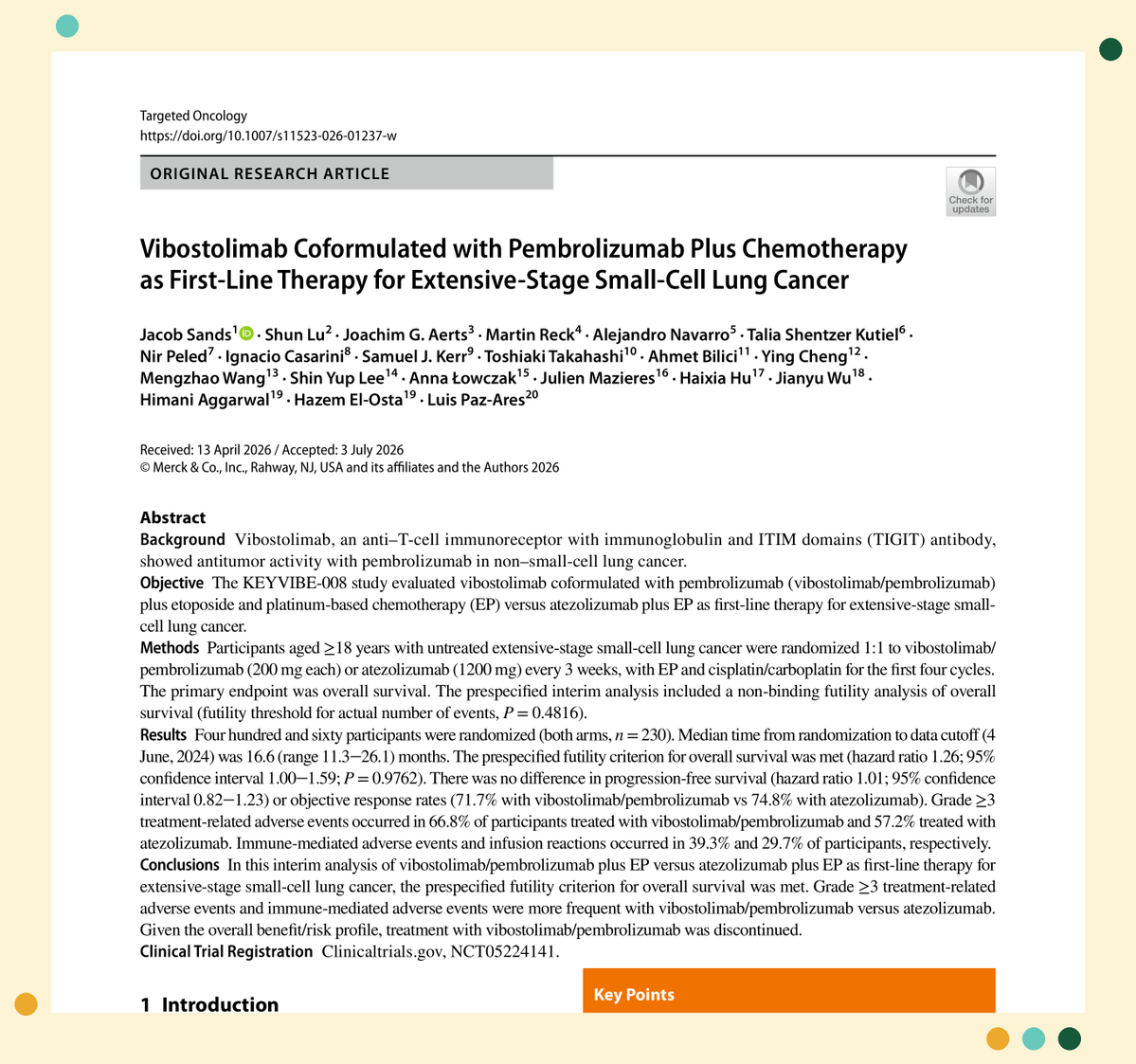
KEYVIBE-008: vibostolimab coformulated with pembrolizumab plus chemotherapy by @sands_jacob and colleagues on Target Onc for ES-SCLC.
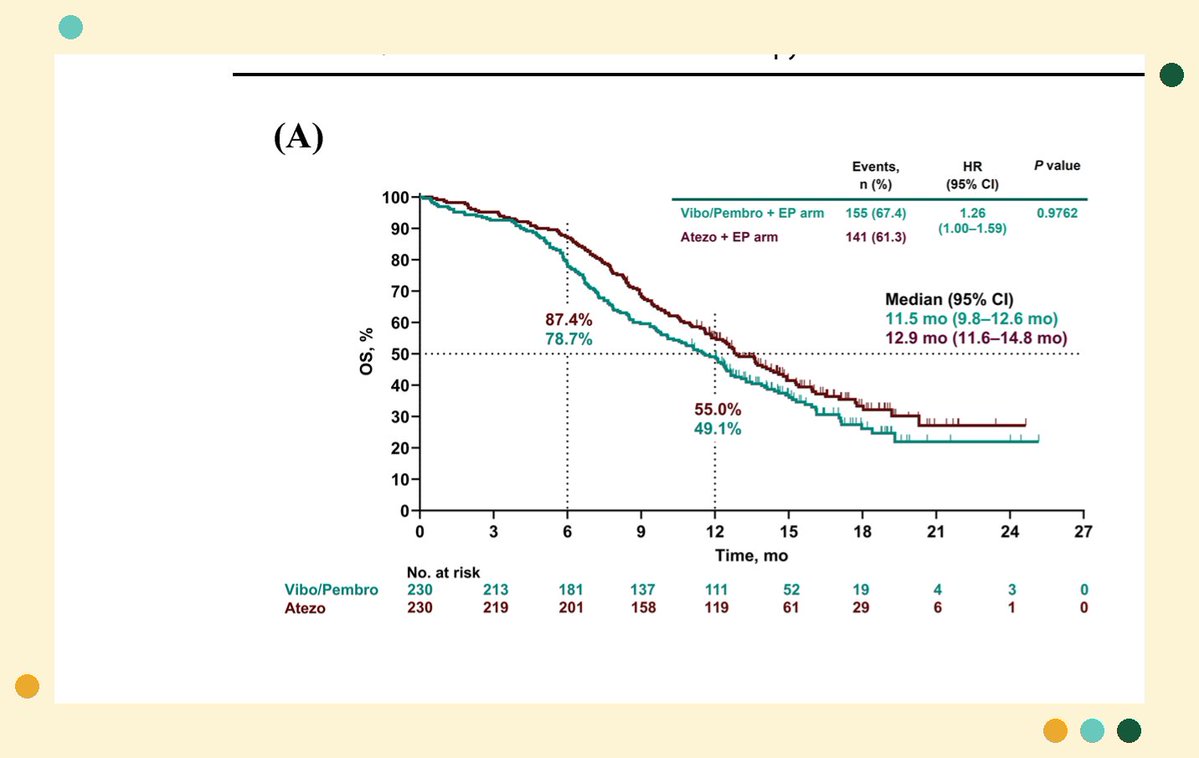
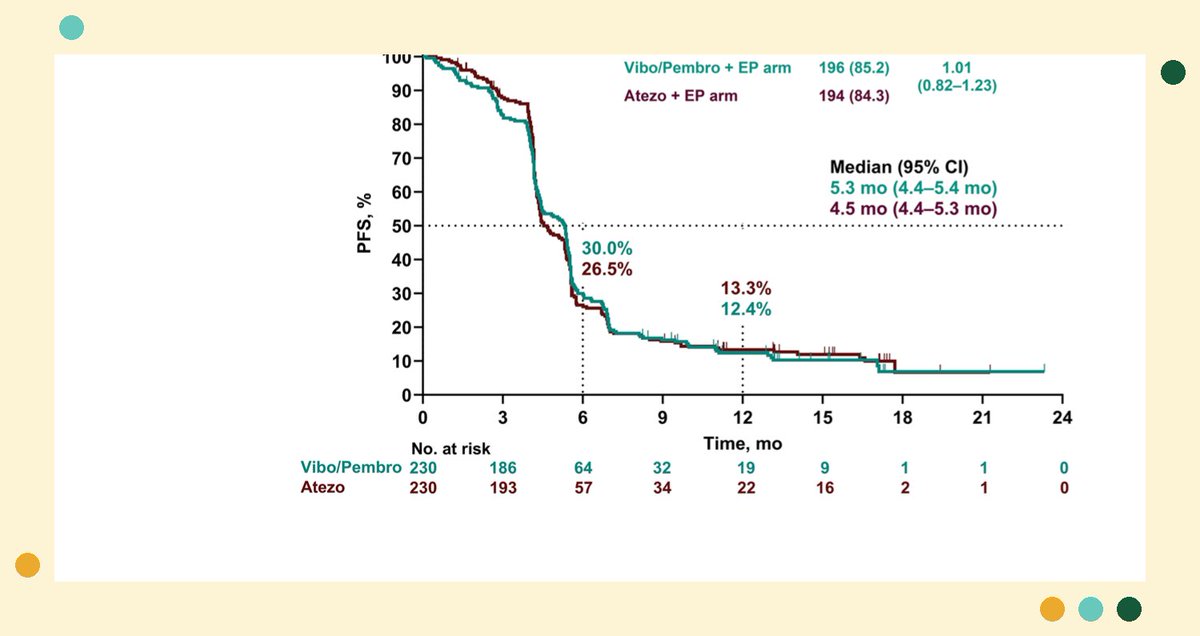
Take: Phase 3 interim analysis: OS futility criterion met (HR 1.26, 95% CI 1.00-1.59; P=0.9762); no PFS difference (HR 1.01); ORR 71.7% vs 74.8% with atezolizumab. Treatment arm discontinued.
Another TIGIT combo that fails and adds toxicity. As a young thoracic oncologist I joined when the list of TIGIT failures increased. How do we avoid this in the future, so we dont spend so many collective resources until we have a potential candidate? @TejasPatilMD @drshieldsmd
#LCSM #SCLC #clinicaltrials
🔖 0 ❤️ 0 🔁 0 👁 105
Hidehito HORINOUCHI @HHorinouchi
🆙#ESMO26 Proffered Paper: #LCSM Non-Mets
🔥ASTRIDE: Randomized Trial of Serplulimab or Atezolizumab Plus Chemotherapy in USA Patients With Extensive-Stage Small Cell Lung Cancer
🎙️ @drgandara
🔢3809O
🎯Serplulimab Numerically Longer OS vs Atezolizumab
🎯mOS 12.4 vs 10.2m, HR 0.82; 24-Mo OS 32.2% vs 17.6%
☑️NCT05468489
🔗 https://t.co/grEfaUbJVf
@OncoAlert @Larvol @myESMO @IASLC
[Quoting @HHorinouchi: 🆙 #ESMO26 Proffered Paper: #LCSM Non-Mets NSCLC, others
🔥ASTRIDE: Randomized Trial of Serplulimab or Atezolizumab Plus Chemotherapy in USA Patients With Extensive-Stage Small Cell Lung Cancer
🎙️ @drgandara
🔢3809O
🔗 https://t.co/grEfaUchKN
☑️NCT05468489
@OncoAlert @Larvol @myESMO @IASLC]
🔖 3 ❤️ 7 🔁 3 👁 821
Hidehito HORINOUCHI @HHorinouchi
🆙#ESMO26 Proffered Paper: #LCSM Non-Mets
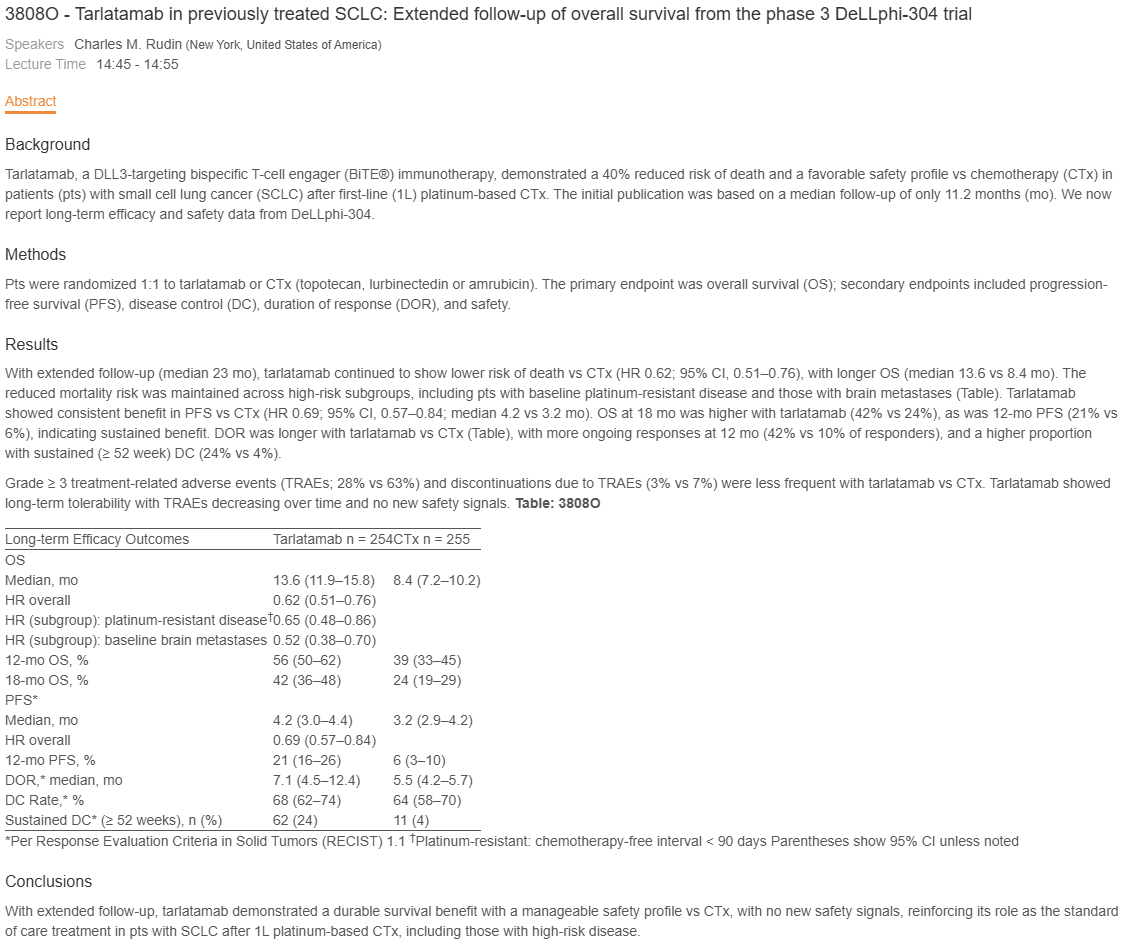
🔥DeLLphi-304: Tarlatamab in Previously Treated SCLC: Extended Follow-Up of Overall Survival From the Phase 3 Trial
🎙️ @charlesrudin
🔢3808O
🎯Durable OS Benefit at 23-Mo Median Follow-Up
🎯mOS 13.6 vs 8.4mo (HR 0.62); 18-Mo OS 42% vs 24%
🎯Grade≥3 TRAEs 28% vs 63%
☑️NCT05740566
🔗 https://t.co/grEfaUbJVf
@OncoAlert @Larvol @myESMO @IASLC
[Quoting @HHorinouchi: 🆙 #ESMO26 #LCSM Proffered Paper Session
🔥DeLLphi-304: Tarlatamab in Previously Treated SCLC: Extended Follow-Up of Overall Survival From the Phase 3 Trial
🎙️ @charlesrudin
🔢3808O
🎯Primary Analysis: Median OS 13.6 vs 8.3mo (HR 0.60)
☑️NCT05740566
🔗 https://t.co/grEfaUchKN
@OncoAlert @Larvol @myESMO @IASLC]
🔖 5 ❤️ 8 🔁 3 👁 870
Hidehito HORINOUCHI @HHorinouchi
🆙#ESMO26 Proffered Paper I: #LCSM Mets
🔥PERSEE (GFPC 01-2020): Pembrolizumab With or Without Platinum-Based Chemotherapy as First-Line Treatment in Advanced NSCLC With PD-L1 ≥50%, Phase 3 Trial
🎙️ @decroisette
🔢2614O
🎯Pembro-Chemo Improved BCR-PFS vs Pembro Alone
🎯PFS HR 0.56, mPFS 16.1 vs 6.9m
🎯OS HR 0.77 not significant; mOS 50.2 vs 29.9mo
🎯Grade≥3 TRAEs 53.8% vs 19.3%
☑️NCT04547504
🔗 https://t.co/uGHKJfiJGo
@OncoAlert @Larvol @myESMO @IASLC
[Quoting @HHorinouchi: 🆙 #ESMO26 Proffered Paper I: #LCSM Mets
🔥PERSEE (GFPC 01-2020): Pembrolizumab With or Without Platinum-Based Chemotherapy as First-Line Treatment in Advanced NSCLC With PD-L1 ≥50%, Phase 3 Trial
🎙️ @decroisette
🔢2614O
☑️NCT04547504
🔗 https://t.co/uGHKJfjhvW
@OncoAlert @Larvol @myESMO @IASLC]
🔖 2 ❤️ 27 🔁 13 👁 2,743
Hidehito HORINOUCHI @HHorinouchi
🆙#ESMO26 Proffered Paper II: #LCSM Mets
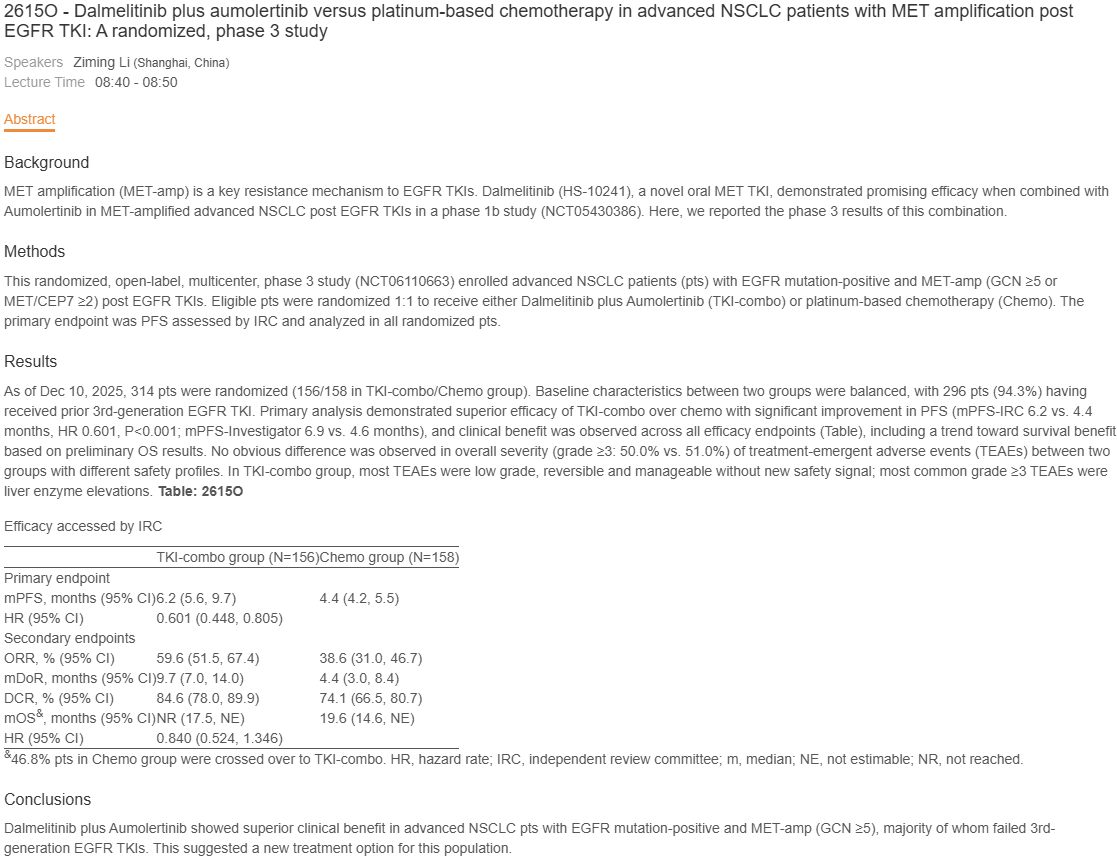
🔥Dalmelitinib Plus Aumolertinib Versus Platinum-Based Chemotherapy in Advanced NSCLC Patients With MET Amplification Post EGFR TKI: A Randomized, Phase 3 Study
🎙️Dr. Ziming Li
🔢2615O
🎯Met Primary Endpoint: IRC-PFS 6.2 vs 4.4mo (HR 0.601, p<0.001; n=314); ORR 59.6% vs 38.6%; OS HR 0.840 (Immature, 46.8% Crossover); Grade≥3 TEAEs 50.0% vs 51.0%
☑️NCT06110663
🔗 https://t.co/M4ccE0ikXo
@OncoAlert @Larvol @myESMO @IASLC @EGFRResisters
[Quoting @HHorinouchi: 🆙 #ESMO26 Proffered Paper II: #LCSM Mets
🔥Dalmelitinib Plus Aumolertinib Versus Platinum-Based Chemotherapy in Advanced NSCLC Patients With MET Amplification Post EGFR TKI
🎙️Dr. Ziming Li
🔢2615O
☑️NCT06110663
🔗 https://t.co/M4ccE0iSMW
@OncoAlert @Larvol @myESMO @IASLC @EGFRResisters]
🔖 1 ❤️ 3 🔁 1 👁 338
Hidehito HORINOUCHI @HHorinouchi
🆙#ESMO26 Proffered Paper: #LCSM Non-Mets
🔥PEARLS/KEYNOTE-091: Final Analysis of Adjuvant Pembrolizumab (Pembro) in Resected Early-Stage Non–Small-Cell Lung Cancer (NSCLC): Phase 3 Study
🎙️ @drMaryOBr
🔢2511O
🎯Consistent DFS Benefit (HR 0.85, 58.7 vs 43.3mo; n=1177)
🎯6-Yr OS 68.5% vs 66.4% (HR 0.98, NS)
🎯Favorable LCSS Trend (HR 0.81)
☑️NCT02504372
🔗 https://t.co/grEfaUchKN
@OncoAlert @Larvol @myESMO @IASLC
🔖 2 ❤️ 7 🔁 4 👁 993
Hidehito HORINOUCHI @HHorinouchi
🆙 #ESMO26 Proffered Paper I: #LCSM Mets
🔥SARON: Primary Results of a Randomised-Controlled Trial of Consolidation Radiotherapy for Synchronous Oligometastatic Non-Small Cell Lung Cancer
🎙️Dr. Fiona McDonald
🔢2613O
🎯SACT+RT Improved PFS (13.9 vs 8.9m, HR 0.64, p=0.03) and 12-Mo Local Failure (13.0% vs 39.5%)
🎯No OS Benefit (31.0 vs 28.0mo, HR 0.99)
☑️NCT02417662
🔗 https://t.co/uGHKJfiJGo
@OncoAlert @Larvol @myESMO @IASLC
[Quoting @HHorinouchi: 🆙 #ESMO26 Proffered Paper I: #LCSM Mets
🔥SARON: A Randomised-Controlled Trial of Consolidation Radiotherapy for Synchronous Oligometastatic Non-Small Cell Lung Cancer
🎙️Dr. Fiona McDonald
🔢2613O
☑️NCT02417662
🔗 https://t.co/iyD9xWSAFb
@OncoAlert @Larvol @myESMO @IASLC]
🔖 0 ❤️ 2 🔁 1 👁 338
sciqst @sciqst
PD-L1 is changing who gets immunotherapy. But is it enough? 🧬
In 2025, the FDA approved perioperative pembrolizumab for PD-L1-positive head and neck cancer. KEYNOTE-689 showed median event-free survival of 59.7 vs 29.6 months (CPS ≥1). [1]
In gastric cancer, KEYNOTE-811 showed median survival of 20.1 vs 15.7 months. [2]
🔬 PD-L1 testing now shapes treatment access. Yet assay variability and imperfect prediction remain challenges. Precision requires more than one marker.
🤔 How should oncology move beyond PD-L1 alone without delaying access to effective treatment?
Sources:
[1] [https://t.co/sLZezIjSQo](https://t.co/t7qPL0dVN1)
[2] [https://t.co/8epmWj35Ew](https://t.co/o4IDDxdwOA)
[3] [https://t.co/u0nTRU90f5](https://t.co/s9n0vZsZub)
#PDL1 #Immunotherapy #Oncology #Biomarkers
🔖 0 ❤️ 0 🔁 1 👁 272
Yakup Ergün @dr_yakupergun
#ESMO26 | PERSEE – Phase III
In advanced NSCLC with PD-L1 ≥50%, adding chemotherapy to pembrolizumab improved median PFS from 6.9 to 16.1 months (HR 0.56). The numerical OS difference was notable (50.2 vs 29.9 months; HR 0.77), but not statistically significant. However, we should remember that OS was not the primary endpoint!
Grade ≥3 toxicity: 53.8% vs 19.3%.
I think adding chemotherapy provides benefit, but at the cost of increased toxicity. We need to better identify the patients for whom this toxicity is worth it.
🔖 24 ❤️ 44 🔁 12 👁 3,483
🧪 Newly Recruiting Trials
7 trials (1 phase III, 2 phase II, 3 phase I, 1 device/procedure) opened this week, testing ABBV-1480, PF-07220060, pembrolizumab plus nodal-sparing radiotherapy, STRO-006, FH-A11KRASG12V-TCR T cells, [225Ac]Ac-AKY-2519 and brain-avoidant proton craniospinal irradiation (BRAVO-pCSI)
Phase 3 · AbbVie · ABBV-1480 · Indiana · CT.gov ↗
Phase 1/2 · Pfizer · PF-07220060 · California, Connecticut, Massachusetts, Michigan, Tennessee, Texas · CT.gov ↗
Phase 2 · Medical College of Wisconsin · pembrolizumab plus nodal-sparing radiotherapy · Wisconsin · CT.gov ↗
Phase 1 · Sutro Biopharma, Inc. · STRO-006 · Florida, Massachusetts, Oklahoma, Texas, Virginia · CT.gov ↗
Phase 1 · Fred Hutchinson Cancer Center · FH-A11KRASG12V-TCR T cells · Washington · CT.gov ↗
Phase 1 · Aktis Oncology, Inc. · [225Ac]Ac-AKY-2519 · Florida · CT.gov ↗
Phase N/A · University of Miami · brain-avoidant proton craniospinal irradiation (BRAVO-pCSI) · Florida · CT.gov ↗
Open all 7 on the trials page →
Agent descriptions from the NCI Thesaurus.
Prepared by Rafael Santana-Davila, M.D. Questions or feedback? Just reply to this email.
Disclaimer: This digest is AI-generated. Content may contain errors -- always verify with original sources.
Know a colleague who would find this useful? Just forward them this email.
☕ Not funded by anyone — no sponsors, no pharma. Buy me a coffee if it's useful.