📬 GU Oncology Intelligence Digest — Week 2026-W44
ESMO26 delivered VOLGA (EV+durvalumab EFS HR 0.51, OS HR 0.58 in cisplatin-ineligible MIBC), two negative perioperative chemo-IO trials (KEYNOTE-866, ENERGIZE), DASL-HiCaP darolutamide MFS HR 0.42, PEACE-1 at 7.7 years, CAPItello-281 OS 57.4 vs 46.5 months, KEYNOTE-564 at 7 years and two negative RCC triplets in LITESPARK-012.
⚡ TL;DR
📄 Publications
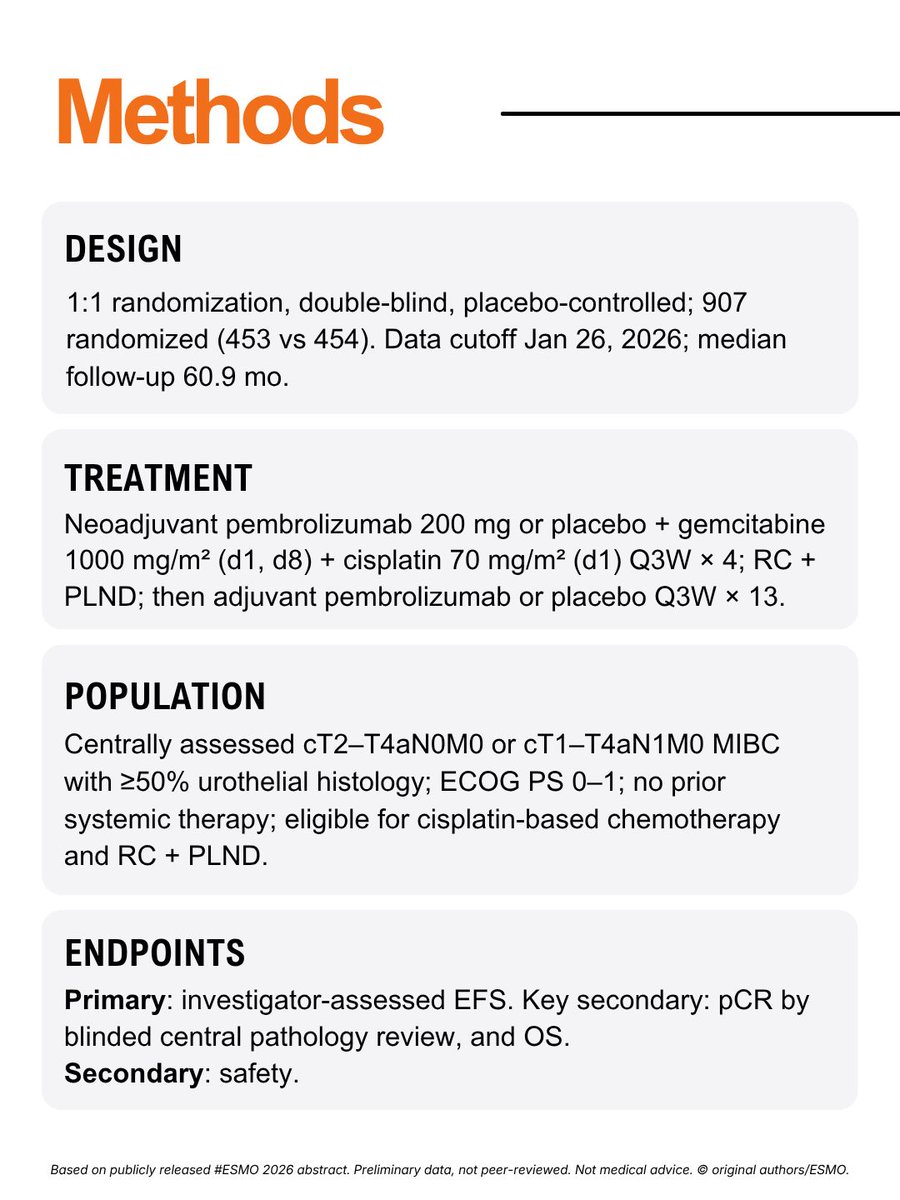
- Perioperative pembrolizumab or placebo plus neoadjuvant cisplatin and gemcitabine in participants with muscle-invasive bladder cancer who are eligible for cisplatin: the double-blind, phase III KEYNOTE-866 study. — 907 participants randomized (pembrolizumab n=453; placebo n=454), median follow-up 60.9 months
- Capivasertib plus abiraterone in PTEN-deficient de novo metastatic hormone-sensitive prostate cancer: updated survival analysis from CAPItello-281. — 1012 patients received capivasertib plus abiraterone (n=507) or placebo plus abiraterone (n=505)
- ENZARAD (ANZUP 1303): Phase 3 Trial of Enzalutamide With Androgen Deprivation Therapy and Radiation Therapy in High-Risk Localized or Locally Advanced Prostate Cancer. — 802 participants randomized to enzalutamide 160mg daily for 24 months or an older nonsteroidal antiandrogen for 6 months, with definitive radiotherapy and 24 months of ADT
- Neoadjuvant nivolumab plus gemcitabine-cisplatin followed by postsurgical adjuvant nivolumab versus neoadjuvant gemcitabine-cisplatin in patients with muscle-invasive bladder cancer: final results from the phase III CA017-078 trial. — At final analysis with 54.5 months median follow-up, 325 patients randomized to nivolumab plus GC and 328 to GC
🐦 Twitter / 🦋 Bluesky
- VOLGA: three cycles of neoadjuvant enfortumab vedotin with perioperative durvalumab improves EFS and OS in cisplatin-ineligible MIBC, with no adjuvant EV — Phase 3 VOLGA (n=695) tested perioperative durvalumab ± tremelimumab plus neoadjuvant enfortumab vedotin versus radical cystectomy control in cisplatin-ineligible MIBC; interim analysis, median EFS follow-up 22.9 months
- KEYNOTE-866 and ENERGIZE both negative: adding PD-1 blockade to neoadjuvant gemcitabine-cisplatin raises pCR but not EFS or OS — KEYNOTE-866 (n=907): median EFS 74.1 months vs NR, HR 0.88 (0.71-1.10), P=.1366; pCR 44.4% vs 35.8%; OS HR 1.00 (0.79-1.27)
- DASL-HiCaP: darolutamide added to ADT and radiotherapy cuts metastasis or death by 58% in very high-risk localized prostate cancer — Phase 3 DASL-HiCaP (n=1106) randomized darolutamide vs placebo added to 96 weeks of ADT plus prostate/pelvic RT; interim analysis at median follow-up 3.8 years
- ctDNA across KEYNOTE-B15/EV-304, VOLGA and ENERGIZE is strongly prognostic but not yet a treatment compass — In B15/EV304, ctDNA is strongly prognostic at all time points for both arms, with higher clearance rates on EVP, and control-arm results strikingly similar to the NIAGARA chemo control arm
- PROTEUS randomized substudy: perioperative apalutamide plus ADT around prostatectomy improves EFS versus surgery alone, and the comparator is contested — Perioperative apalutamide plus ADT with RP+PLND (n=102) versus RP+PLND alone (n=306): EFS HR 0.38 (95% CI 0.26-0.55); MFS HR 0.49 (95% CI 0.26-0.90); time to first subsequent therapy HR 0.29 (95% CI 0.20-0.43)
Full details below ↓
📄 What's Being Published
Perioperative pembrolizumab or placebo plus neoadjuvant cisplatin and gemcitabine in participants with muscle-invasive bladder cancer who are eligible for cisplatin: the double-blind, phase III KEYNOTE-866 study. — Bedke J et al., Ann Oncol
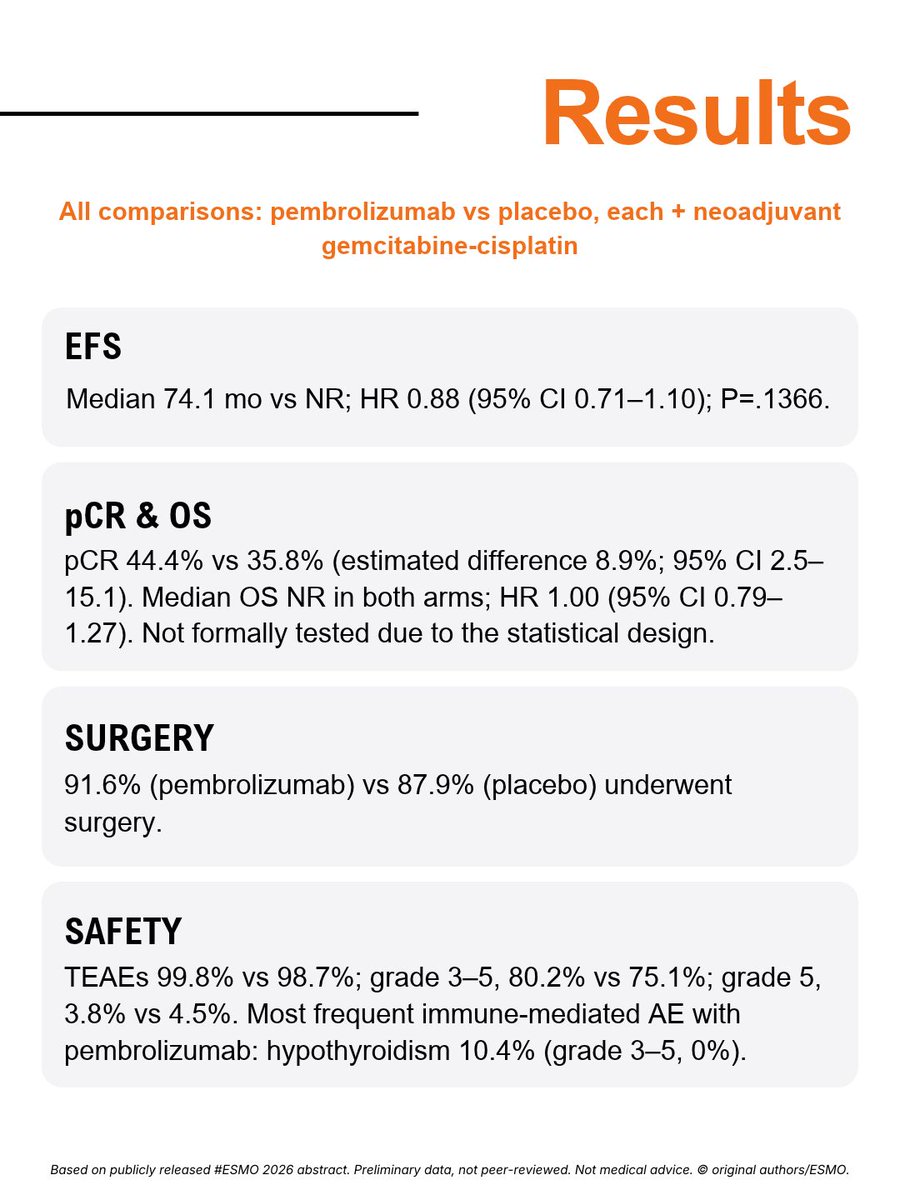
The trial randomized 907 participants (pembrolizumab n = 453; placebo n = 454), with median follow-up of 60.9 months. At 60 months, estimated EFS was 63.5% with pembrolizumab versus 61.9% with placebo (hazard ratio 0.88; 95% CI 0.71-1.10; one-sided P = 0.1366). pCR was 44.4% versus 35.8% (estimated difference 8.9%; 95% CI 2.5-15.1), median OS was not reached in either group (hazard ratio 1.00; 95% CI 0.79-1.27), and grade ≥3 treatment-emergent adverse events occurred in 80.2% versus 75.1%.
Clinical bottom line: Do not add perioperative pembrolizumab to neoadjuvant gemcitabine-cisplatin in cisplatin-eligible MIBC. pCR rose, but EFS and OS did not improve.
Capivasertib plus abiraterone in PTEN-deficient de novo metastatic hormone-sensitive prostate cancer: updated survival analysis from CAPItello-281. — Fizazi K et al., Ann Oncol
In 1012 patients (capivasertib plus abiraterone n=507; placebo plus abiraterone n=505), the OS hazard ratio favored capivasertib (HR 0.82, 95% CI 0.68-0.99, P=0.044), with medians of 57.4 versus 46.5 months. Updated rPFS (HR 0.83, 95% CI 0.70-0.99, nominal P=0.033; median 35.5 versus 26.0 months) was consistent with the primary analysis (HR 0.81, 95% CI 0.66-0.98; P=0.034). The safety profile was unchanged from the primary findings.
Clinical bottom line: In PTEN-deficient de novo mHSPC, longer follow-up shows median overall survival of 57.4 versus 46.5 months. This strengthens the case for capivasertib plus abiraterone in this biomarker-defined group.
ENZARAD (ANZUP 1303): Phase 3 Trial of Enzalutamide With Androgen Deprivation Therapy and Radiation Therapy in High-Risk Localized or Locally Advanced Prostate Cancer. — Williams Scott et al., J Clin Oncol
The trial randomized 802 participants receiving definitive radiotherapy and 24 months of ADT to enzalutamide (160mg daily for 24 months) or an older nonsteroidal antiandrogen for 6 months. After median follow-up of 92 months, 8-year MFS-CI rates were 74% vs 72% (HR 0.88, 95% CI 0.67 to 1.15; P=0.34). In the prespecified subgroup receiving planned pelvic nodal radiotherapy (N=324), the HR was 0.47 (95% CI 0.29 to 0.76, Padjusted=0.004). Grade 3-5 adverse events occurred in 185 participants in each arm.
Clinical bottom line: ENZARAD does not support replacing an older antiandrogen with enzalutamide alongside radiotherapy and 2 years of ADT in high-risk localized disease. The signal in the planned pelvic nodal radiotherapy subgroup is hypothesis-generating only.
Neoadjuvant nivolumab plus gemcitabine-cisplatin followed by postsurgical adjuvant nivolumab versus neoadjuvant gemcitabine-cisplatin in patients with muscle-invasive bladder cancer: final results from the phase III CA017-078 trial. — Sonpavde G et al., Ann Oncol
At final analysis (54.5 months median follow-up; 325 patients randomized to nivolumab plus GC, 328 to GC), pCR was 39.1% vs 29.6% (adjusted difference 9.5%, 99.91% CI -2.6-21.6). EFS did not improve (104 events in each arm; HR 0.94, 95.74% CI 0.71-1.25; P=0.6697). OS was descriptive only (HR 0.88, 95% CI 0.64-1.21). Grade 3-4 treatment-related adverse events occurred in 50.0% versus 49.5%. Pretreatment ctDNA was positive in 229/416 patients (55%), and clearance by C4D1 occurred in 153/199 (76.9%).
Clinical bottom line: ENERGIZE is negative and does not change practice. Perioperative nivolumab added to neoadjuvant gemcitabine-cisplatin did not improve pCR or EFS, although ctDNA was strongly prognostic.
Pan-Asian adapted ESMO Clinical Practice Guidelines for the diagnosis, treatment and follow-up of patients with renal cell carcinoma. — Kanesvaran R et al., ESMO Open
The ESMO RCC guidelines published in May 2024 were adapted in December 2025 to produce Pan-Asian consensus guidelines. Voting was based on scientific evidence and was independent of current treatment practices, drug access restrictions and reimbursement decisions. The guidelines draw attention to regional disparities in drug approvals and reimbursement.
Clinical bottom line: This adaptation does not change Western RCC practice. It gives Asian clinicians an evidence-based regional reference that explicitly separates recommendations from local access and reimbursement constraints.
Neoadjuvant nivolumab with or without visugromab in muscle-invasive bladder cancer: the phase 2a GDFATHER-NEO trial. — Necchi Andrea et al., Nat Med
Thirty-one cisplatin-ineligible or cisplatin-refusing patients with MIBC received nivolumab plus visugromab (n = 16) or placebo (n = 15). pCR was 33% (5 of 15, 95% CI 12-62%) versus 8% (1 of 13, 95% CI 0-36%). Major pathologic response was 60% versus 23%, and radiographic ORR was 60% versus 15%. Grade 3-4 treatment-related adverse events occurred in two (13%) versus three (20%) patients, with no treatment-related delays to surgery.
Clinical bottom line: Adding GDF-15 blockade with visugromab to nivolumab is a proof-of-concept signal, not a treatment option. The study included 31 patients and was nonrandomized, and it does not justify omitting cystectomy.
Skin Toxic Effects and Survival With Enfortumab Vedotin-Pembrolizumab in Advanced Urothelial Carcinoma. — Thomas Zachariah et al., JAMA Netw Open
Among 185 patients receiving first-line EVP, skin toxic effects occurred in 98 (53.0%) at a median of 14 days. In adjusted time-dependent Cox regression, skin toxic effects were associated with longer OS (HR 0.34 [95% CI 0.20-0.57]). Grade 3 or higher skin toxic effects occurred in 10 patients (5.4%). They led to EV dose reduction in 31 (16.8%), interruption in 20 (10.8%) and discontinuation in 9 (4.9%).
Clinical bottom line: Early skin toxicity on first-line enfortumab vedotin plus pembrolizumab is a candidate marker of benefit, not a reason to stop therapy. This single-center retrospective cohort needs prospective validation before it changes counselling.
🗂 Every paper considered this week, including the ones that didn’t make it →
🗣️ What People Were Discussing This Week
How these are chosen: filtered for clinical relevance, grouped by the new development discussed, then ordered by engagement (bookmarks and reposts).
VOLGA: three cycles of neoadjuvant enfortumab vedotin with perioperative durvalumab improves EFS and OS in cisplatin-ineligible MIBC, with no adjuvant EV
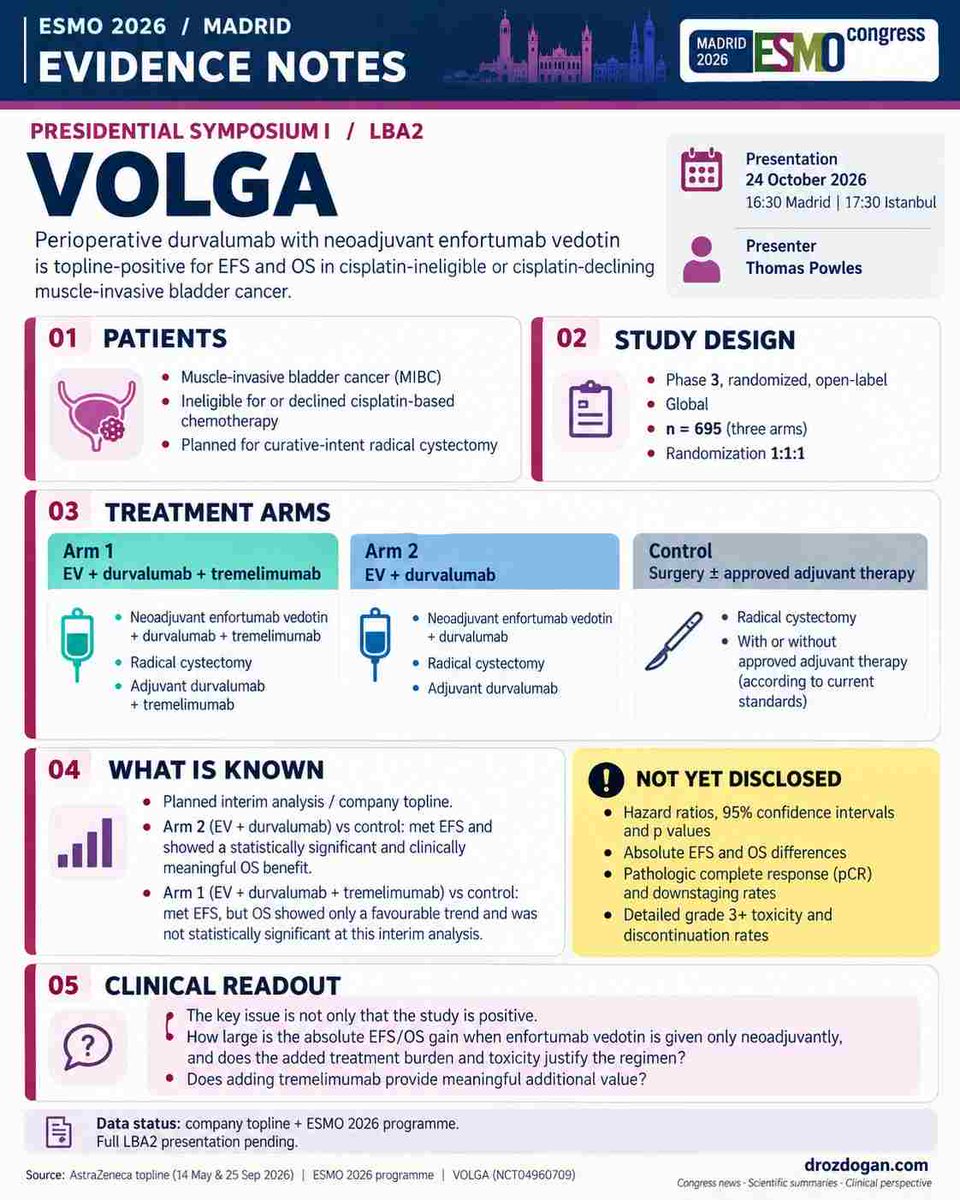
The phase 3 VOLGA interim analysis tested three neoadjuvant cycles of enfortumab vedotin with perioperative durvalumab, followed by adjuvant durvalumab and no adjuvant EV. Durvalumab plus EV roughly halved the hazard of an EFS event versus cystectomy, improved OS, and raised pCR, with fewer grade 3/4 treatment-related adverse events than control. Adding tremelimumab improved EFS but has not yet reached significant OS, with more toxicity and less EV delivered. Caveats include that roughly a quarter of patients had refused cisplatin rather than being ineligible, and that the trial had no trimodality arm. The open question is whether adjuvant EV after cystectomy is still needed.
Key numbers: 2-yr EFS 64% vs 45%, HR 0.51 · 2-yr OS 78% vs 69%, HR 0.58 · pCR 45% vs 10% · G3/4 TRAEs 30% vs 42%
Discussed by: @HHorinouchi, @Uromigos, @urotoday, @DrChoueiri, @shilpaonc, @dr_yakupergun, @SuyogCancer, @TiansterZhang, @DrKarineTawagi, @jryckman3, @OncBrothers, @PGrivasMDPhD
Sources cited: Durvalumab, Tremelimumab, and Enfortumab Vedotin in Muscle-Invasive Bladder Cancer (New England Journal of Medicine, 2026)
KEYNOTE-866 and ENERGIZE both negative: adding PD-1 blockade to neoadjuvant gemcitabine-cisplatin raises pCR but not EFS or OS
Two perioperative PD-1 trials raised pCR without significant gains in EFS or OS, in contrast to NIAGARA with perioperative durvalumab. Trialists cannot explain the discordance. They point to NIAGARA's possibly higher-risk population and baseline differences in T2 disease and control-arm EFS, while calling the KEYNOTE-866 OS HR of 1 concerning. ENERGIZE also allowed split-dose cisplatin, had imbalanced baseline ctDNA, and control patients may have received adjuvant IO. The debate is whether NIAGARA reflects a real durvalumab-specific effect, and whether perioperative chemo-IO should still be offered where EV-pembrolizumab is unavailable.
Key numbers: KEYNOTE-866 EFS HR 0.88, pCR 44.4% vs 35.8% · KEYNOTE-866 OS HR 1.00 · ENERGIZE EFS HR 0.94, pCR 39.1% vs 29.6% · ENERGIZE OS HR 0.88
Discussed by: @scocmem, @DrChoueiri, @VJOncology, @TiansterZhang, @urotoday, @nataliagandur, @PGrivasMDPhD, @SuyogCancer, @drenriquegrande, @weoncologists, @VJOncology
DASL-HiCaP: darolutamide added to ADT and radiotherapy cuts metastasis or death by 58% in very high-risk localized prostate cancer
The phase 3 DASL-HiCaP interim analysis added darolutamide or placebo to 96 weeks of ADT with prostate/pelvic radiotherapy. The trial substantially improved metastasis-free survival, with gains in PSA-PFS and time to castration resistance, while OS remains immature and grade ≥3 adverse events were more frequent. The US lead considers it a new standard, and the MFS benefit held regardless of PSMA PET staging or nodal status. Powles argues the clearest indication is N1 disease, so the debate is whether to intensify every very high-risk patient or only those with N1 disease.
Key numbers: 4-yr MFS 95% vs 88%, HR 0.42 · PSA-PFS HR 0.47 · OS HR 0.88 · Time to CRPC HR 0.22 · Grade ≥3 AEs 43% vs 36%
Discussed by: @_ShankarSiva, @TylerSbrt, @jryckman3, @seanmmcbride, @DrChoueiri, @ozdogan_md, @brookmans76, @TiansterZhang, @urotoday
ctDNA across KEYNOTE-B15/EV-304, VOLGA and ENERGIZE is strongly prognostic but not yet a treatment compass
Across KEYNOTE-B15/EV-304, VOLGA and ENERGIZE, ctDNA was strongly prognostic at all time points. Clearance was higher with EV-pembrolizumab than gemcitabine-cisplatin, and frequent with durvalumab plus EV. In ENERGIZE, however, ctDNA identified who was at risk but not who benefited from nivolumab. Because about a quarter of patients who convert to ctDNA-negative still progress despite cystectomy, clinicians debate whether clearance can select patients for bladder preservation or adjuvant de-escalation, or remains purely prognostic.
Key numbers: KEYNOTE-B15 ctDNA clearance 82.1% vs 66.7% · Post-surgery ctDNA+ 4.8% vs 13.5% · Baseline ctDNA+ EFS HR 0.54
Discussed by: @PGrivasMDPhD, @urotoday, @DrChoueiri, @Dr_Aggen, @montypal, @BrendanGuercio
PROTEUS randomized substudy: perioperative apalutamide plus ADT around prostatectomy improves EFS versus surgery alone, and the comparator is contested
Perioperative apalutamide plus ADT with prostatectomy and node dissection improved EFS, MFS and time to subsequent therapy versus immediate surgery, and fewer patients needed postoperative radiotherapy. Critics argue that ongoing castration confounds the EFS readout and that conventional-imaging entry followed by PSMA-inclusive endpoints complicates interpretation. A radiation oncologist argues the right comparator is prostatectomy plus ADT. The debate is whether this establishes a perioperative apalutamide strategy or reflects an artifact.
Key numbers: 3-yr EFS 63.0% vs 41.4%, HR 0.38 · MFS HR 0.49 · Time to 1st subsequent therapy HR 0.29 · Postoperative RT 20% vs 43%
Discussed by: @brookmans76, @seanmmcbride, @_ShankarSiva, @DrChoueiri, @SuyogCancer, @tiansterzhangmd.bsky.social
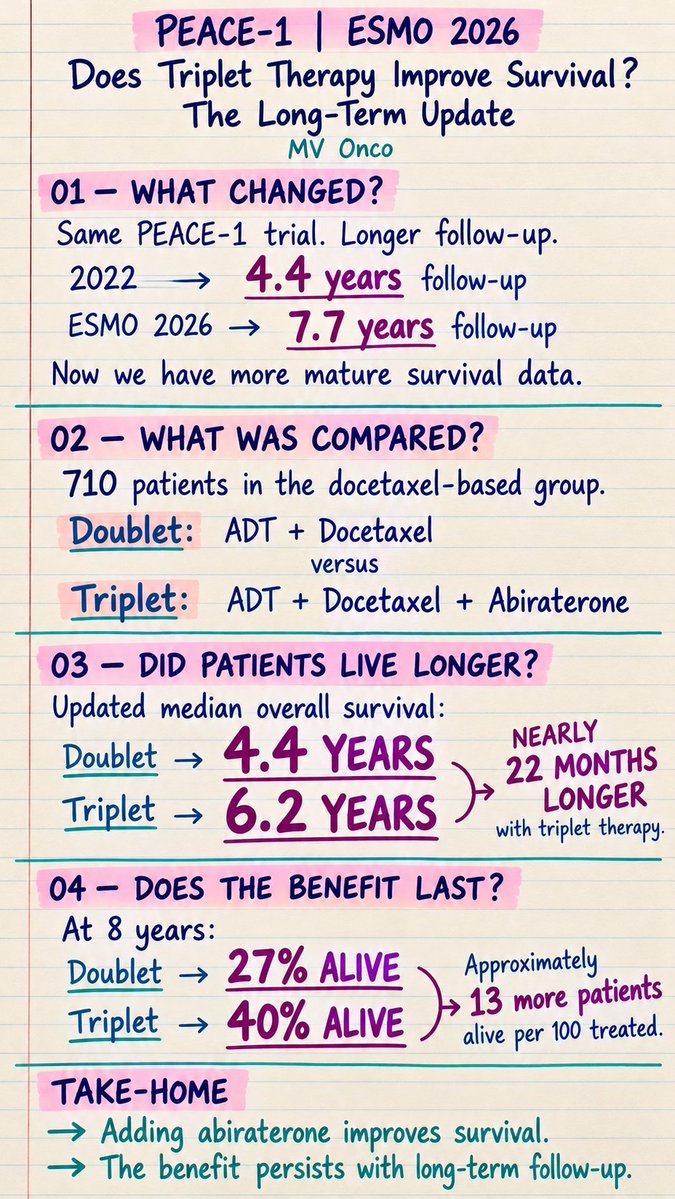
PEACE-1 at 7.7 years: adding abiraterone to ADT plus docetaxel lifts median OS from 4.4 to 6.2 years in de novo mCSPC
With longer follow-up, the survival benefit of adding abiraterone to ADT plus docetaxel grew, and most controls received an ARPI after progression. No long-term safety signal emerged. Benefit appeared in both high- and low-volume disease without a treatment-by-volume interaction, although the low-volume confidence interval crossed 1. The question is whether to offer triplet therapy to docetaxel-fit low-volume patients as well.
Key numbers: Median OS 6.2 vs 4.4 years, HR 0.68 · 8-yr OS 40.3% vs 27.1% · 7-yr OS 45.7% vs 30.7% · High-vol OS HR 0.67 · Low-vol OS HR 0.74
Discussed by: @DrChoueiri, @TiansterZhang, @dmukherji, @urotoday, @nataliagandur, @ChandrakanthMv
JNJ-6143, a first-in-class oral AR-BRD4 RIPTAC, reports phase 1 activity in heavily pretreated mCRPC
In heavily pretreated mCRPC, the oral RIPTAC JNJ-6143 produced high PSA and objective response rates at the recommended phase 2 dose, including responses in ARv7-positive patients and across aggressive molecular subtypes, with few discontinuations. A phase 2 trial is active. Clinicians are asking whether targeting AR presence rather than AR dependence offers something ARPIs and degraders cannot, and which post-ARPI patients to prioritize.
Key numbers: PSA50 77% · PSA90 48% · Confirmed ORR 69% · DCR 88%
Discussed by: @neerajaiims, @ErikaHamilton9, @dmukherji, @VJOncology, @PGrivasMDPhD
POTOMAC papillary-only subgroup: durvalumab plus BCG improves disease-free and cystectomy-free survival at the cost of more grade 3/4 events
In papillary-only high-risk NMIBC, durvalumab plus BCG reduced early high-risk recurrences, BCG-unresponsive recurrences and cystectomies, with the largest DFS effect in T1 disease. Grade 3/4 toxicity was substantially higher. A separate concern is that neither POTOMAC nor CREST has reported how many patients had prior BCG exposure. The trade-off is whether the cystectomy-free benefit justifies the added toxicity.
Key numbers: High-risk events 13% vs 20% · Cystectomy-free survival HR 0.59 · 48-mo DFS 84% vs 74%, HR 0.56 · T1 48-mo DFS 85% vs 73%, HR 0.48 · G3/4 AEs 23% vs 3%
Discussed by: @scocmem, @DrChoueiri, @OncBrothers, @eugene_pietzak
STAMPEDE Decipher analysis: genomic risk predicts who gains most from abiraterone in very high-risk M0 prostate cancer
In STAMPEDE, a high Decipher score predicted greater benefit from abiraterone in N0 patients, and Decipher was prognostic in a large real-world cohort. Using the score to omit treatment still requires validation. The debate is whether a low score justifies withholding abiraterone or whether the interaction is too retrospective to act on.
Key numbers: 5-yr absolute benefit 2% (low) vs 12% (high Decipher) · Distant metastasis aHR 1.44 per 0.1-point increase
Discussed by: @DrChoueiri, @weoncologists, @nataliagandur, @urotoday, @SuyogCancer
Circulating tumor cells in prostate cancer reviewed in Nature Reviews Urology as a potential alternative to repeat biopsy
A review of prostate cancer circulating tumor cells, linked to the SPACE study, was published in Nature Reviews Urology. The senior author frames CTCs as a window into disease behaviour in both metastatic and localised settings and asks whether this could be the liquid biopsy that ends prostate biopsy. The open question is whether CTC assays can realistically characterise localised disease or remain confined to the metastatic setting.
Discussed by: @SophiaAbusamra, @LambAlastair
UK consensus extends upfront germline Lynch syndrome testing to urinary tract tumors
A new UK consensus on dMMR/MSI tumors recommends upfront germline Lynch testing for urinary tract, small bowel, pancreas, adrenal, sebaceous and glioma tumors, with MLH1 methylation triage for gastric cancer. Separate published work documents the efficacy of immune checkpoint blockade in mismatch repair-deficient or MSI upper tract urothelial cancer. The question is whether every patient with upper tract urothelial carcinoma, not only those with a suggestive family history, should now undergo upfront germline testing.
Discussed by: @DraMartinezLago, @JCOPO_ASCO
Sources cited: UK consensus recommendations for onward testing for Lynch syndrome in patients with defic… (Journal of Medical Genetics, 2026) · Efficacy of Immune Checkpoint Blockade in Advanced Upper Tract Urothelial Cancer With DNA… (JCO Precision Oncology, 2026)
TROPHY-U-01 Cohort 7: dual ADC plus PD-1 blockade reaches 81% response in untreated metastatic urothelial cancer, at a cost
The sacituzumab govitecan, enfortumab vedotin and PD-1 triplet produced very high response rates with durable responses and no treatment-related deaths in a small phase Ib cohort. Grade ≥3 toxicity was frequent, a third of patients discontinued at least one agent, and G-CSF support was mandatory. The debate is whether this justifies randomized testing against EV-pembrolizumab.
Key numbers: ORR 81% (14% CR) · Median PFS 19.3 months · Median DOR 16.7 months · Grade ≥3 TRAEs 52%
Discussed by: @DrChoueiri, @PGrivasMDPhD, @DrKarineTawagi, @scocmem, @TiansterZhang, @BrendanGuercio
KEYNOTE-905 three-arm ad hoc analysis quantifies what pembrolizumab alone contributes before cystectomy
In cisplatin-ineligible MIBC, EV-pembrolizumab outperformed both pembrolizumab alone and surgery. Single-agent pembrolizumab achieved pCR in the range of neoadjuvant cisplatin chemotherapy with about half the toxicity of EV-pembrolizumab. However, this was an ad hoc comparison, and the pembrolizumab arm did not separate from surgery. The question is which cisplatin-ineligible patients could be spared the ADC.
Key numbers: 2-yr EFS 75.8% vs 55.8% vs 41.0% · EFS HR 0.40 vs 0.71 · pCR 58.8% vs 25.3% vs 10.3% · OS HR 0.48 vs 0.76 · Grade ≥3 TEAEs 42% / 70% / 69%
Discussed by: @DrChoueiri, @urotoday, @AndreaNecchi, @nataliagandur, @OncoAlert
Update: ENZARAD at 8 years is negative, and clinicians now place it beside DASL-HiCaP, STAMPEDE and PROTEUS when deciding which high-risk patient needs ARPI intensification
ENZARAD showed no significant overall metastasis-free survival benefit from enzalutamide with ADT and radiotherapy, and its pelvic radiotherapy subgroup signal remains hypothesis-generating. Clinicians ask why STAMPEDE and DASL-HiCaP were positive when ENZARAD was not. These trials support specific strategies but cannot rank the drugs or settle prostatectomy versus radiotherapy. The debate is whether the difference lies in the drug, the mandated pelvic nodal radiotherapy, or the risk definition used for enrolment.
Discussed by: @SuyogCancer, @brookmans76, @5_utr
ABBV-969, a dual PSMA/STEAP1 topoisomerase-1 ADC, reports deep responses in mCRPC
In a phase I study of heavily pretreated mCRPC, ABBV-969 produced deep PSA and radiographic responses, including in patients previously treated with taxanes and radioligand therapy. Grade ≥3 events were frequent, mostly anemia, and the evidence remains early-phase. Clinicians ask whether dual targeting addresses antigen heterogeneity and whether the drug should be tested against docetaxel.
Key numbers: Confirmed PSA50 67% · Confirmed PSA90 28% · Confirmed ORR 45% · Grade ≥3 TEAEs 63%
Discussed by: @weoncologists, @nataliagandur
XmAb819, a first-in-class ENPP3 x CD3 bispecific, reports phase 1 activity in heavily pretreated clear cell RCC
In treatment-refractory ccRCC, the ENPP3/CD3 bispecific XmAb819 showed dose-dependent responses with manageable CRS, including activity after prior HIF-2α inhibition, and most responders remain on treatment. Commentators stress that these are phase I data. The question is whether ENPP3 T-cell engagement can become a new pillar after IO, VEGF and HIF-2α therapy.
Key numbers: ORR 27% · DCR 68% · ORR after prior HIF-2α inhibitor 26%
Discussed by: @TiansterZhang, @nataliagandur, @MarioBalsaMD, @to_be_elizabeth
CAPItello-281 updated analysis: capivasertib plus abiraterone reaches median OS 57.4 versus 46.5 months in PTEN-deficient de novo mHSPC
Updated CAPItello-281 data show longer overall survival and rPFS with capivasertib plus abiraterone in PTEN-deficient de novo mHSPC. However, the prespecified statistical significance threshold for OS was not met, and some clinicians describe the result as an encouraging but non-significant trend, while ESMO framed it as a significant improvement. The debate is whether the combination is now a standard or still a signal.
Key numbers: mOS 57.4 vs 46.5 mos, HR 0.82 · m-rPFS 35.5 vs 26.0 mos, HR 0.83 · mSSE-FS 43.8 vs 35.9 mos, HR 0.83
Discussed by: @dmukherji, @urotoday, @gbanna74, @PGrivasMDPhD, @weoncologists
SAC-TMT plus pembrolizumab in cisplatin-ineligible advanced urothelial cancer reports 68% response and feeds the TroFuse-055 bladder-sparing design
In previously untreated, cisplatin-ineligible advanced urothelial cancer (a cohort with a majority of UTUC), sac-TMT plus pembrolizumab produced high response rates with durable responses, though grade 3-4 TRAEs were common. The randomized phase 3 TroFuse-055 is testing the combination in bladder-sparing approaches. Clinicians question its place now that EV-pembrolizumab is the first-line standard.
Key numbers: Confirmed ORR 68% · DCR 88% · Median DOR 19.4 months · Median PFS 11.2 months
Real-world mHSPC analysis in JAMA Network Open: direct AR inhibitors associated with longer overall survival than abiraterone
In a JAMA Network Open real-world mHSPC analysis, apalutamide or enzalutamide was associated with longer overall survival than abiraterone (median OS 67.9 vs 57.2 mo; HR 0.74). A separate OASIS analysis linked apalutamide plus ADT to a lower risk of death than the alternatives. The debate is whether these differences reflect drug biology or residual confounding by prescribing patterns.
Discussed by: @neerajaiims, @urotoday, @jamanetworkopen.com
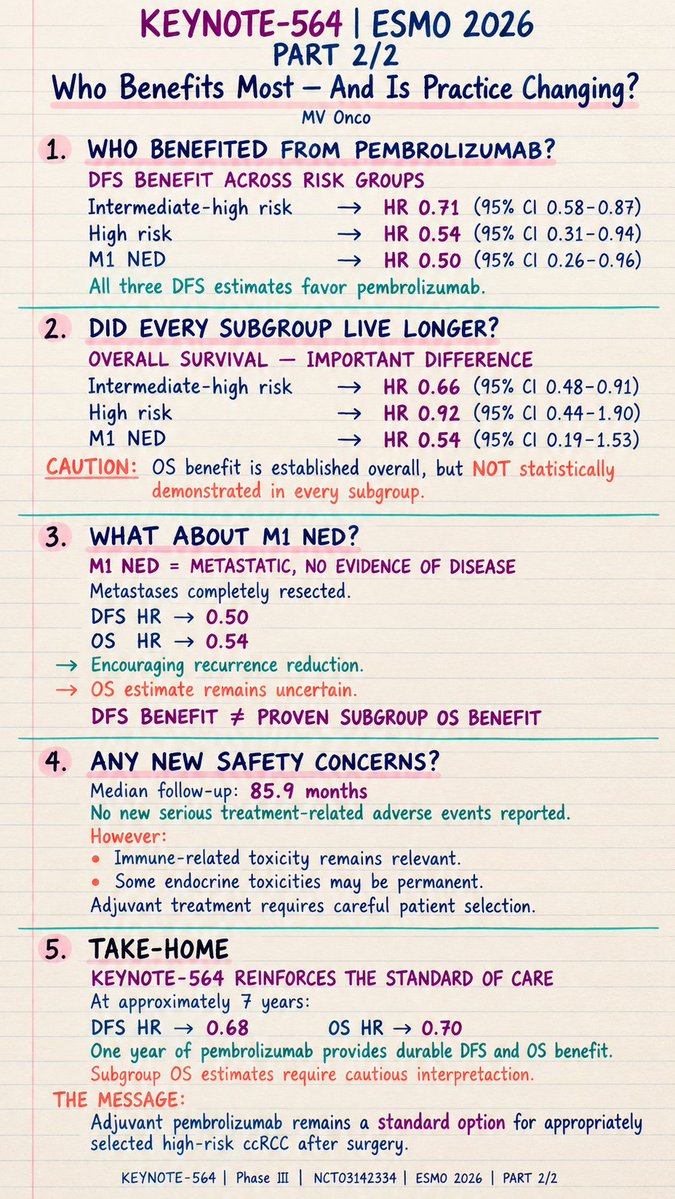
KEYNOTE-564 final prespecified analysis: adjuvant pembrolizumab holds a DFS and OS benefit at 7 years in high-risk clear cell RCC
At 7-year follow-up, adjuvant pembrolizumab maintained its disease-free and overall survival benefit with no new safety signal, confirming it as the first therapy to show an OS benefit in the adjuvant setting. The DFS benefit is consistent across subgroups, while subgroup OS results require cautious interpretation. The open question is how to select patients for adjuvant pembrolizumab now that belzutifan plus pembrolizumab is also approved adjuvantly.
Key numbers: DFS HR 0.68, 7-yr DFS 57.2% vs 44.6% · OS HR 0.70, 7-yr OS 82.3% vs 76.6%
Discussed by: @ReneeSaliby, @ChandrakanthMv, @nataliagandur, @TiansterZhang, @weoncologists
LuCAB: cabazitaxel plus 177Lu-PSMA-617 in post-docetaxel mCRPC reports PSA50 73% and median OS 16.5 months
In patients treated after docetaxel and an ARPI, cabazitaxel plus LuPSMA produced no dose-limiting toxicities and no grade 4/5 events at the recommended dose. Adding a taxane may overcome heterogeneous PSMA expression and act as a radiosensitiser, but randomized trials are needed. The debate is whether to give the two concurrently or sequentially.
Key numbers: PSA50 73% · rPFS 10.9 mo · OS 16.5 mo · G3 TRAEs 24%
Discussed by: @urotoday, @nataliagandur
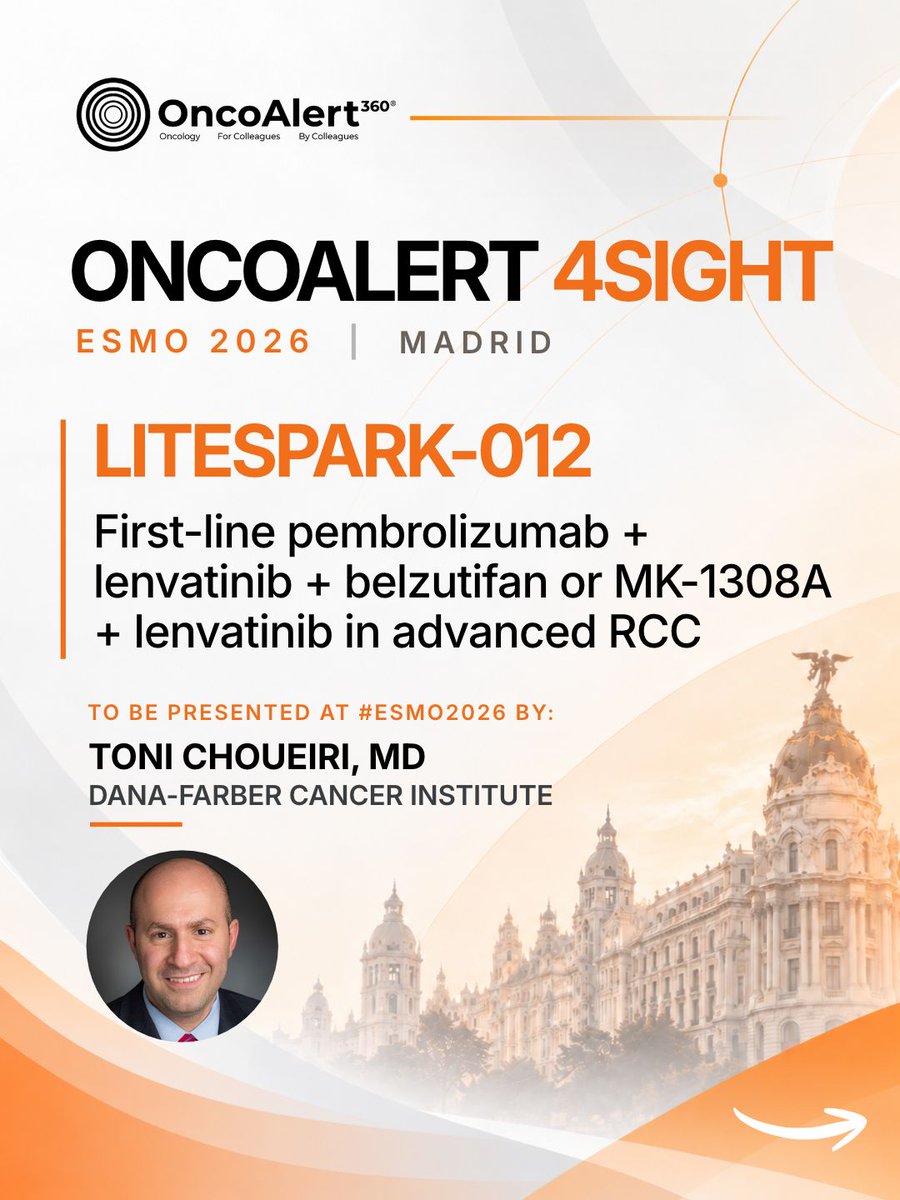
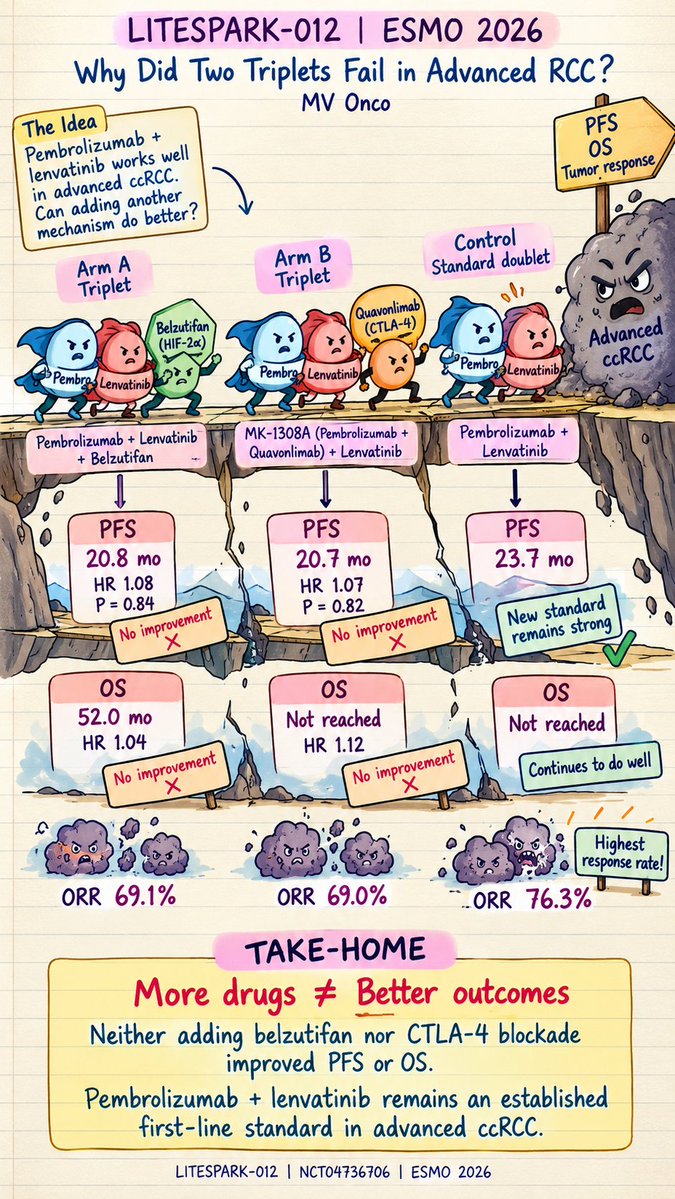
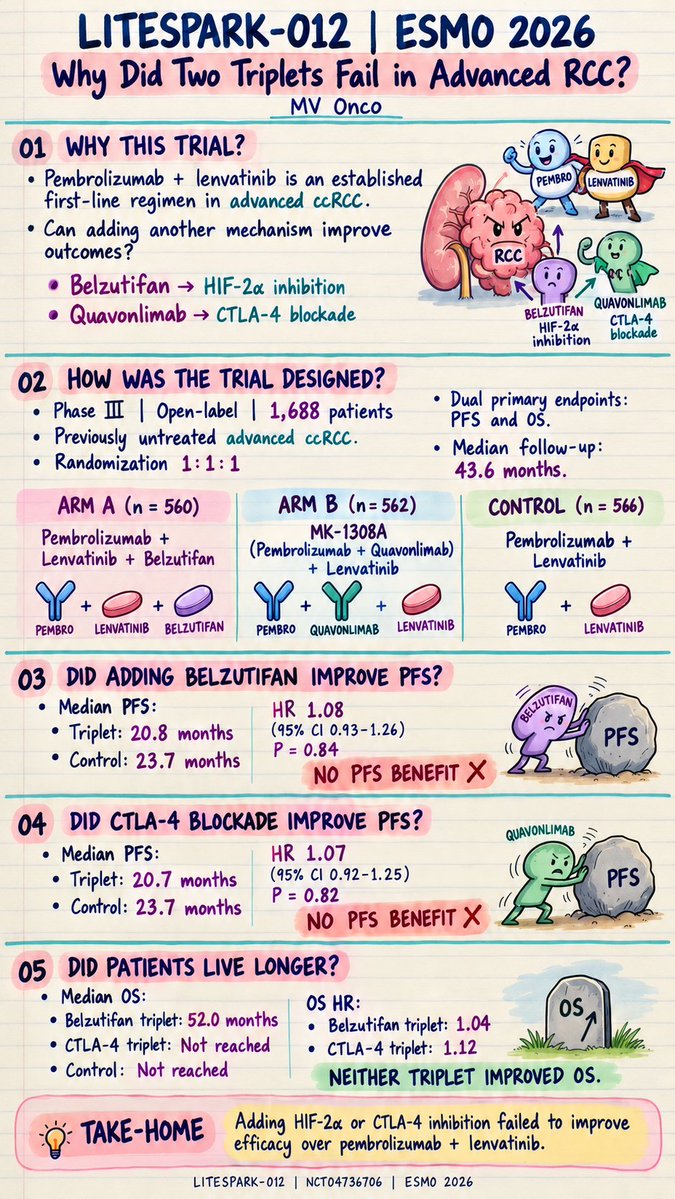
LITESPARK-012: adding belzutifan or quavonlimab to pembrolizumab plus lenvatinib fails to improve first-line advanced RCC
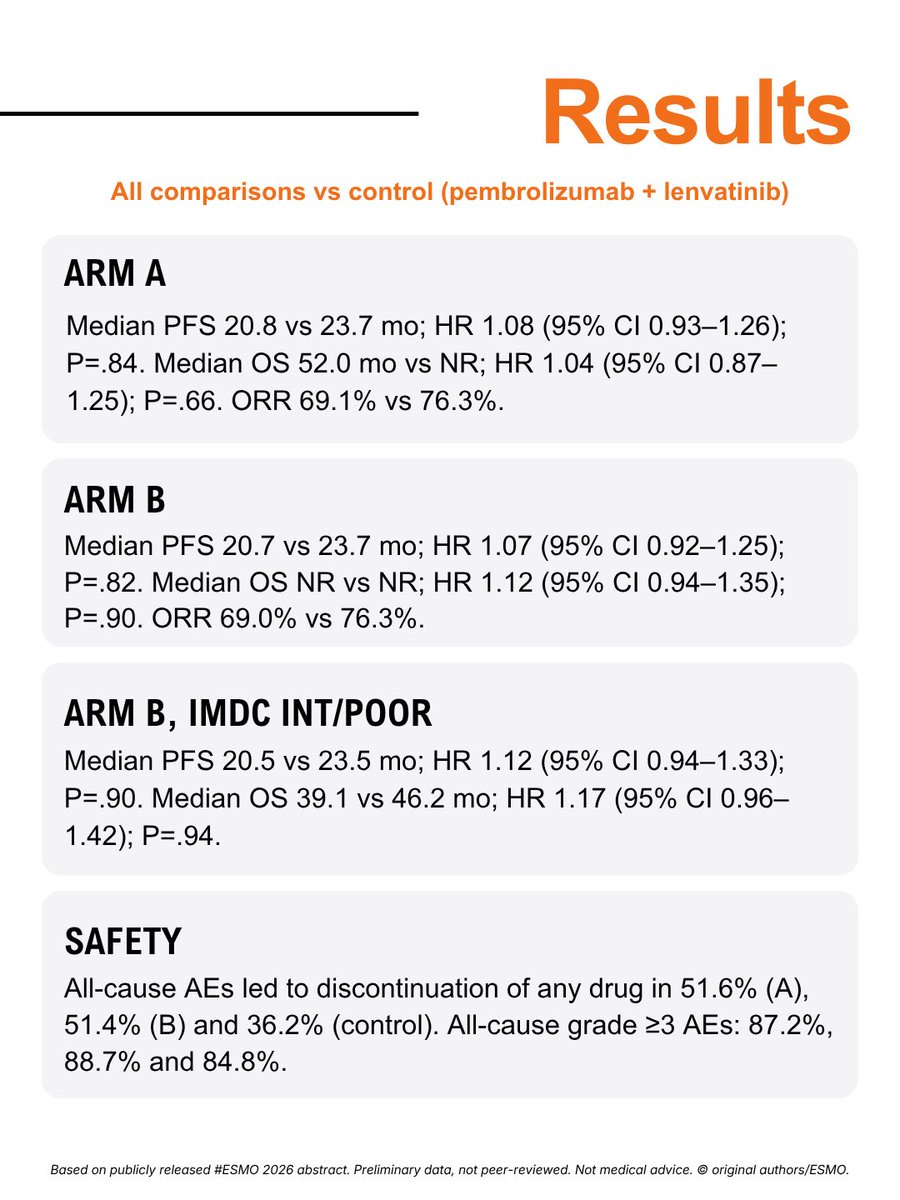
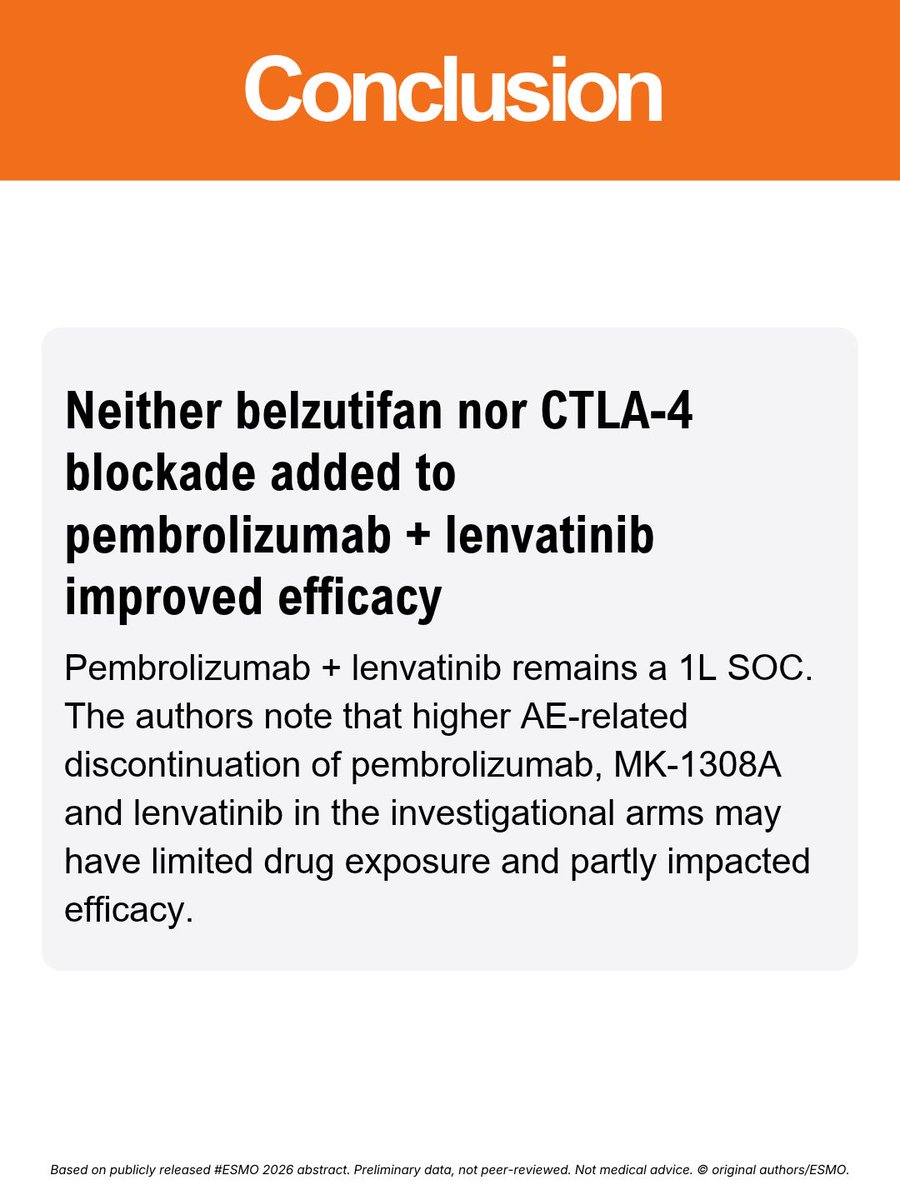
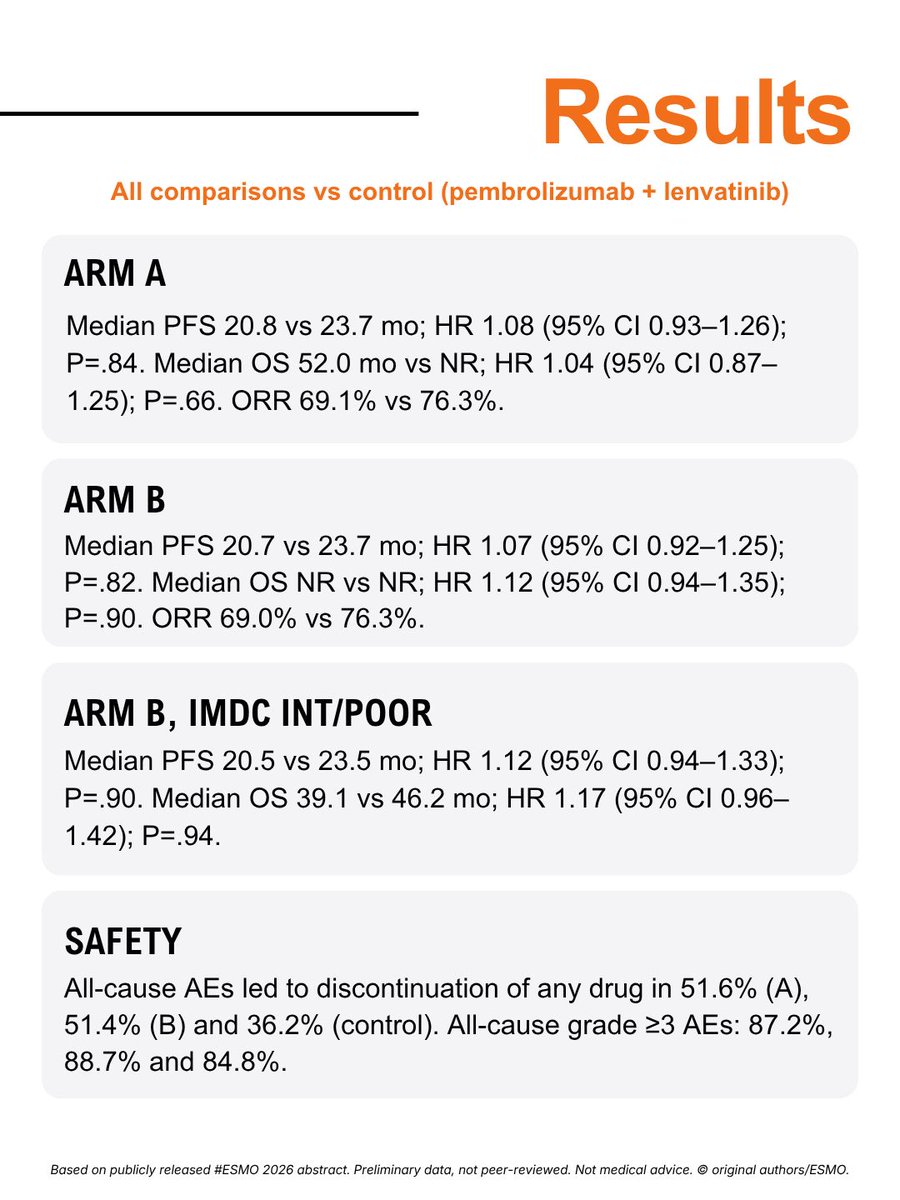
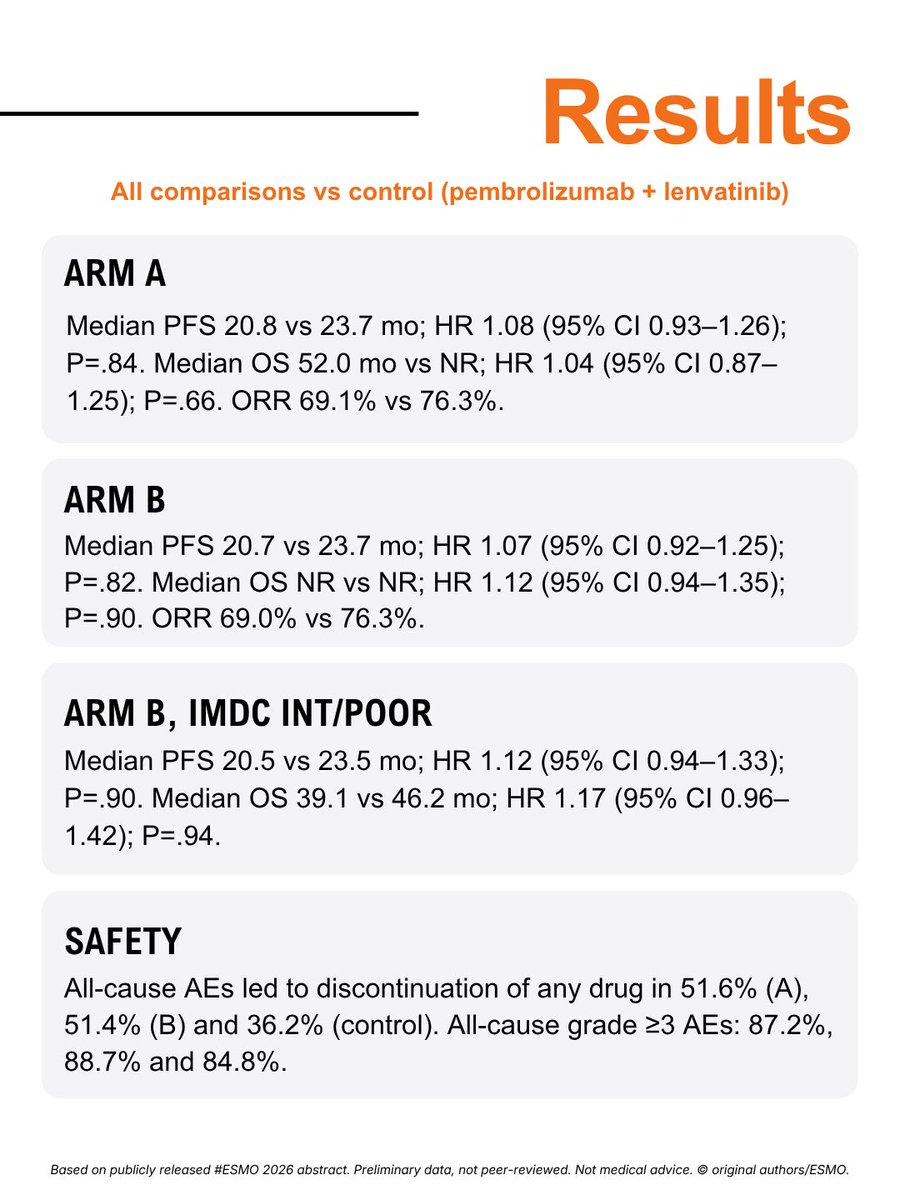
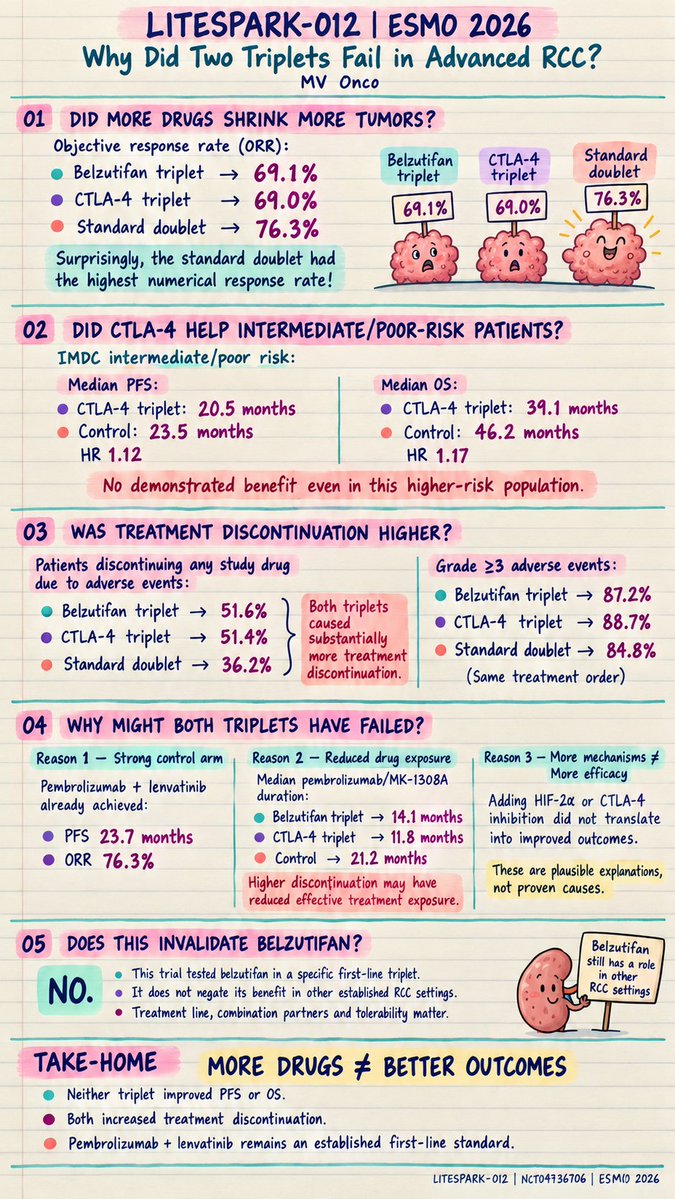
Neither belzutifan nor CTLA-4 blockade added to pembrolizumab plus lenvatinib improved PFS or OS in untreated advanced ccRCC, and response rates were numerically lower than in the control arm. Discontinuation due to adverse events was markedly higher in the triplet arms. Pembrolizumab plus lenvatinib remains a first-line standard. Clinicians debate whether toxicity-driven discontinuation or a strong control arm explains the result.
Key numbers: Arm A PFS HR 1.08, OS HR 1.04 · Arm B PFS HR 1.07, OS HR 1.12 · ORR 69.1% | 69.0% vs 76.3% · Discontinuation due to AEs 51.6% (A), 51.4% (B), 36.2% (control)
Discussed by: @tiansterzhangmd.bsky.social, @ChandrakanthMv, @nataliagandur, @Dr_Oncologista, @weoncologists
Sources cited: Annals of Oncology
Largest series of metastasis-directed radiotherapy in SMARCB1-deficient renal medullary carcinoma reports high radiographic response
The largest series to date of metastasis-directed radiotherapy in SMARCB1-deficient renal medullary carcinoma suggests this cancer is far more radiosensitive than clear cell kidney cancer. The design is retrospective and systemic benefit is uncertain, so the authors support prospective evaluation within multimodal strategies. The question is whether the response rate justifies routine use.
Key numbers: Radiographic response 82% · Complete responses 50% · Local control 91.3% at 12 months
Discussed by: @neerajaiims, @weoncologists
Sources cited: ScienceDirect · ScienceDirect
🔥 Top Ranked Tweets
OncoAlert @OncoAlert
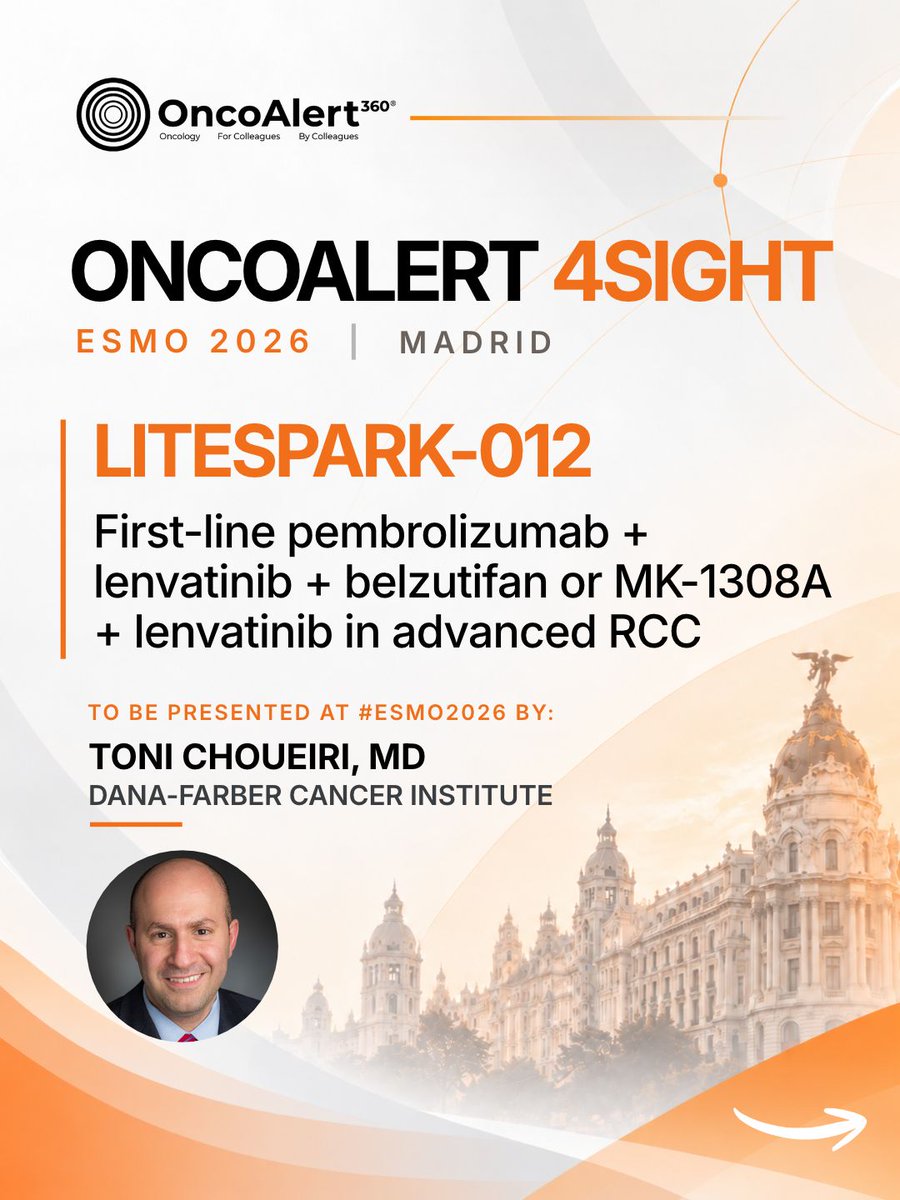
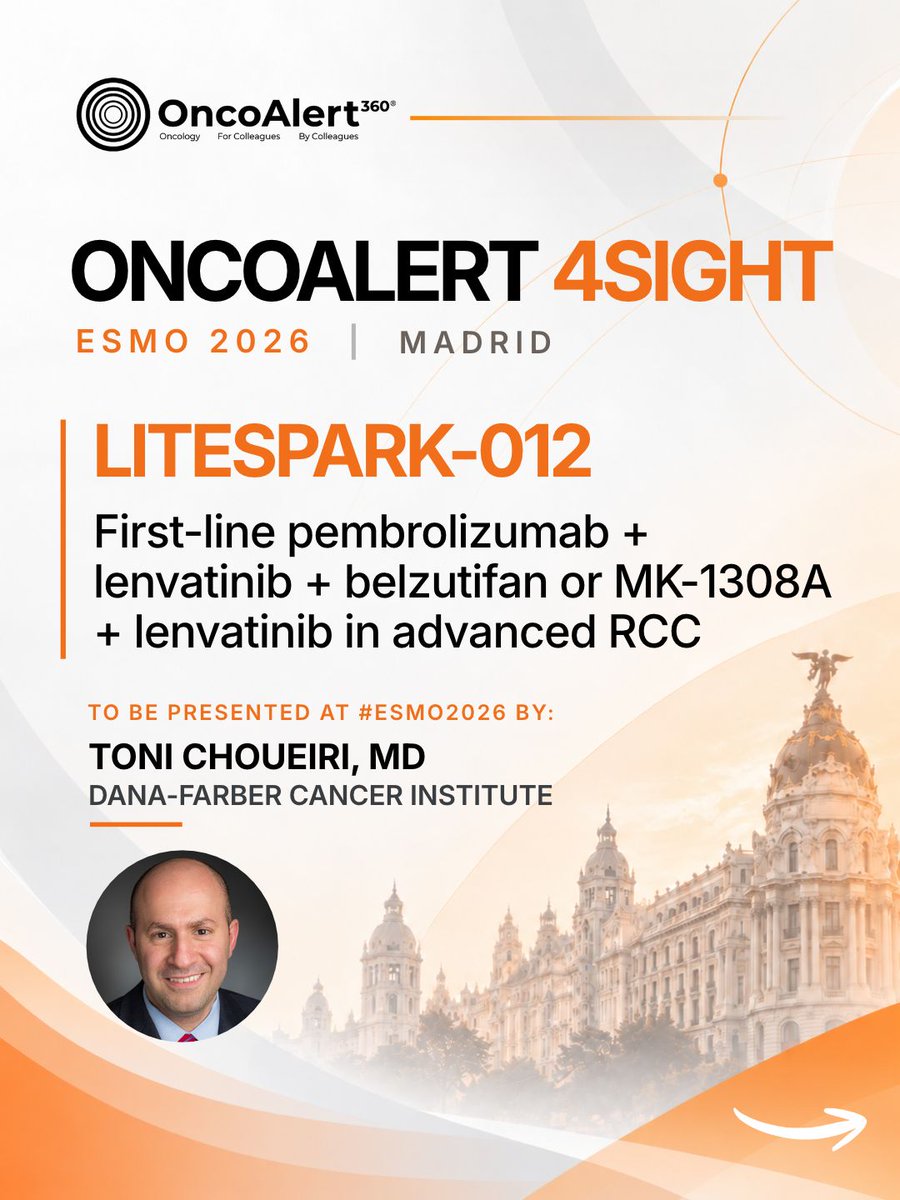
OncoAlert 4Sight Abstracts to be Presented at #ESMO26
First-Line Pembrolizumab + Lenvatinib + Belzutifan or MK-1308A + Lenvatinib in Advanced RCC: The Randomized Open-Label Phase 3 LITESPARK-012 Study
@DrChoueiri
@tompowles1
@MVossMD
@ERPlimackMD
@HowardGurney
@brian_rini
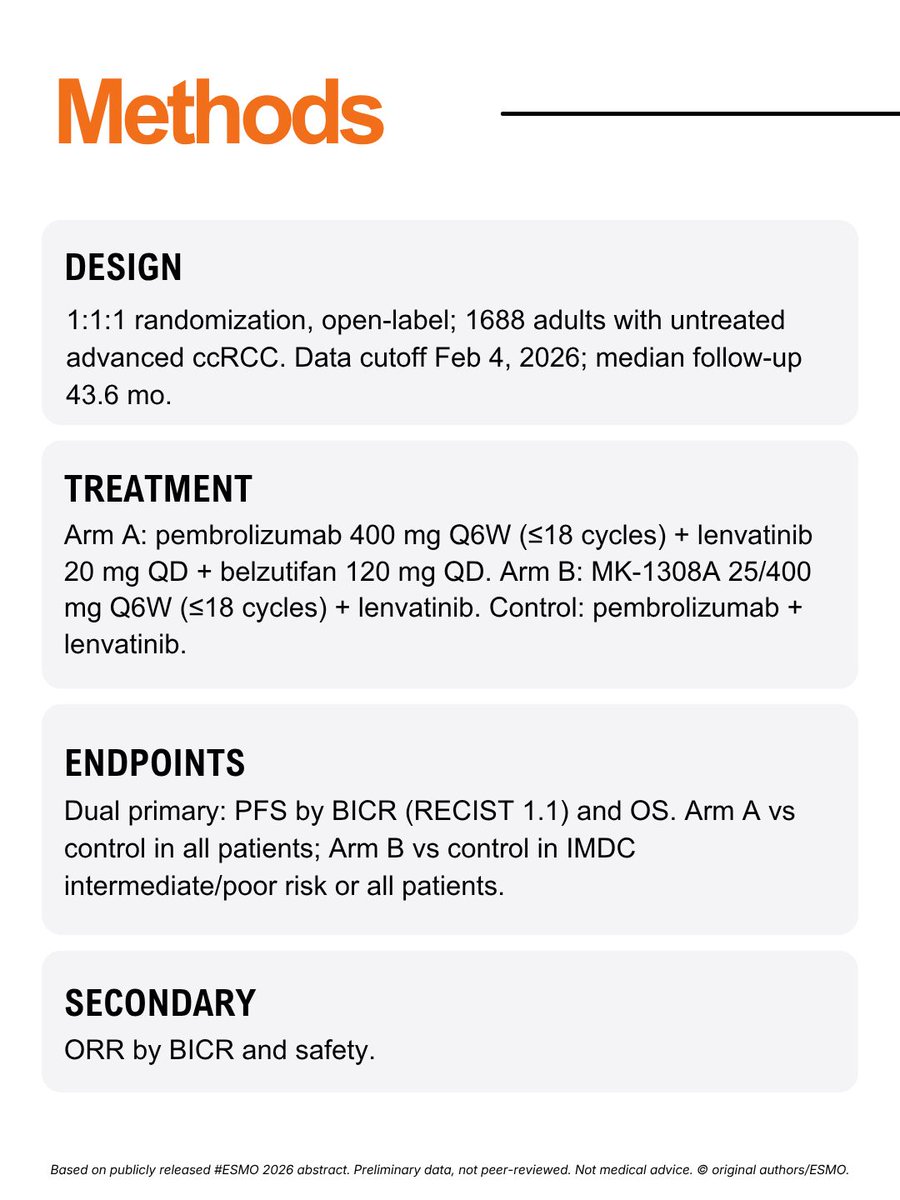
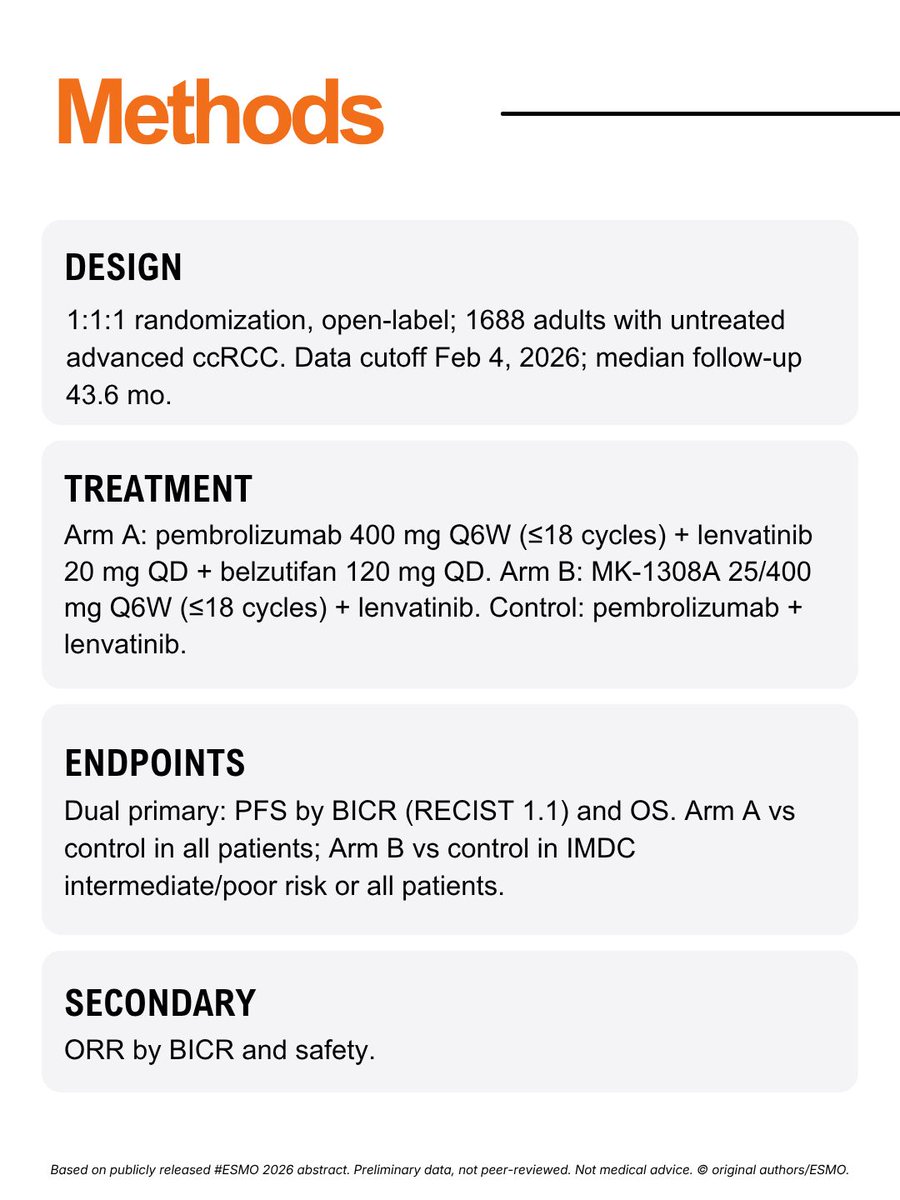
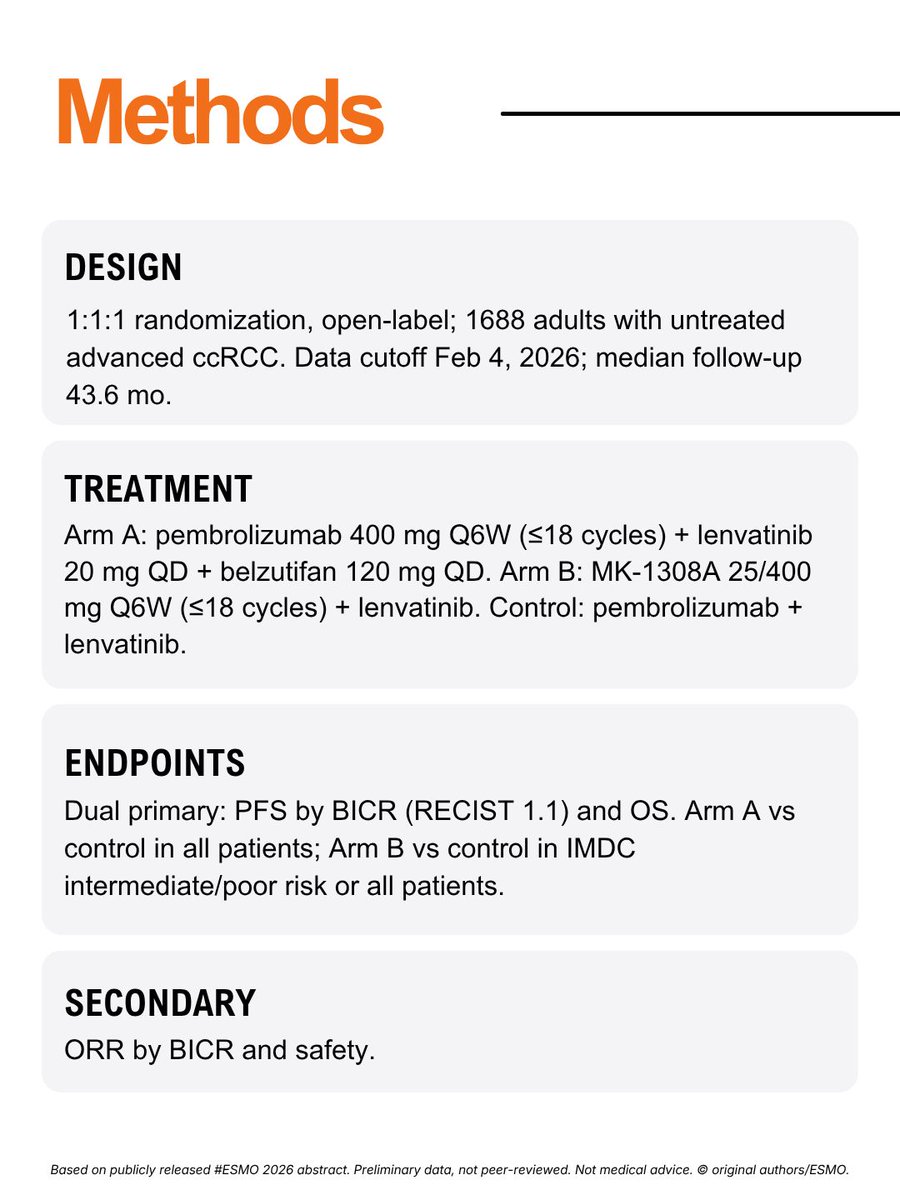
🔬 Phase 3 (n=1688), untreated advanced ccRCC: pembrolizumab + lenvatinib + belzutifan (Arm A) or MK-1308A + lenvatinib (Arm B) vs pembrolizumab + lenvatinib. Dual primary: PFS by BICR and OS.
➡️ Arm A: PFS HR 1.08 (0.93–1.26); OS HR 1.04 (0.87–1.25)
➡️ Arm B: PFS HR 1.07 (0.92–1.25); OS HR 1.12 (0.94–1.35)
➡️ Discontinuation due to AEs: 51.6% (A), 51.4% (B), 36.2% (control)
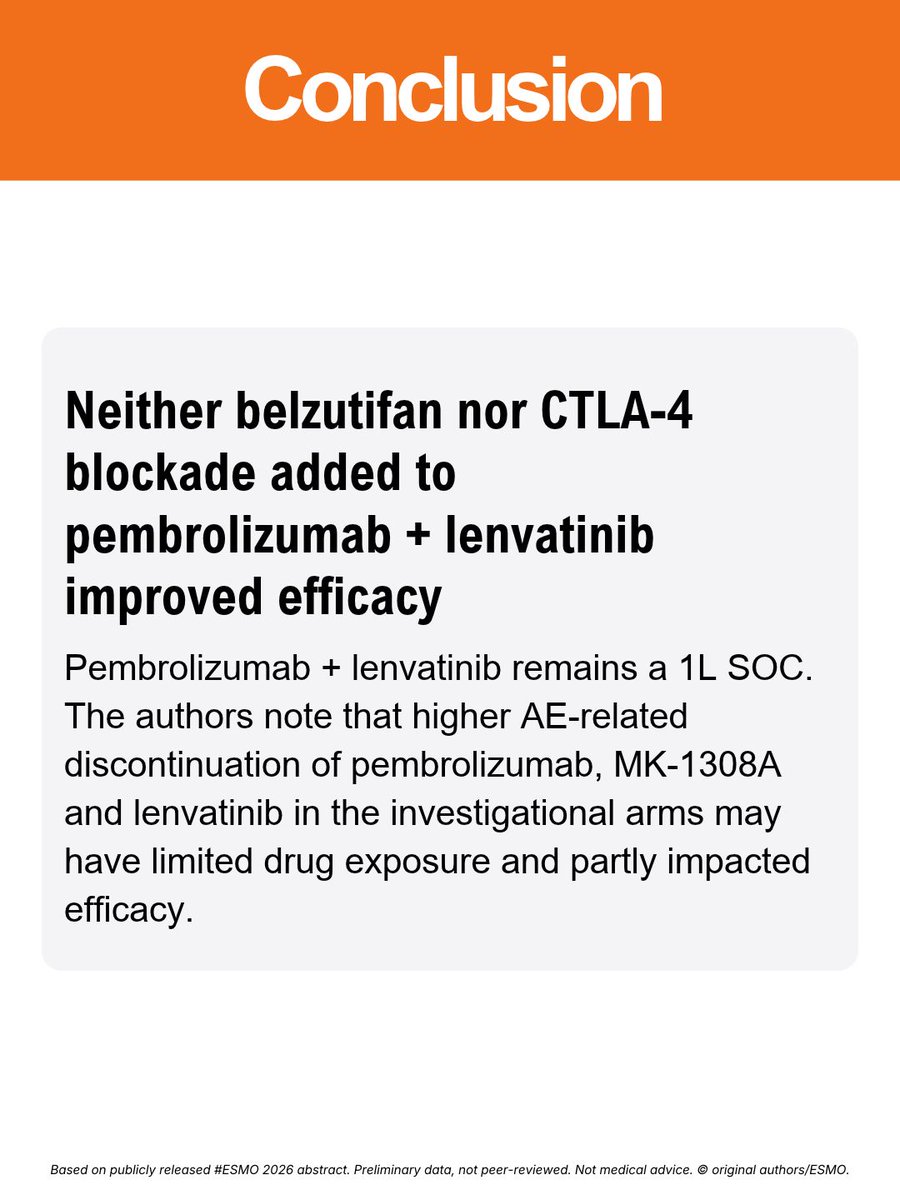
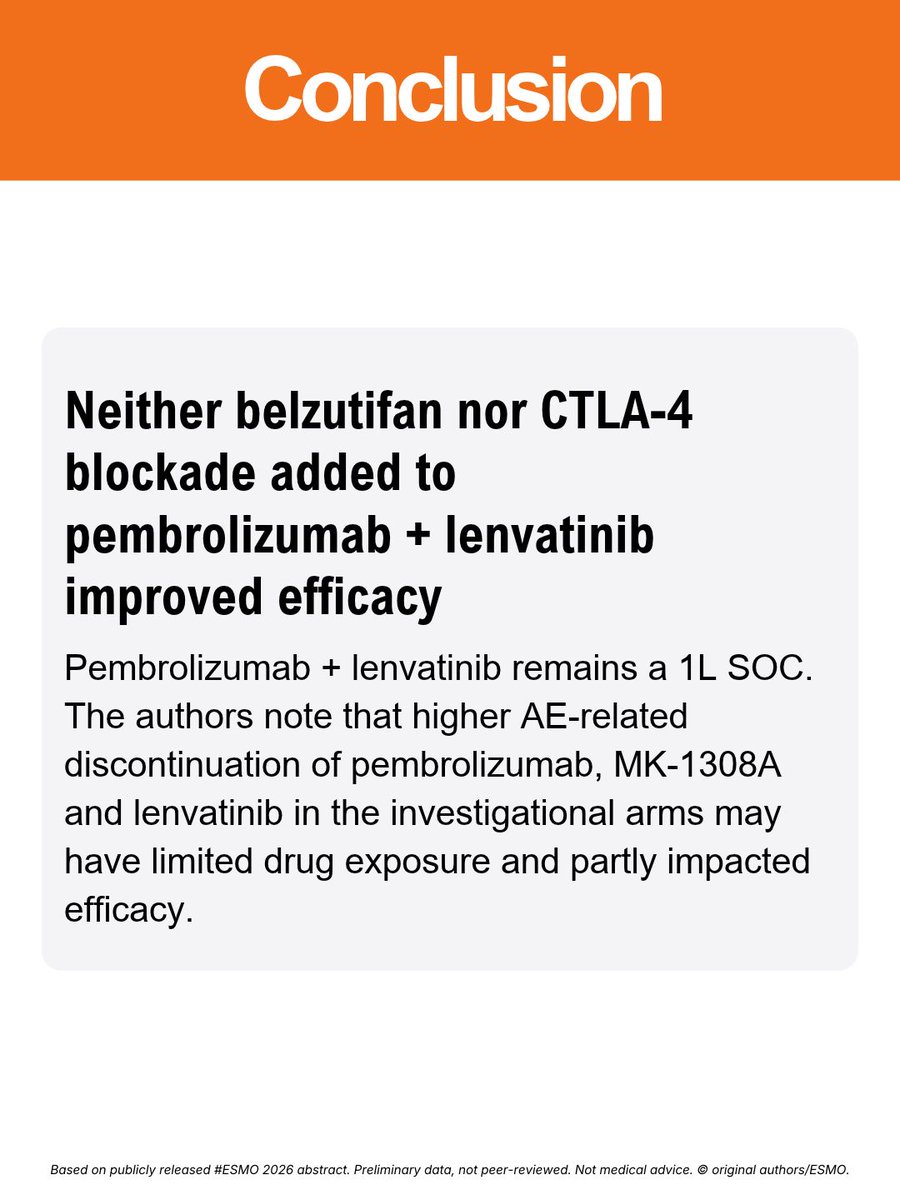
✅ Neither belzutifan nor CTLA-4 blockade added to pembrolizumab + lenvatinib improved efficacy; pembrolizumab + lenvatinib remains a 1L SOC. #KidneyCancer
🎙️ Toni Choueiri
👥 Thomas Powles · Martin Voss · Elizabeth Plimack · Howard Gurney · Yue Song · Rodolfo Perini · Karla Rodriguez-Lopez · Brian Rini
(4Sight Made solely from Abstracts publicly available at the ESMO website)
Pinging Our Faculty
@tompowles1, @apolo_andrea, @neerajaiims, @montypal, @Silke_Gillessen, @AOmlin, @PGrivasMDPhD, @TiansterZhang, @amerseburger, @DrDanielHeng, @HHammersMD, @scocmem, @AndreaNecchi, @AmandaNizamMD, @drenriquegrande, @nataliagandur, @AlbigesL, @cdanicas, @declangmurphy, @seanmmcbride, @shilpaonc, @DrRanaMcKay, @scserendipity1, @DrYukselUrun, @ravikanesvaran, @BraunMDPhD, @EfstathiouEleni, @mzugman, @crisbergerot, @niklas_kluemper
🔖 1 ❤️ 29 🔁 14 👁 3,160
Neeraj Agarwal, MD, FASCO @neerajaiims
RT @OncoAlert: OncoAlert 4Sight Abstracts to be Presented at #ESMO26
First-Line Pembrolizumab + Lenvatinib + Belzutifan or MK-1308A + Lenvatinib in Advanced RCC: The Randomized Open-Label Phase 3 LITESPARK-012 Study
@DrChoueiri
@tompowles1
@MVossMD
@ERPlimackMD
@HowardGurney
@brian_rini
🔬 Phase 3 (n=1688), untreated advanced ccRCC: pembrolizumab + lenvatinib + belzutifan (Arm A) or MK-1308A + lenvatinib (Arm B) vs pembrolizumab + lenvatinib. Dual primary: PFS by BICR and OS.
➡️ Arm A: PFS HR 1.08 (0.93–1.26); OS HR 1.04 (0.87–1.25)
➡️ Arm B: PFS HR 1.07 (0.92–1.25); OS HR 1.12 (0.94–1.35)
➡️ Discontinuation due to AEs: 51.6% (A), 51.4% (B), 36.2% (control)
✅ Neither belzutifan nor CTLA-4 blockade added to pembrolizumab + lenvatinib improved efficacy; pembrolizumab + lenvatinib remains a 1L SOC. #KidneyCancer
🎙️ Toni Choueiri
👥 Thomas Powles · Martin Voss · Elizabeth Plimack · Howard Gurney · Yue Song · Rodolfo Perini · Karla Rodriguez-Lopez · Brian Rini
(4Sight Made solely from Abstracts publicly available at the ESMO website)
Pinging Our Faculty
@tompowles1, @apolo_andrea, @neerajaiims, @montypal, @Silke_Gillessen, @AOmlin, @PGrivasMDPhD, @TiansterZhang, @amerseburger, @DrDanielHeng, @HHammersMD, @scocmem, @AndreaNecchi, @AmandaNizamMD, @drenriquegrande, @nataliagandur, @AlbigesL, @cdanicas, @declangmurphy, @seanmmcbride, @shilpaonc, @DrRanaMcKay, @scserendipity1, @DrYukselUrun, @ravikanesvaran, @BraunMDPhD, @EfstathiouEleni, @mzugman, @crisbergerot, @niklas_kluemper
🔖 1 ❤️ 29 🔁 14 👁 3,160
Toni Choueiri, MD @DrChoueiri
RT @OncoAlert: OncoAlert 4Sight Abstracts to be Presented at #ESMO26
First-Line Pembrolizumab + Lenvatinib + Belzutifan or MK-1308A + Lenvatinib in Advanced RCC: The Randomized Open-Label Phase 3 LITESPARK-012 Study
@DrChoueiri
@tompowles1
@MVossMD
@ERPlimackMD
@HowardGurney
@brian_rini
🔬 Phase 3 (n=1688), untreated advanced ccRCC: pembrolizumab + lenvatinib + belzutifan (Arm A) or MK-1308A + lenvatinib (Arm B) vs pembrolizumab + lenvatinib. Dual primary: PFS by BICR and OS.
➡️ Arm A: PFS HR 1.08 (0.93–1.26); OS HR 1.04 (0.87–1.25)
➡️ Arm B: PFS HR 1.07 (0.92–1.25); OS HR 1.12 (0.94–1.35)
➡️ Discontinuation due to AEs: 51.6% (A), 51.4% (B), 36.2% (control)
✅ Neither belzutifan nor CTLA-4 blockade added to pembrolizumab + lenvatinib improved efficacy; pembrolizumab + lenvatinib remains a 1L SOC. #KidneyCancer
🎙️ Toni Choueiri
👥 Thomas Powles · Martin Voss · Elizabeth Plimack · Howard Gurney · Yue Song · Rodolfo Perini · Karla Rodriguez-Lopez · Brian Rini
(4Sight Made solely from Abstracts publicly available at the ESMO website)
Pinging Our Faculty
@tompowles1, @apolo_andrea, @neerajaiims, @montypal, @Silke_Gillessen, @AOmlin, @PGrivasMDPhD, @TiansterZhang, @amerseburger, @DrDanielHeng, @HHammersMD, @scocmem, @AndreaNecchi, @AmandaNizamMD, @drenriquegrande, @nataliagandur, @AlbigesL, @cdanicas, @declangmurphy, @seanmmcbride, @shilpaonc, @DrRanaMcKay, @scserendipity1, @DrYukselUrun, @ravikanesvaran, @BraunMDPhD, @EfstathiouEleni, @mzugman, @crisbergerot, @niklas_kluemper
🔖 1 ❤️ 29 🔁 14 👁 3,161
Sara Coca Membribes @scocmem
RT @niklas_kluemper: 🚨 New ESMO 2026 data challenge our understanding of perioperative therapy in MIBC!
KEYNOTE-866 (phase III, n=707), ENERGIZE (phase III, n=653): Adding perioperative pembro or nivolumab to neoadjuvant gemcitabine/cisplatin did not significantly improve EFS and OS, despite numerically higher pCR!
Yet NIAGARA demonstrated significant EFS (HR 0.68) and OS (HR 0.75) benefits with perioperative durvalumab.
Why does one chemoimmunotherapy strategy succeed while others fails? Different patient populations, trial designs, or underlying biology? We urgently need predictive biomarkers—not just another checkpoint inhibitor.
Meanwhile, new KEYNOTE-905 data in cisplatin-ineligible MIBC (ad hoc, n=255) show:
• Pembrolizumab alone: pCR 25.3%; EFS HR 0.71 vs surgery alone.
• EV+pembrolizumab: pCR 58.8%; EFS HR 0.40 vs surgery alone.
The key question is no longer simply whether to add immunotherapy—but which patients need chemotherapy, ADC-based therapy, or both.
Histology, NECTIN4/HER2 biology, and longitudinal ctDNA deserve prospective evaluation as treatment-selection tools.
Exciting times for MIBC—but precision must catch up with therapeutic progress.
@OncoAlert Faculty @DrChoueiri , @tompowles1 , @apolo_andrea , @neerajaiims , @montypal , @Silke_Gillessen , @AOmlin , @brian_rini , @PGrivasMDPhD , @TiansterZhang , @amerseburger , @DrDanielHeng , @HHammersMD , @scocmem , @AndreaNecchi , @AmandaNizamMD , @drenriquegrande , @nataliagandur , @AlbigesL , @cdanicas , @declangmurphy , @seanmmcbride , @shilpaonc , @DrRanaMcKay , @scserendipity1 , @DrYukselUrun , @ravikanesvaran , @BraunMDPhD , @EfstathiouEleni , @mzugman , @crisbergerot
🔖 6 ❤️ 27 🔁 11 👁 908
Sara Coca Membribes @scocmem
RT @weoncologists: More pCR didn’t translate into EFS or OS. KEYNOTE-866: an important negative phase 3 in cisplatin-eligible MIBC. #ESMO26 #BladderCancer
🔖 2 ❤️ 13 🔁 6 👁 809
OncoAlert @OncoAlert
RT @weoncologists: More pCR didn’t translate into EFS or OS. KEYNOTE-866: an important negative phase 3 in cisplatin-eligible MIBC. #ESMO26 #BladderCancer
🔖 2 ❤️ 13 🔁 6 👁 809
OncoAlert @OncoAlert
OncoAlert 4Sight Abstracts to be Presented at #ESMO26
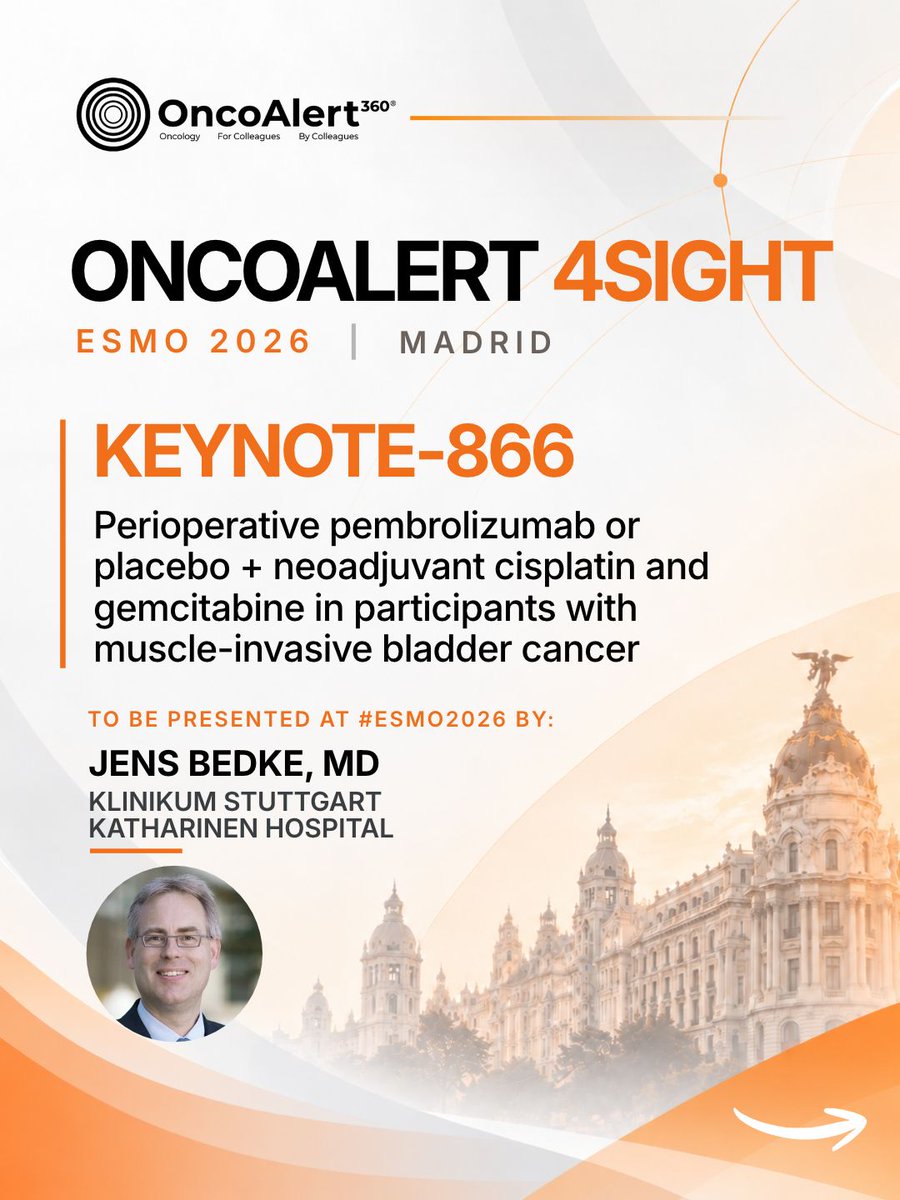
Perioperative Pembrolizumab or Placebo + Neoadjuvant Cisplatin and Gemcitabine in Muscle-Invasive Bladder Cancer: The Double-Blind, Phase 3 KEYNOTE-866 Study
@garysteinbergmd
@DrChrisHoimes
🔬 Phase 3, double-blind (n=907): perioperative pembrolizumab or placebo + neoadjuvant gemcitabine-cisplatin and RC + PLND in cisplatin-eligible MIBC. Primary endpoint: EFS.
➡️ Median EFS 74.1 mo vs NR; HR 0.88 (0.71–1.10); P=.1366
➡️ pCR 44.4% vs 35.8%; OS HR 1.00 (0.79–1.27); neither formally tested
➡️ Grade 3–5 TEAEs 80.2% vs 75.1%
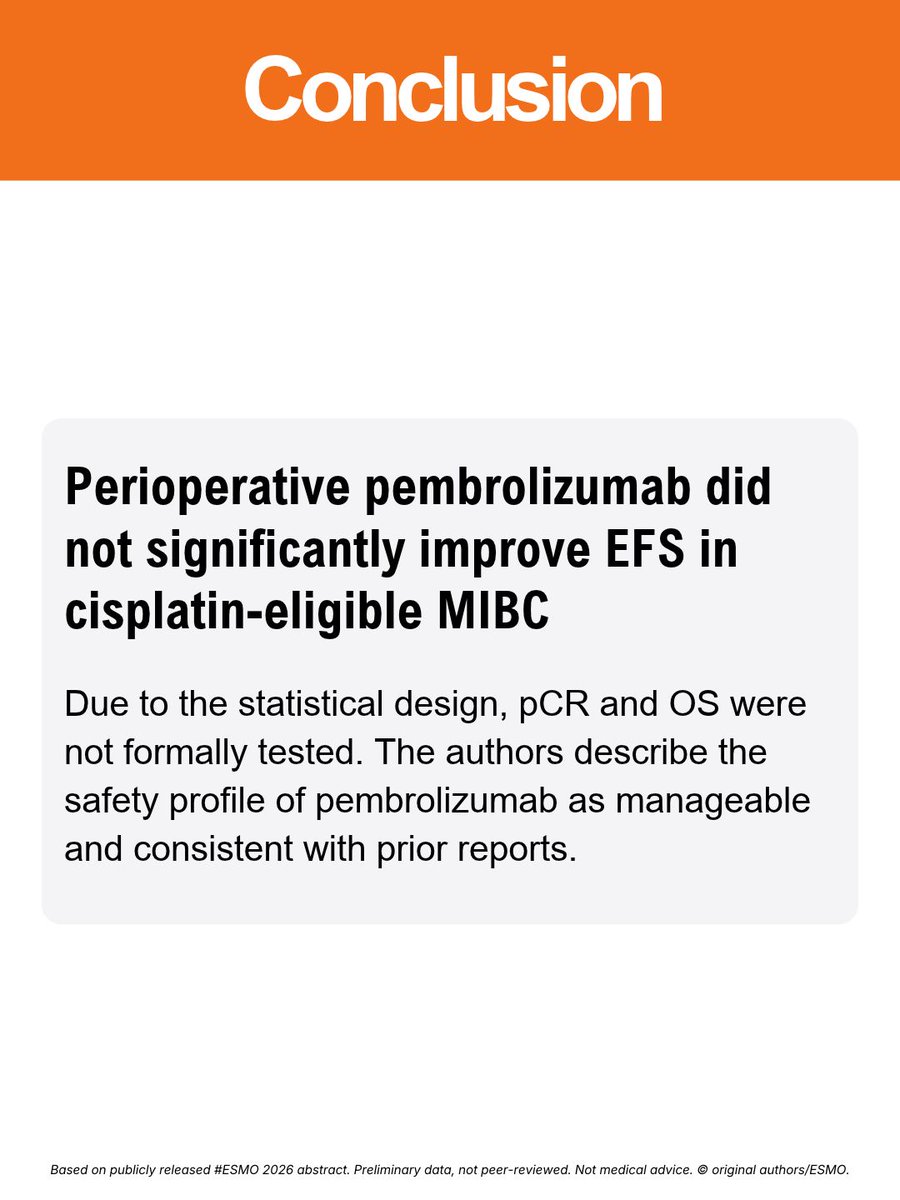
✅ Perioperative pembrolizumab did not confer a statistically significant EFS benefit; safety profile manageable and consistent with prior reports. #BladderCancer
🎙️ Jens Bedke
👥 Arlene Siefker-Radtke · Gary Steinberg · Hiroyuki Nishiyama · Xiao Fang · Ritesh Kataria · Blanca Homet Moreno · Christopher Hoimes
(4Sight Made from Abstracts publicly available at the ESMO website)
Pinging Our Faculty
@DrChoueiri, @tompowles1, @apolo_andrea, @neerajaiims, @montypal, @Silke_Gillessen, @AOmlin, @brian_rini, @PGrivasMDPhD, @TiansterZhang, @amerseburger, @DrDanielHeng, @HHammersMD, @scocmem, @AndreaNecchi, @AmandaNizamMD, @drenriquegrande, @nataliagandur, @AlbigesL, @cdanicas, @declangmurphy, @seanmmcbride, @shilpaonc, @DrRanaMcKay, @scserendipity1, @DrYukselUrun, @ravikanesvaran, @BraunMDPhD, @EfstathiouEleni, @mzugman, @crisbergerot, @niklas_kluemper
🔖 1 ❤️ 14 🔁 7 👁 1,640
Gil Morgan, MD @weoncologists
More pCR didn’t translate into EFS or OS. KEYNOTE-866: an important negative phase 3 in cisplatin-eligible MIBC. #ESMO26 #BladderCancer
[Quoting @OncoAlert: OncoAlert 4Sight Abstracts to be Presented at #ESMO26
Perioperative Pembrolizumab or Placebo + Neoadjuvant Cisplatin and Gemcitabine in Muscle-Invasive Bladder Cancer: The Double-Blind, Phase 3 KEYNOTE-866 Study
@garysteinbergmd
@DrChrisHoimes
🔬 Phase 3, double-blind (n=907): perioperative pembrolizumab or placebo + neoadjuvant gemcitabine-cisplatin and RC + PLND in cisplatin-eligible MIBC. Primary endpoint: EFS.
➡️ Median EFS 74.1 mo vs NR; HR 0.88 (0.71–1.10); P=.1366
➡️ pCR 44.4% vs 35.8%; OS HR 1.00 (0.79–1.27); neither formally tested
➡️ Grade 3–5 TEAEs 80.2% vs 75.1%
✅ Perioperative pembrolizumab did not confer a statistically significant EFS benefit; safety profile manageable and consistent with prior reports. #BladderCancer
🎙️ Jens Bedke
👥 Arlene Siefker-Radtke · Gary Steinberg · Hiroyuki Nishiyama · Xiao Fang · Ritesh Kataria · Blanca Homet Moreno · Christopher Hoimes
(4Sight Made from Abstracts publicly available at the ESMO website)
Pinging Our Faculty
@DrChoueiri, @tompowles1, @apolo_andrea, @neerajaiims, @montypal, @Silke_Gillessen, @AOmlin, @brian_rini, @PGrivasMDPhD, @TiansterZhang, @amerseburger, @DrDanielHeng, @HHammersMD, @scocmem, @AndreaNecchi, @AmandaNizamMD, @drenriquegrande, @nataliagandur, @AlbigesL, @cdanicas, @declangmurphy, @seanmmcbride, @shilpaonc, @DrRanaMcKay, @scserendipity1, @DrYukselUrun, @ravikanesvaran, @BraunMDPhD, @EfstathiouEleni, @mzugman, @crisbergerot, @niklas_kluemper]
🔖 2 ❤️ 13 🔁 6 👁 809
Gil Morgan, MD @weoncologists
Triplets don’t always beat doublets!
LITESPARK-012: no PFS or OS gain with belzutifan or MK-1308A, just more discontinuations. An important negative phase 3 for 1L RCC. #ESMO26 #KidneyCancer
[Quoting @OncoAlert: OncoAlert 4Sight Abstracts to be Presented at #ESMO26
First-Line Pembrolizumab + Lenvatinib + Belzutifan or MK-1308A + Lenvatinib in Advanced RCC: The Randomized Open-Label Phase 3 LITESPARK-012 Study
@DrChoueiri
@tompowles1
@MVossMD
@ERPlimackMD
@HowardGurney
@brian_rini
🔬 Phase 3 (n=1688), untreated advanced ccRCC: pembrolizumab + lenvatinib + belzutifan (Arm A) or MK-1308A + lenvatinib (Arm B) vs pembrolizumab + lenvatinib. Dual primary: PFS by BICR and OS.
➡️ Arm A: PFS HR 1.08 (0.93–1.26); OS HR 1.04 (0.87–1.25)
➡️ Arm B: PFS HR 1.07 (0.92–1.25); OS HR 1.12 (0.94–1.35)
➡️ Discontinuation due to AEs: 51.6% (A), 51.4% (B), 36.2% (control)
✅ Neither belzutifan nor CTLA-4 blockade added to pembrolizumab + lenvatinib improved efficacy; pembrolizumab + lenvatinib remains a 1L SOC. #KidneyCancer
🎙️ Toni Choueiri
👥 Thomas Powles · Martin Voss · Elizabeth Plimack · Howard Gurney · Yue Song · Rodolfo Perini · Karla Rodriguez-Lopez · Brian Rini
(4Sight Made solely from Abstracts publicly available at the ESMO website)
Pinging Our Faculty
@tompowles1, @apolo_andrea, @neerajaiims, @montypal, @Silke_Gillessen, @AOmlin, @PGrivasMDPhD, @TiansterZhang, @amerseburger, @DrDanielHeng, @HHammersMD, @scocmem, @AndreaNecchi, @AmandaNizamMD, @drenriquegrande, @nataliagandur, @AlbigesL, @cdanicas, @declangmurphy, @seanmmcbride, @shilpaonc, @DrRanaMcKay, @scserendipity1, @DrYukselUrun, @ravikanesvaran, @BraunMDPhD, @EfstathiouEleni, @mzugman, @crisbergerot, @niklas_kluemper]
🔖 0 ❤️ 7 🔁 6 👁 737
Mustafa Özdoğan, MD @ozdogan_md
VOLGA tests a key perioperative strategy in cisplatin-ineligible or cisplatin-declining MIBC.
EV + durvalumab improved EFS and OS; adding tremelimumab met EFS, but OS was not significant at interim analysis.
Now the key question: magnitude of benefit vs toxicity.
Presented by @tompowles1 @myESMO
#ESMO26 #BladderCancer
🔖 0 ❤️ 6 🔁 6 👁 243
MV Chandrakanth @ChandrakanthMv
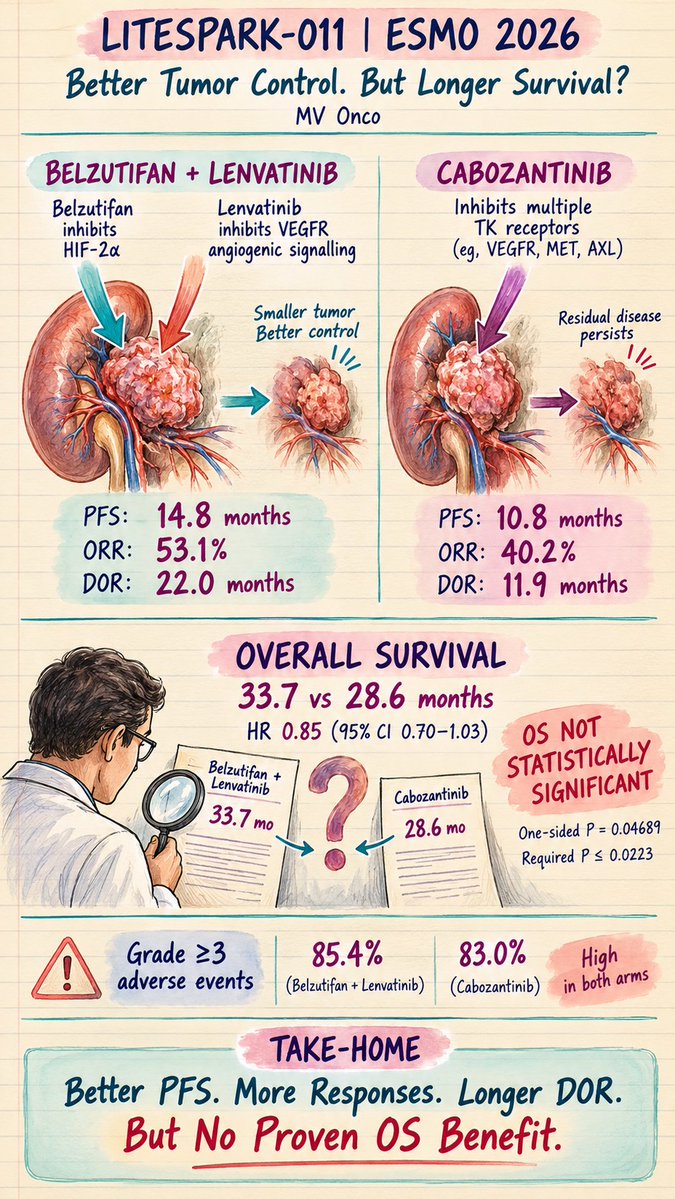
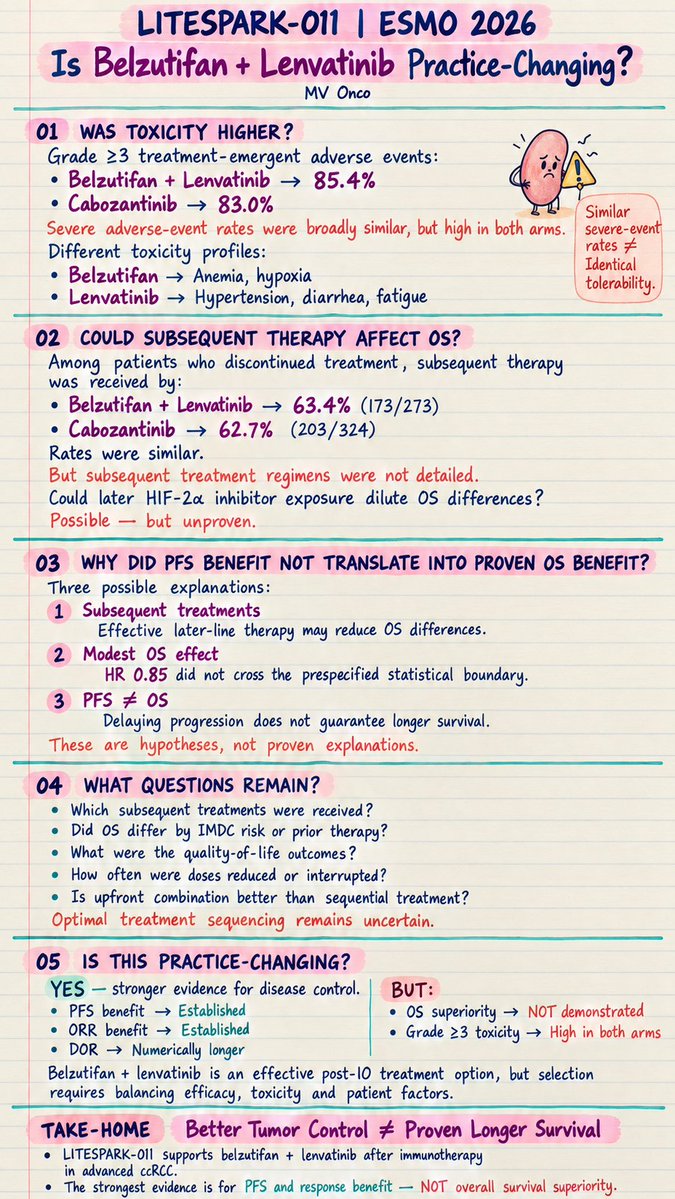
🧬 LITESPARK-011 | ESMO 2026
Better Tumor Control — But No Proven Survival Benefit!
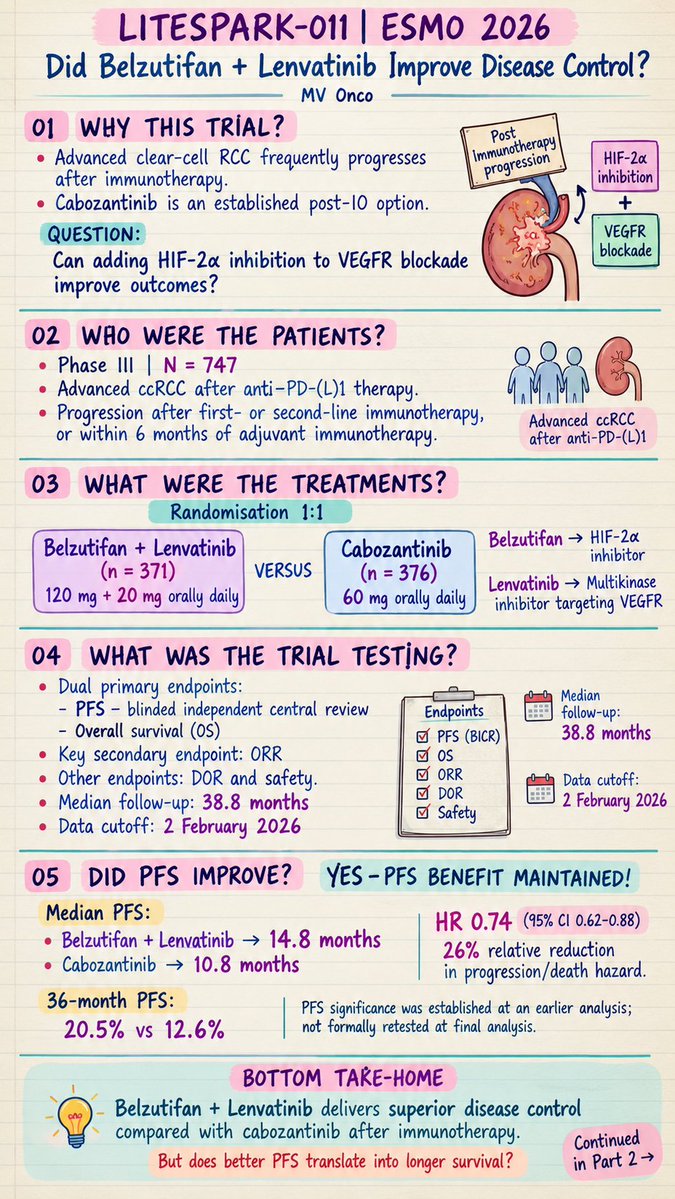
Phase III | 747 patients | Advanced ccRCC after immunotherapy
💊 Belzutifan + Lenvatinib vs Cabozantinib
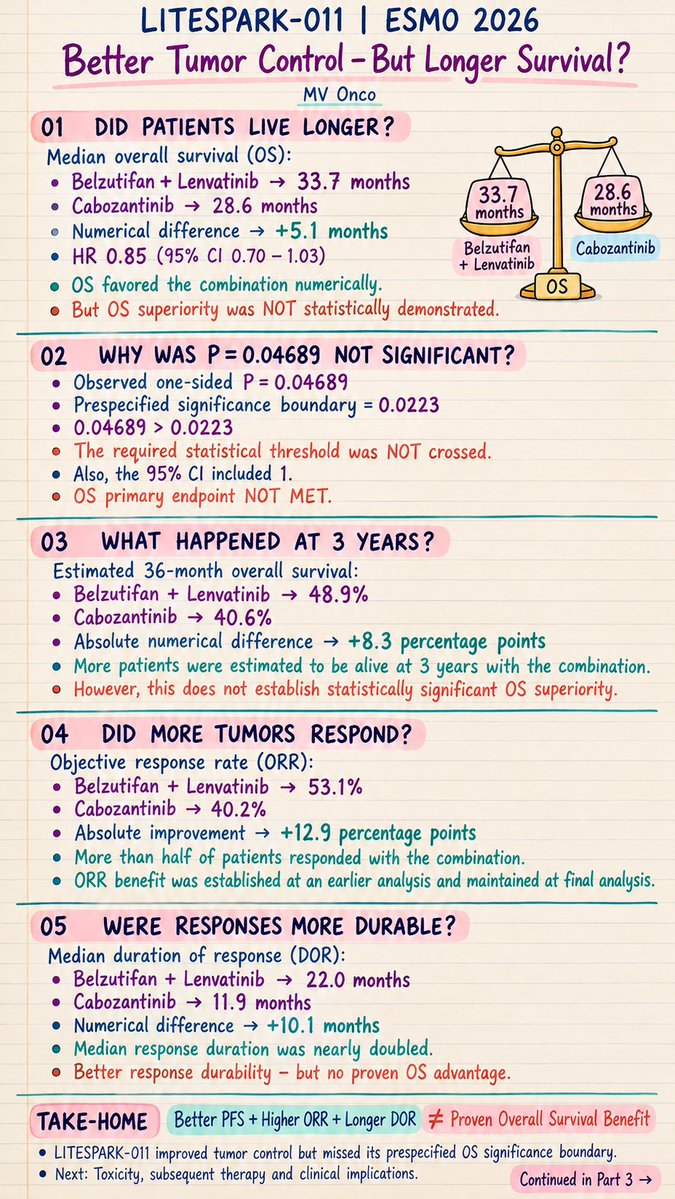
✅ PFS: 14.8 vs 10.8 months (HR 0.74)
✅ ORR: 53.1% vs 40.2%
✅ DOR: 22.0 vs 11.9 months
⚠️ OS: 33.7 vs 28.6 months (HR 0.85)
Despite a numerical 5.1-month advantage, OS did not meet the prespecified significance boundary (P=0.04689; required P≤0.0223).
⚠️ Grade ≥3 adverse events: 85.4% vs 83.0%
🎯 TAKE-HOME: Stronger disease control does not necessarily translate into proven longer survival. LITESPARK-011 supports the combination as a post-IO option, but OS superiority remains unproven.
📚 Reference: Heng DYC, McDermott RS, Park SH, et al. Final analysis of phase III LITESPARK-011. ESMO Congress 2026. NCT04586231.
#ESMO2026 #LITESPARK011 #RenalCellCarcinoma #KidneyCancer #GUOncology #Oncology #MVOnco
🔖 5 ❤️ 5 🔁 4 👁 538
MV Chandrakanth @ChandrakanthMv
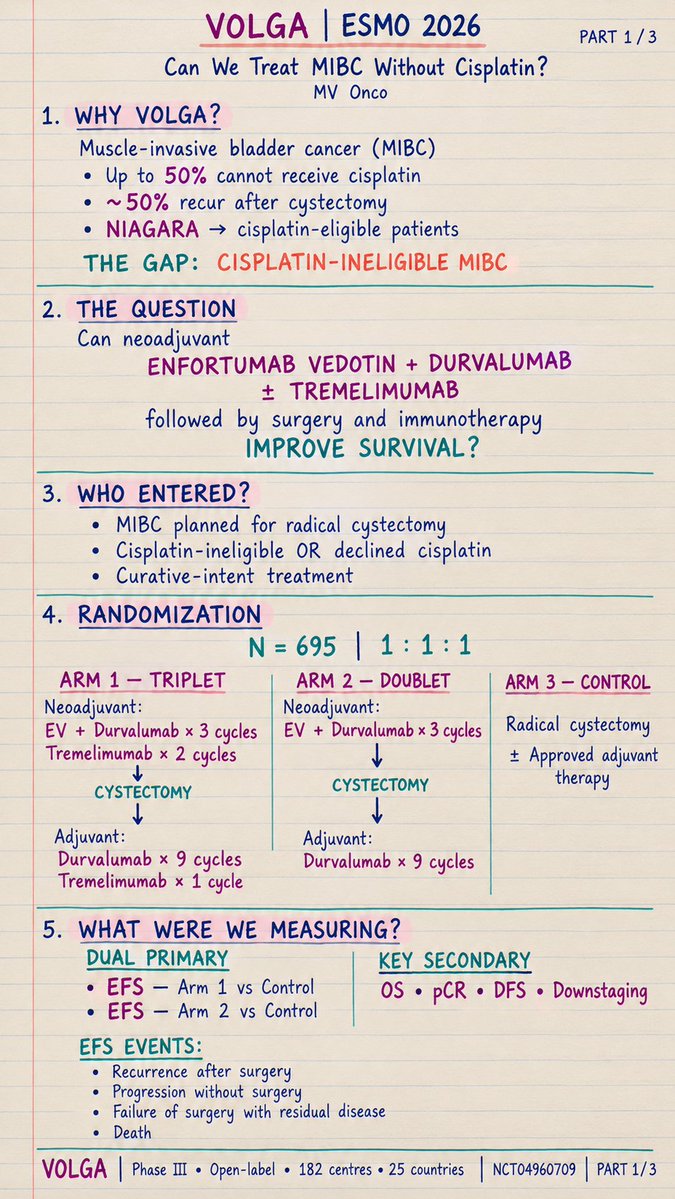
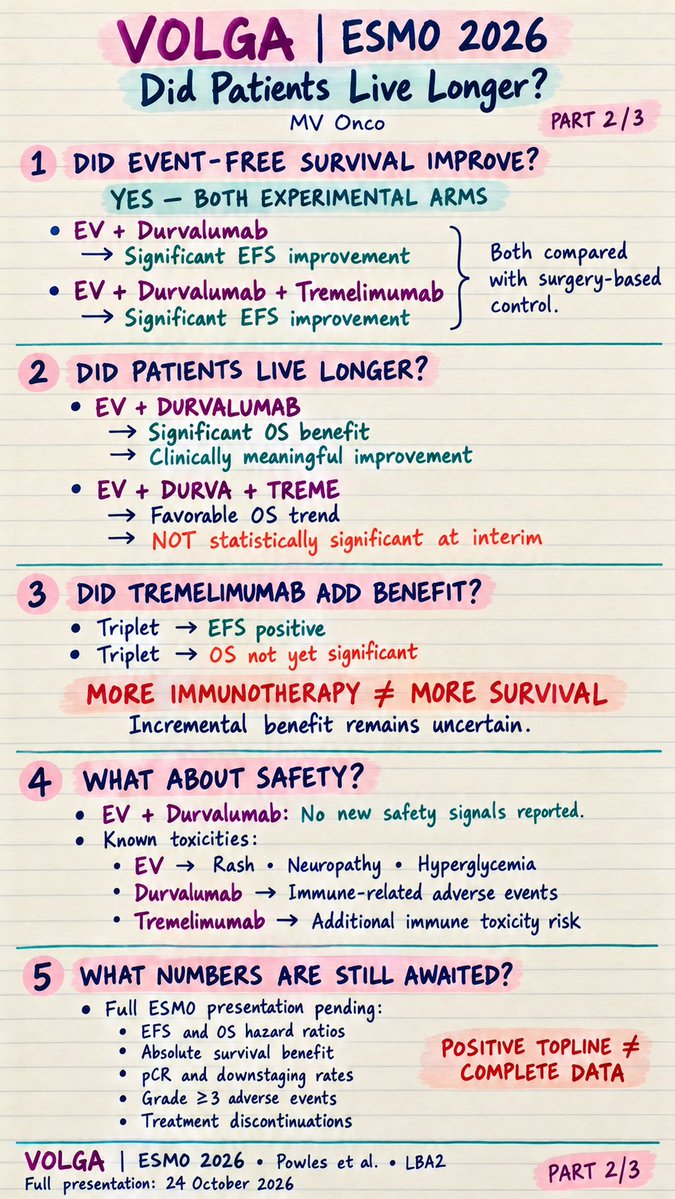
🌊 VOLGA | ESMO 2026
A River by Name. A New Course in Bladder Cancer Treatment?
Named after the Volga River — Europe's longest river, flowing through Russia into the Caspian Sea.
Cisplatin-Free. Adjuvant EV-Free.
The Phase III VOLGA trial (N = 695) evaluated perioperative durvalumab ± tremelimumab with neoadjuvant enfortumab vedotin in cisplatin-ineligible or cisplatin-declining MIBC.
🔹 EV + durvalumab: Significant EFS and OS benefit versus surgery-based control.
🔹 Adding tremelimumab: EFS benefit reported; OS not statistically significant at interim analysis.
🔹 Key distinction: EV is given ONLY before surgery — no adjuvant EV!
🔹 FDA: Priority Review granted; decision expected Q4 2026.
The big question: Can shorter EV exposure deliver durable survival benefit with less treatment burden?
Full results awaited at ESMO on 24 October 2026.
📚 Reference: Powles TB et al. VOLGA Phase III trial. ESMO 2026; LBA2. NCT04960709. AstraZeneca, September 2026.
#ESMO26 #VOLGA #BladderCancer #MIBC #EnfortumabVedotin #Durvalumab #UroOncology #MVOnco
🔖 10 ❤️ 20 🔁 6 👁 979


MV Chandrakanth @ChandrakanthMv
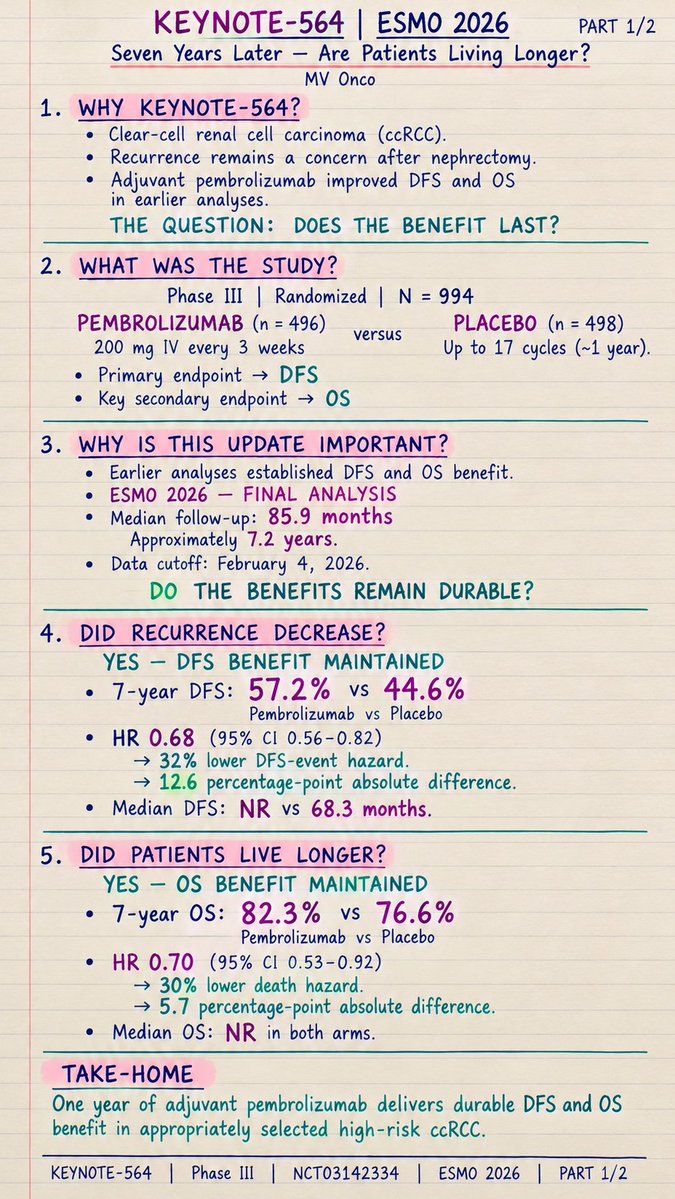
KEYNOTE-564 | ESMO 2026
Seven Years Later… Are Patients Living Longer?
One year of adjuvant pembrolizumab. Seven years of follow-up. A survival benefit that endures.
🔹 7-year DFS: 57.2% vs 44.6%
HR 0.68 — 32% lower DFS-event hazard.
🔹 7-year OS: 82.3% vs 76.6%
HR 0.70 — 30% lower hazard of death.
Median follow-up: 85.9 months.
But does every risk subgroup benefit equally? DFS benefit is consistent, while subgroup OS results require cautious interpretation.
Take-home: KEYNOTE-564 reinforces adjuvant pembrolizumab as a standard option for appropriately selected high-risk ccRCC.
Less recurrence. More patients alive.
📖 Reference: Choueiri TK et al. KEYNOTE-564 final protocol-prespecified analysis. ESMO 2026; Abstract 3589RO. NCT03142334.
#KEYNOTE564 #ESMO2026 #KidneyCancer #Pembrolizumab #RCC #MVOnco
🔖 9 ❤️ 8 🔁 6 👁 1,019

MV Chandrakanth @ChandrakanthMv
🧬 LITESPARK-012 | ESMO 2026
More Drugs ≠ Better Outcomes!
Two triplets failed to outperform pembrolizumab + lenvatinib in first-line advanced ccRCC.
❌ PFS HR: Belzutifan triplet 1.08 | CTLA-4 triplet 1.07
❌ No OS benefit with either triplet.
📉 ORR: 69.1% | 69.0% vs 76.3% (control)
⚠️ Treatment discontinuation: ~51% vs 36% — could reduced drug exposure partly explain the failure?
💡 Take-home: Treatment intensification is not always better. Pembrolizumab + lenvatinib remains an established first-line standard.
📚 Reference: Choueiri TK et al. LITESPARK-012. ESMO 2026; Abstract 3586O.
#ESMO2026 #LITESPARK012 #RCC #KidneyCancer #MVOnco
🔖 8 ❤️ 10 🔁 3 👁 1,069
MV Chandrakanth @ChandrakanthMv
PEACE-1 | ESMO 2026: The Long-Term Survival Update
With median follow-up extending from 4.4 to 7.7 years, triplet therapy (ADT + docetaxel + abiraterone) demonstrates sustained survival benefit in de novo mCSPC.
• Median OS: 4.4 → 6.2 years
• Survival gain: Nearly 22 months
• 8-year OS: 27% → 40%
The survival advantage persists with longer follow-up.
Reference: PEACE-1, ESMO 2026 update; Fizazi K et al. Lancet. 2022.
#ESMO2026 #PEACE1 #ProstateCancer #mCSPC #TripletTherapy #MVOnco
🔖 6 ❤️ 15 🔁 10 👁 871
🧪 Newly Recruiting Trials
3 trials (1 phase II, 2 phase I) opened this week, testing PF-07220060, STRO-006 and [225Ac]Ac-AKY-2519
Phase 1/2 · Pfizer · PF-07220060 · California, Connecticut, Massachusetts, Michigan, Tennessee, Texas · CT.gov ↗
Phase 1 · Sutro Biopharma, Inc. · STRO-006 · Florida, Massachusetts, Oklahoma, Texas, Virginia · CT.gov ↗
Phase 1 · Aktis Oncology, Inc. · [225Ac]Ac-AKY-2519 · Florida · CT.gov ↗
Open all 3 on the trials page →
Agent descriptions from the NCI Thesaurus.
Prepared by Rafael Santana-Davila, M.D. Questions or feedback? Just reply to this email.
Disclaimer: This digest is AI-generated. Content may contain errors -- always verify with original sources.
Know a colleague who would find this useful? Just forward them this email.
☕ Not funded by anyone — no sponsors, no pharma. Buy me a coffee if it's useful.