📬 GI Cancer Intelligence Digest — Week 2026-W44
ESMO 2026 delivers NICHE-2 with 100% 3-year DFS and 5-year OS in dMMR colon cancer, MASTERPLAN SBRT in high-risk pancreatic cancer, PRABITAS biweekly FTD/TPI-bevacizumab, CheckMate 8HW final OS, HARMONi-GI1 beating durvalumab in biliary tract cancer, and FDA accelerated approval of dostarlimab for dMMR/MSI-H rectal cancer.
⚡ TL;DR
📄 Publications
- 14-day versus 28-day trifluridine-tipiracil plus bevacizumab for refractory metastatic colorectal cancer (PRABITAS): a pragmatic, multicentre, open-label, randomised, phase 3, non-inferiority trial in Japan. — 972 patients randomised in 178 hospitals in Japan, 970 in the intention-to-treat population (486 to 28-day, 484 to 14-day)
- Final results of nivolumab plus ipilimumab versus nivolumab or chemotherapy in microsatellite instability-high/mismatch repair-deficient metastatic colorectal cancer from CheckMate 8HW. — 839 patients randomized across all lines, 2:2:1 to NIVO+IPI, NIVO, or chemotherapy; median follow-up 68.0 months
- A randomized Phase 1 study of telisotuzumab adizutecan (ABBV-400, Temab-A) in combination with bevacizumab versus trifluridine-tipiracil with bevacizumab in patients with metastatic colorectal cancer. — 83 patients treated with Temab-A + Bev (n=63) or FTD-TPI + Bev (n=20), median 3 prior lines, median follow-up 18.2 months
- COMPANION-002: A Randomized Phase 2/3 Trial of Tovecimig Plus Paclitaxel versus Paclitaxel Alone as a Second-line Therapy in Patients with Advanced Biliary Tract Cancer. — 168 patients randomized 2:1 to tovecimig+paclitaxel (n=111) or paclitaxel alone (n=57)
- Perioperative chemotherapy and stereotactic body radiotherapy versus perioperative chemotherapy alone in patients with high-risk, localised pancreatic cancer (MASTERPLAN): an open-label, phase 2, multicentre, randomised trial of the Australasian Gastro-Intestinal Trials Group. — 74 participants randomly assigned 2:1 to chemotherapy and SBRT (n=49) or chemotherapy alone (n=25) across 14 hospitals in Australia and New Zealand
🐦 Twitter / 🦋 Bluesky
- MASTERPLAN in Lancet Oncology: adding SBRT to perioperative chemotherapy cuts locoregional recurrence in high-risk localized pancreatic cancer — 12-month locoregional recurrence 20·2% with SBRT versus 52·0% with chemotherapy alone (subdistribution HR 0·44; p=0·022)
- NICHE-2 five-year data in The Lancet: 100% disease-free and overall survival after four weeks of neoadjuvant ipilimumab/nivolumab in dMMR colon cancer — 111 patients with locally advanced dMMR colon cancer received one dose of ipilimumab and two of nivolumab then surgery, with zero events
- RASolute 302 subgroup analyses at ESMO: daraxonrasib overall survival benefit holds across RAS genotypes in previously treated metastatic pancreatic cancer — In 500 previously treated mPDAC patients, median OS 13.2 vs 6.7 months (HR 0.40), with OS HR 0.49 for G12D, 0.32 for G12V and 0.61 for G12R
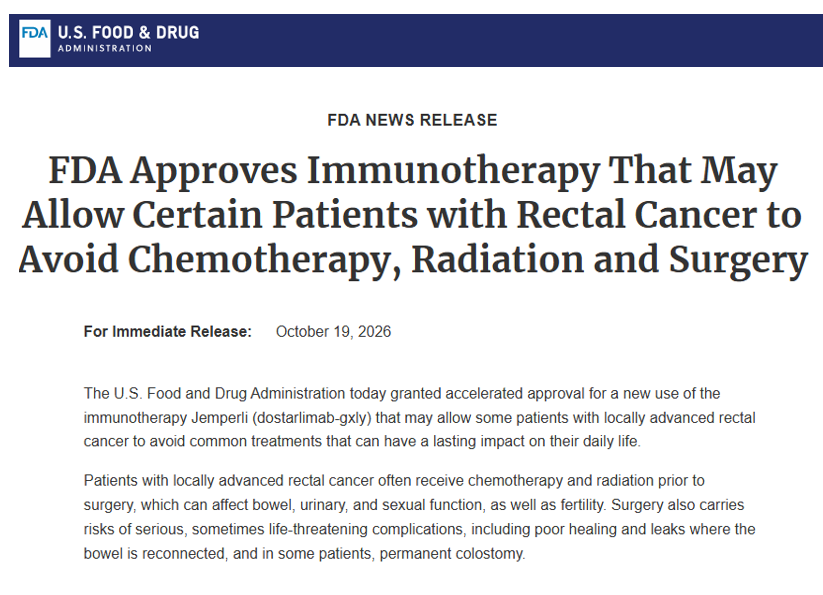
- FDA accelerated approval of dostarlimab for stage II/III dMMR/MSI-H locally advanced rectal cancer on AZUR-1 — FDA granted accelerated approval to dostarlimab for adults with stage II or III dMMR or MSI-H locally advanced rectal cancer
- AMPLIFY-7P in Nature Medicine: the mKRAS amphiphile vaccine misses its DFS endpoint but ctDNA emerges as the dominant prognostic driver — Primary DFS endpoint not met: median 23.8 versus 21.2 months, HR 0.85, P = 0.5329 in 144 randomized patients
Full details below ↓
📄 What's Being Published
14-day versus 28-day trifluridine-tipiracil plus bevacizumab for refractory metastatic colorectal cancer (PRABITAS): a pragmatic, multicentre, open-label, randomised, phase 3, non-inferiority trial in Japan. — Sakakida Tomoki et al., Lancet
In 970 intention-to-treat patients from 178 hospitals in Japan, median overall survival was 10·3 months in the 28-day group and 11·3 months in the 14-day group (stratified HR 0·93 [95% CI 0·80-1·08]), with 12-month overall survival of 44·0% vs 47·5%. Grade 3 or worse neutropenia fell to 13% vs 39%, and grade 2 or worse anorexia to 15% vs 26%. Two treatment-related deaths occurred in the 14-day group and none in the 28-day group.
Clinical bottom line: The biweekly FTD-TPI plus bevacizumab schedule should become the default in refractory metastatic colorectal cancer, because survival is preserved and grade 3+ neutropenia falls by two thirds.
Lymph node-targeted, mKRAS-specific amphiphile vaccine in pancreatic cancer: the randomized phase 2 AMPLIFY-7P trial. — George Ben et al., Nat Med
In 144 patients with stage I-III KRAS-mutated PDAC randomized 2:1 to camupepimut (n = 96) or observation (n = 48), the primary DFS endpoint was not met (median 23.8 versus 21.2 months; HR 0.85, P = 0.5329). In post hoc multivariate analysis, camupepimut had an adjusted HR of 0.47 (P = 0.0086), while baseline ctDNA positivity carried an adjusted HR of 5.99 (P < 0.0001). A T cell response >9.17-fold over baseline correlated with improved DFS (HR 0.22, P < 0.0001), and grade ≥3 adverse events occurred in 10.4% versus 14.6%.
Clinical bottom line: The KRAS amphiphile vaccine does not change adjuvant pancreatic cancer practice today because DFS was not improved. Baseline ctDNA status is the dominant driver of recurrence and should shape the planned phase 3.
Final results of nivolumab plus ipilimumab versus nivolumab or chemotherapy in microsatellite instability-high/mismatch repair-deficient metastatic colorectal cancer from CheckMate 8HW. — Lonardi S et al., Ann Oncol
Across 839 randomized patients with median follow-up of 68.0 months, NIVO+IPI showed significant OS benefit versus NIVO across all lines (HR 0.61; 95% CI 0.46-0.82; P=0.0009) and versus chemotherapy in 1L (HR 0.37; 95% CI 0.24-0.57; P<0.0001). In 1L, NIVO+IPI versus NIVO gave an OS HR of 0.66 (P=0.0432), which did not meet the prespecified P<0.006 threshold. Grade 3/4 treatment-related adverse events occurred in 22% versus 14%.
Clinical bottom line: Final CheckMate 8HW overall survival confirms nivolumab plus ipilimumab as first-line standard of care in MSI-H/dMMR metastatic colorectal cancer, ahead of both single-agent nivolumab and chemotherapy.
A randomized Phase 1 study of telisotuzumab adizutecan (ABBV-400, Temab-A) in combination with bevacizumab versus trifluridine-tipiracil with bevacizumab in patients with metastatic colorectal cancer. — Cecchini M et al., Ann Oncol
In 83 treated patients with a median of 3 prior lines, objective response rate was 19% and 30% with Temab-A 2.0 and 2.4 + Bev, versus 0% with FTD-TPI + Bev. Median PFS was 5.6 and 6.8 months vs 4.2 months. Median OS was 11.2 (HR=0.75) and 14.7 months (HR=0.62) vs 10.2 months.
Clinical bottom line: Temab-A 2.4 mg/kg plus bevacizumab produced responses where the FTD-TPI control arm produced none in refractory colorectal cancer. This is a randomized phase 1, however, and the practice question waits on the phase 3 AndroMETa-560.
Bispecific dual T cell agonist invikafusp alfa in solid tumors: the phase 1/2 START-001 trial. — Sullivan Ryan J et al., Nat Med
Phase 1 escalation in 34 participants reached 0.16 mg kg-1 without a maximum tolerated dose, and 0.08 mg kg-1 was selected as the RP2D. At the optimal biological doses, the objective response rate was 14.8% (4/27), including confirmed partial responses in microsatellite stable colorectal cancer. Cytokine release syndrome, mainly grades 1 and 2, was the most common treatment-related adverse event.
Clinical bottom line: Invikafusp alfa produces confirmed responses in microsatellite stable colorectal cancer, a setting where checkpoint blockade fails. At a 14.8% response rate, however, it remains an early-phase signal and not a treatment option.
COMPANION-002: A Randomized Phase 2/3 Trial of Tovecimig Plus Paclitaxel versus Paclitaxel Alone as a Second-line Therapy in Patients with Advanced Biliary Tract Cancer. — Azad Nilofer S et al., J Clin Oncol
In 168 patients randomized 2:1, tovecimig+paclitaxel improved BICR-assessed ORR (18.0% vs 5.3%; P=.0228) and PFS (4.7 vs 2.6 months; HR 0.44; P<.0001). No difference in OS was observed (HR 1.05; P=.779), with 85% of patients overall receiving tovecimig. Grade ≥3 TEAEs occurred in 93.5% vs 64.2%.
Clinical bottom line: Tovecimig plus paclitaxel is an active second-line regimen in biliary tract cancer on response and PFS. With no OS signal and 93.5% grade ≥3 toxicity, it does not displace current second-line practice.
Perioperative chemotherapy and stereotactic body radiotherapy versus perioperative chemotherapy alone in patients with high-risk, localised pancreatic cancer (MASTERPLAN): an open-label, phase 2, multicentre, randomised trial of the Australasian Gastro-Intestinal Trials Group. — Oar Andrew et al., Lancet Oncol
Seventy-four participants were randomly assigned to chemotherapy plus SBRT (40 Gy in five fractions; n=49) or chemotherapy alone (n=25). Twelve-month locoregional recurrence was 20·2% vs 52·0% (subdistribution HR 0·44 [95% CI 0·22-0·88]; p=0·022). Grade 3 or higher adverse events occurred in 70% vs 64% (p=0·27). The trial planned to recruit 120 patients but closed early for slow accrual.
Clinical bottom line: MASTERPLAN gives the first randomized evidence that SBRT meaningfully cuts locoregional recurrence in high-risk localized pancreatic cancer without added toxicity. That is enough to bring to tumour board, but at 74 patients and phase 2 it is not yet a standard.
Adjuvant chemotherapy with cisplatin and gemcitabine compared to standard of care after curative intent resection of cholangiocarcinoma and muscle invasive gallbladder carcinoma (ACTICCA-1/AIO-HEP-0112 trial). — Stein A et al., Ann Oncol
Across 591 randomized patients with median follow-up of 4.8 years, CisGem showed a median DFS of 25.7 months vs 17.9 months for capecitabine (log rank p=0.097). On RMST analysis, CisGem gave 2.6 additional DFS months (95% CI 0.6-4.68, p=0.011) but no significant OS improvement (RMST p=0.076; median 58.1 vs 48.2 months). The AE rate was 74.7% vs 69.5%, with 130 vs 113 serious adverse events.
Clinical bottom line: Adjuvant capecitabine remains the standard after biliary tract cancer resection. CisGem did not statistically improve DFS and added toxicity, so it should not replace capecitabine.
Active surveillance versus standard surgery after neoadjuvant chemoradiotherapy for oesophageal cancer: long-term results of a cluster-randomised controlled trial (SANO). — Panday S S G Gangaram et al., Ann Oncol
In 309 patients (198 active surveillance, 111 surgery) with median follow-up of 76 months, five-year overall survival was 50% vs 54% (HR 1.17, 95%CI 0.77-1.77). Disease-free survival did not differ significantly (HR 1.39). Five-year cumulative incidence of distant metastases was higher with surveillance, at 46% vs 29% (P<.01). Overall, 85 of 198 patients (43%) avoided oesophagectomy.
Clinical bottom line: Active surveillance after complete clinical response preserves five-year survival and spares 43% of patients an oesophagectomy. The excess in distant metastases means it should be offered only to carefully selected, closely monitored patients.
Ociperlimab and tislelizumab in advanced esophageal squamous cell carcinoma (AdvanTIG-203): a phase II study. — Wang Feng et al., Nat Commun
In 125 randomized patients, the primary endpoint was not met: ORR was 30.6% vs 20.6% (stratified 2-sided p = 0.2114). Median OS was 10.2 vs 9.3 months (stratified HR 0.92). Grade ≥3 treatment-related TEAEs occurred in 25.8% vs 20.6%.
Clinical bottom line: Adding the anti-TIGIT antibody ociperlimab to tislelizumab does not improve outcomes in second-line advanced oesophageal squamous cell carcinoma. It should not be pursued outside biomarker-selected research.
Selection and Management of Patients With Resectable Gastric or Gastroesophageal Junction Cancer Receiving Perioperative FLOT: A Modified Delphi Consensus Approach. — Saeed Anwaar et al., JCO Oncol Pract
A multidisciplinary panel of 16 experts agreed that patients aged >70 years should not be routinely excluded from perioperative FLOT. ECOG PS 0-1 is appropriate for inclusion, and ECOG PS 0-2 may be considered case by case. The panel endorsed hepatitis B screening and DPD testing before FLOT initiation, and favoured dose modification over drug omission for toxicity management.
Clinical bottom line: This consensus fills the practical gaps that guidelines leave around perioperative FLOT: selection by fitness rather than age, DPD and hepatitis B testing before cycle 1, and dose modification rather than dropping agents.
Disease-free survival and overall survival after neoadjuvant immunotherapy in mismatch repair-deficient colon cancer in the Netherlands: results of the single-arm, multicentre, phase 2, NICHE-2 trial. — Chalabi Myriam et al., Lancet
Patients with stage 2 or 3 dMMR colon cancer received a single dose of ipilimumab (1 mg per kg) and two doses of nivolumab (3 mg per kg) before surgery. Three-year disease-free survival was 100% at a postoperative median follow-up of 58·7 months, and 5-year overall survival was 100% after a median follow-up of 60·4 months. ctDNA was detected in 99 (92%) of 108 patients at baseline and cleared in 80 (82%) of 97 before surgery.
Clinical bottom line: Four weeks of neoadjuvant ipilimumab plus nivolumab produced zero recurrences and 100% five-year survival in locally advanced dMMR colon cancer. Practice should move toward neoadjuvant immunotherapy over surgery first, although a randomized comparison is still owed.
Intrahepatic Cholangiocarcinoma: A Review. — Tsilimigras Diamantis I et al., JAMA Surg
Intrahepatic cholangiocarcinoma is the second most common primary liver malignancy, and 5-year overall survival remains approximately 9%. Resection with regional lymphadenectomy remains the cornerstone of curative therapy, with adjuvant capecitabine as standard. Neoadjuvant chemotherapy may be considered for high-risk features such as tumor size larger than 5 cm. Comprehensive molecular profiling identifies actionable targets, including FGFR2 fusions and IDH1 variants, in 30% to 40% of patients.
Clinical bottom line: Every patient with intrahepatic cholangiocarcinoma should have comprehensive genomic profiling and multidisciplinary board review. A substantial fraction carry an actionable alteration, and high-risk resectable disease now has a neoadjuvant option.
🗂 Every paper considered this week, including the ones that didn’t make it →
🗣️ What People Were Discussing This Week
How these are chosen: filtered for clinical relevance, grouped by the new development discussed, then ordered by engagement (bookmarks and reposts).
MASTERPLAN in Lancet Oncology: adding SBRT to perioperative chemotherapy cuts locoregional recurrence in high-risk localized pancreatic cancer
Adding SBRT to perioperative chemotherapy more than halved locoregional recurrence, and clinicians also highlighted gains in PFS and overall survival in this small phase 2 trial. Critics pointed out that only 40/49 patients assigned to SBRT received it under an intention-to-treat analysis. They also flagged a mixed population (59% borderline resectable), early OS curve separation and a poor control-arm median OS with n=25. With adjuvant chemotherapy given to 80% vs 36% of resected patients, the debate is whether the survival signal belongs to SBRT itself or whether the trial should change practice only on local control.
Key numbers: 12-mo locoregional recurrence 20·2% vs 52·0%, sHR 0·44 · PFS 11.9 vs 6.3 mo, HR 0.44 · OS 22.0 vs 14.0 mo, HR 0.45 · Grade ≥3 SAEs 64% vs 56%
Discussed by: @_ShankarSiva, @jryckman3, @NiuSanford, @GIMedOnc, @graokane, @TapiaJC1, @JoeChangMD
Sources cited: Perioperative chemotherapy and stereotactic body radiotherapy versus perioperative chemot… (Lancet Oncol) · Elsevier
NICHE-2 five-year data in The Lancet: 100% disease-free and overall survival after four weeks of neoadjuvant ipilimumab/nivolumab in dMMR colon cancer
Patients with locally advanced dMMR colon cancer received one dose of ipilimumab and two of nivolumab, then surgery, and there were zero events: "a flat line." Nearly all patients cleared ctDNA before surgery, all were ctDNA negative afterward, and no new safety signals emerged. Because the trial is single-arm and overall survival was an exploratory post-hoc analysis, clinicians argue a randomized comparison is still owed before this replaces surgery-first. Others ask whether the next trial should instead test omitting surgery altogether.
Key numbers: 3-y DFS 100% vs prespecified 93% (p<0.0001) · 5-year OS 100% · ctDNA clearance 82% pre-op · Grade 3–4 TRAE 4%
Discussed by: @dr_yakupergun, @GIMedOnc, @ArndtVogel, @DraMartinezLago, @DrAllanPereira, @YGaritaonaindia, @jryckman3, @CathyEngMD
Sources cited: Elsevier · Disease-free survival and overall survival after neoadjuvant immunotherapy in mismatch re… (Lancet) · Elsevier
RASolute 302 subgroup analyses at ESMO: daraxonrasib overall survival benefit holds across RAS genotypes in previously treated metastatic pancreatic cancer
The RAS(ON) inhibitor daraxonrasib roughly halved the risk of death versus chemotherapy in previously treated metastatic pancreatic cancer, and the benefit held across G12D, G12V, Q61 and RAS wild-type subgroups. G12R showed a wide confidence interval, and FDA NDA review data leave open whether RAS inhibition is as effective for KRAS wild-type and whether 300 mg is necessary. With 8.5 months of median follow-up and underpowered subgroups, clinicians debate whether G12R and RAS wild-type patients should be counselled differently.
Key numbers: OS 13.2 vs 6.7 mo, HR 0.40 · PFS 7.2 vs 3.6 mo, HR 0.49 · ORR 32% vs 11%
Discussed by: @DraMartinezLago, @DrDanielKing, @graokane, @TapiaJC1, @ArndtVogel, @DrAngelaLamarca, @SuyogCancer
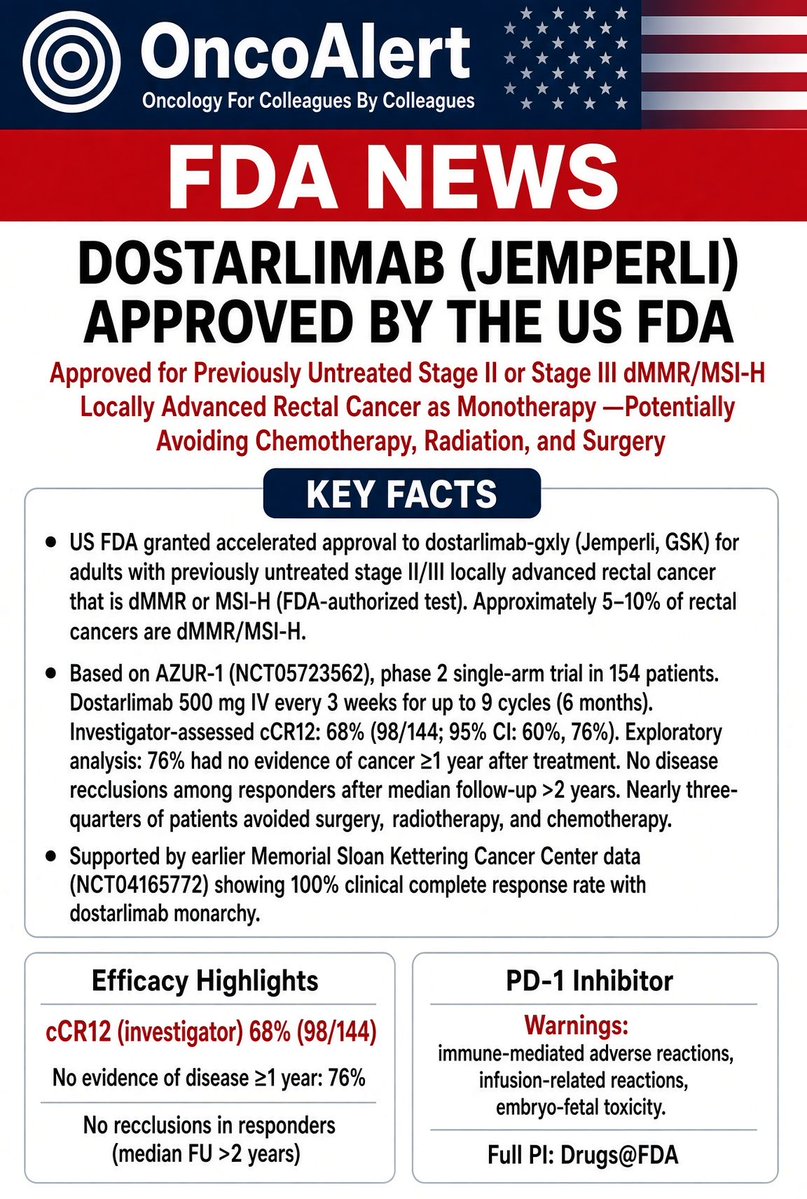
FDA accelerated approval of dostarlimab for stage II/III dMMR/MSI-H locally advanced rectal cancer on AZUR-1
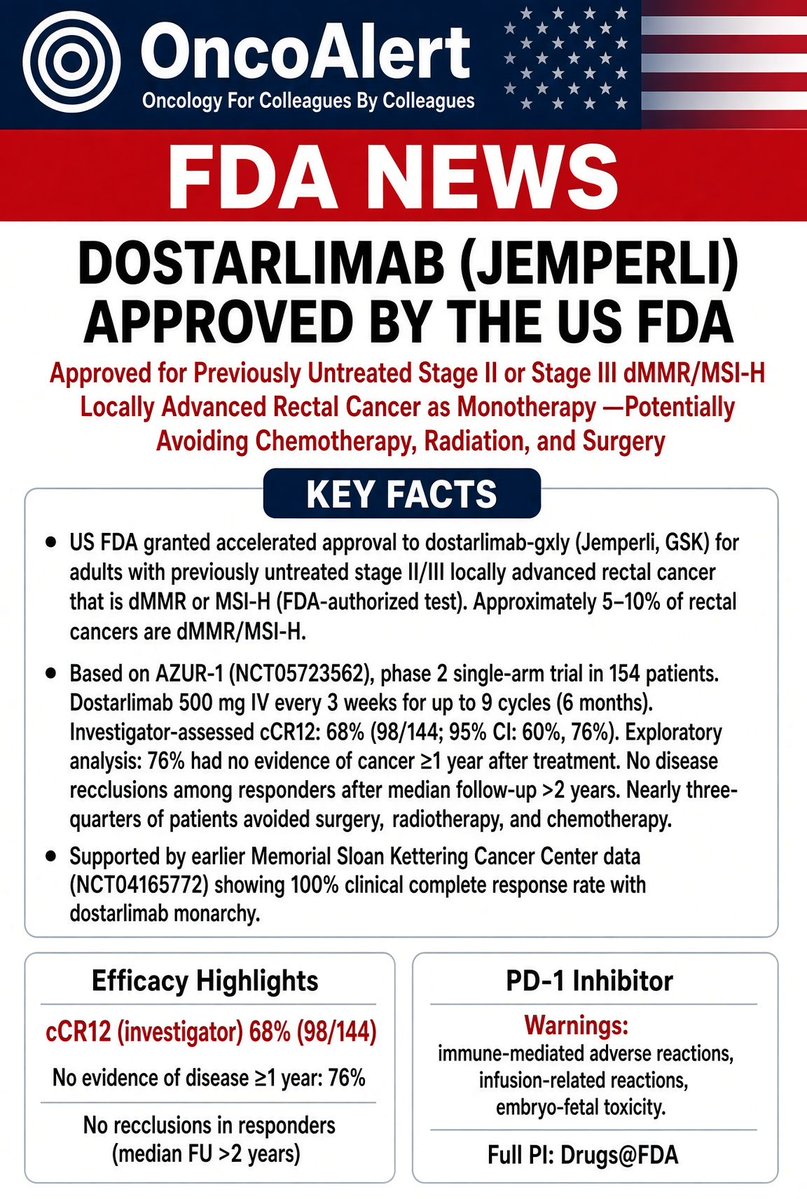
The FDA granted accelerated approval to dostarlimab, dosed at 500 mg IV every 3 weeks for 9 cycles, for stage II or III dMMR or MSI-H locally advanced rectal cancer. The approval is based on AZUR-1, in which most patients received dostarlimab alone with no further treatment and no progression. Clinicians note the approval rests on a single-arm phase 2, so survival equivalence will depend on real-world data. The sustained clinical complete response rate differed between investigator and central review, which used different evaluable populations, and that raises the question of how to judge residual disease before committing a patient to surveillance.
Key numbers: 12-mo sustained cCR 47% central vs 68% investigator · ORR 79% · cCR12 + pCR 76% · 98% durable cCR
Discussed by: @OncBrothers, @OncoAlert, @GIMedOnc, @NiuSanford, @ozdogan_md, @MarioBalsaMD, @dr_yakupergun, @jryckman3, @EvelynWongYT
Sources cited: FDA press release · OncLive
AMPLIFY-7P in Nature Medicine: the mKRAS amphiphile vaccine misses its DFS endpoint but ctDNA emerges as the dominant prognostic driver
Camupepimut did not significantly improve DFS in resected KRAS-mutated pancreatic cancer, even though nearly every vaccinated patient mounted mKRAS-specific T cells and the strongest responders had the lowest recurrence rates. Clinicians called the post hoc ctDNA panel the most important finding: in the post-surgical setting, ctDNA positivity is the pivotal driver of disease-free survival, agnostic to vaccine. Some noted that immunogenicity may be uncoupled from clinical benefit. The open question is whether the confirmatory phase 3 should enrol only ctDNA-negative patients.
Key numbers: Median DFS 23.8 vs 21.2 mo, HR 0.85 · ctDNA+ adjusted HR 5.99 · T cell responders DFS not reached vs 6.08 mo, HR 0.22 · 6-mo DFS 75.7% vs 61.7%, HR 0.55
Discussed by: @LorenzaRimassa, @Aiims1742, @graokane, @ArndtVogel, @DrAngelaLamarca, @KlebanoffLab
Sources cited: Lymph node-targeted, mKRAS-specific amphiphile vaccine in pancreatic cancer: the randomiz… (Nat Med) · OncoDaily
PRABITAS published in The Lancet: biweekly FTD/TPI plus bevacizumab is non-inferior to the conventional schedule with a third of the grade 3+ neutropenia
The 14-day FTD/TPI plus bevacizumab schedule was non-inferior on overall survival, with identical PFS, and it sharply reduced neutropenia, G-CSF use and anorexia. US clinicians say the trial prospectively validates a real-world dosing approach already in use. Two treatment-related deaths in the 14-day arm and a Japan-only population frame the debate over whether to adopt the schedule immediately as default or wait for guidelines.
Key numbers: mOS 11.3 vs 10.3 mo, HR 0.93 · PFS 3.9 vs 3.9 mo · G≥3 neutropenia 13% vs 39% · G-CSF use 3% vs 13% · FN 1% vs 5%
Discussed by: @DraMartinezLago, @ArndtVogel, @CathyEngMD, @UGrewalMD, @DaisukeKotani
Encorafenib/cetuximab beyond progression: ECLYPse meets its endpoint while TRIDENTE and BRICKET rechallenge data split
ECLYPse, which continued encorafenib plus cetuximab beyond progression with FOLFIRI, met its primary endpoint, although OS is still immature. In the rechallenge trials, TRIDENTE (encorafenib, binimetinib and cetuximab) was read as positive, while GONO BRICKET (N=16) missed its primary endpoint with no responses. Discussants noted that PFS was almost identical across TRIDENTE and BRICKET, and attributed the differing ORR to prior-responder selection and the added binimetinib. Clinicians argue that on progression on first-line mFOLFOX plus encorafenib/cetuximab, the EGFR/BRAF backbone should be kept and paired with mFOLFIRI rather than dropped and later rechallenged.
Key numbers: ECLYPse 6-mo PFS 69.5% · TRIDENTE ORR 19% · TRIDENTE vs BRICKET mPFS 2.8 vs 2.9 mo
Discussed by: @CathyEngMD, @ArndtVogel, @UGrewalMD, @DraMartinezLago, @GlopesMd
UK consensus extends Lynch syndrome testing beyond colorectal and endometrial cancer
The consensus recommends upfront germline testing for dMMR/MSI tumours of the urinary tract, small bowel, pancreas, adrenal, sebaceous glands and glioma, with MLH1 methylation triage for gastric tumours. Clinicians position MSI/MMR testing as guiding immunotherapy as well as flagging Lynch syndrome, though making timely testing accessible across healthcare systems remains a challenge. A meta-analysis found pathogenic or likely pathogenic variants in 15.2% of patients with colorectal cancer, including 13% diagnosed at age 50+. Against that background, the debate is whether reflex germline testing should apply to every dMMR tumour or be focused on the patients most likely to carry a variant.
Discussed by: @DraMartinezLago, @sciqst, @AGA_GIHN
Sources cited: UK consensus recommendations for onward testing for Lynch syndrome in patients with defic… (Journal of Medical Genetics, 2026) · FDA press release · FDA press release
ACTICCA-1: adjuvant cisplatin/gemcitabine does not beat capecitabine after curative resection of biliary tract cancer
Adjuvant CisGem numerically lengthened disease-free survival over capecitabine but missed statistical significance on log rank. It did not significantly improve overall survival and carried the expected doublet toxicity. No major subgroup difference was seen for intrahepatic disease, and clinicians conclude that success in metastatic disease did not translate to the adjuvant setting, leaving capecitabine as standard. Discussion now centres on whether any subgroup, such as node-positive or intrahepatic disease, justifies the doublet.
Key numbers: mDFS 25.7 vs 17.9 mo (p=0.097) · RMST DFS +2.6 mo (p=0.011) · mOS 58.1 vs 48.2 mo · DFS at 2 yrs 52 vs 44%
Discussed by: @ArndtVogel, @graokane, @DaniCastilloMD, @DrAngelaLamarca, @DraMartinezLago, @lucykflanders
LOMAC: four months of adjuvant XELOX is non-inferior to six months after D2 gastrectomy
Four months of adjuvant XELOX was non-inferior to six months for 3-year DFS after D2 resection of stage II–III gastric cancer, with fewer severe adverse events and higher completion. Radiation oncologists called the de-escalation important because tolerance of these regimens is a major issue. The debate is whether four months should become the default or whether the Chinese-only population limits generalisability.
Key numbers: 3-y DFS 69.2% vs 70.8%, HR 1.01 · G≥3 AEs 8.4% vs 15% · Completion 83.6% vs 60.4%
Discussed by: @DraMartinezLago, @_ShankarSiva, @Erman_Akkus
SANO five-year results in Annals of Oncology: active surveillance matches surgery on survival but with 17 more distant metastases per 100 patients
Five-year overall survival and disease-free survival did not differ significantly between active surveillance and surgery. However, distant metastases and oesophageal cancer deaths were more frequent with surveillance. Radiation oncologists stress that the regimen used only 41.4 Gy/23 fx, a pre-operative and arguably non-definitive dose, with ~75% adenocarcinoma. Clinicians call SANO neither positive nor negative, and ask whether the metastatic excess is an acceptable trade for organ preservation and whether the trial still applies now that FLOT is used in place of CROSS.
Key numbers: 5-y OS 50% vs 54%, HR 1.17 · Distant metastases 46% vs 29% · Esophageal cancer death 40% vs 30%, HR 1.67 · DFS HR 1.39
Discussed by: @GIMedOnc, @jryckman3, @NiuSanford, @ozdogan_md, @SuyogCancer, @DraMartinezLago, @ArndtVogel, @ChandrakanthMv
Sources cited: Elsevier
HARMONi-GI1 presidential data: ivonescimab plus gem/cis beats durvalumab plus gem/cis head-to-head in first-line advanced biliary tract cancer
The PD-1/VEGF bispecific ivonescimab plus gemcitabine/cisplatin showed OS superiority over durvalumab plus gemcitabine/cisplatin, with PFS and ORR also positive and no new safety signals. Commentators stress that the comparator was an active standard rather than placebo. Because the trial was conducted in China, they also want data on magnitude, toxicity and generalisability, and question whether a Western trial is needed before practice changes.
Key numbers: Median OS 14.9 vs 12.1 mo, HR 0.75 · Median PFS 8.4 vs 5.8 mo, HR 0.61 · ORR 53.8% vs 32.5%
Discussed by: @SuyogCancer, @LorenzaRimassa, @ArndtVogel, @ozdogan_md, @ChandrakanthMv
Two CLDN18.2 ADCs read out at the ESMO presidential: G-HOPE-001 arcotatug tavatecan and CLARITY-Gastric 01 sonesitatug vedotin
Arcotatug tavatecan, a TOPO-I payload ADC tested in CLDN18.2 high-expressing gastric/GEJ cancer after multiple lines, improved PFS, interim OS and response, and no interstitial lung disease was observed. Sonesitatug vedotin improved overall survival, including in patients with lower CLDN18.2 expression, but PFS did not meet significance. Clinicians argue that CLDN18.2 IHC stops being a one-time first-line question, and they debate whether payload matters more than expression level and whether benefit persists after zolbetuximab.
Key numbers: G-HOPE-001 PFS 5.5 vs 2.9 mo, HR 0.47 · G-HOPE-001 OS 9.9 vs 7.4 mo, HR 0.63 · G-HOPE-001 ORR 23.6% vs 5.3% · CLARITY 3L+ OS 10.0 vs 5.0 mo, HR 0.47 · CLARITY PFS 4.2 vs 3.8 mo, HR 0.77
Discussed by: @SuyogCancer, @GIMedOnc, @ArndtVogel, @ChandrakanthMv, @DaniCastilloMD, @DrVilmaPBarcia, @PTarantinoMD
BGB-B2033, a GPC3 x 4-1BB bispecific, shows activity in heavily pretreated advanced hepatocellular carcinoma
BGB-B2033 conditionally activates 4-1BB on GPC3-expressing tumour cells, aiming for targeted T-cell activity with limited off-tumour toxicity. It showed activity across doses in patients of whom two thirds had more than 2 prior lines, with favourable toxicity, and 450 mg was selected as the recommended phase 2 dose ahead of the phase 3 GroundBBreaker 301. The remaining questions are durability of response and whether pairing with PD-1 blockade such as tislelizumab should be established before phase 3.
Discussed by: @graokane, @ArndtVogel, @hongjaechon, @DrAngelaLamarca, @ronanhsieh
GFH276 pan-RAS molecular glue phase 1/1b in pancreatic cancer raises the sequencing question for RAS inhibitors
In 73 PDAC patients with a median of 2 prior lines, the pan-RAS(ON) molecular glue GFH276 produced an ORR of 41% at 40-160 mg, with rash the most common adverse event. In related chemotherapy-free combinations, daraxonrasib plus vopimetostat reached an 81.8% confirmed ORR (18/22), although commentators note that cohort was predominantly G12V/G12R, which complicates attribution. As RAS-directed trials move quickly to first line, clinicians ask how to sequence a pan-RAS agent against an allele-selective one.
Discussed by: @graokane, @UGrewalMD, @DavidHongMD
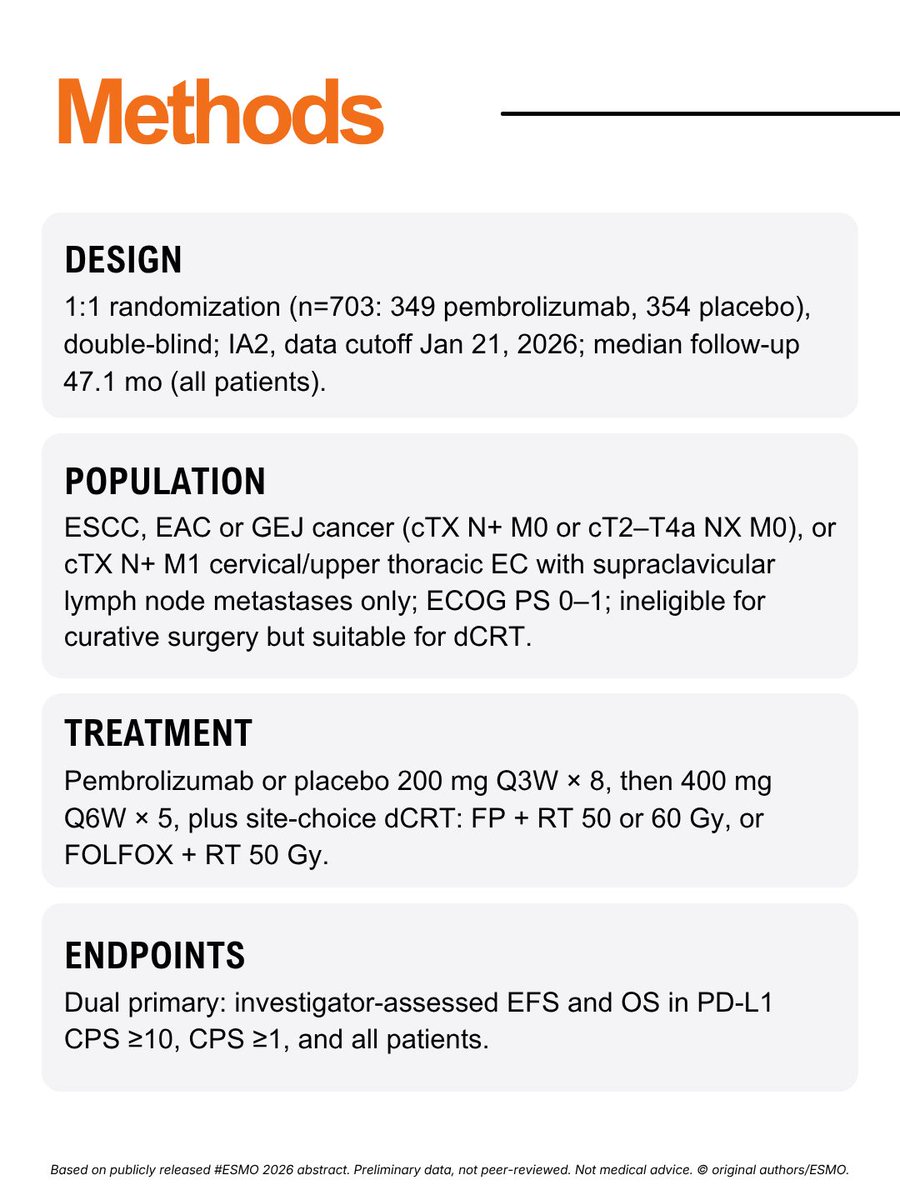
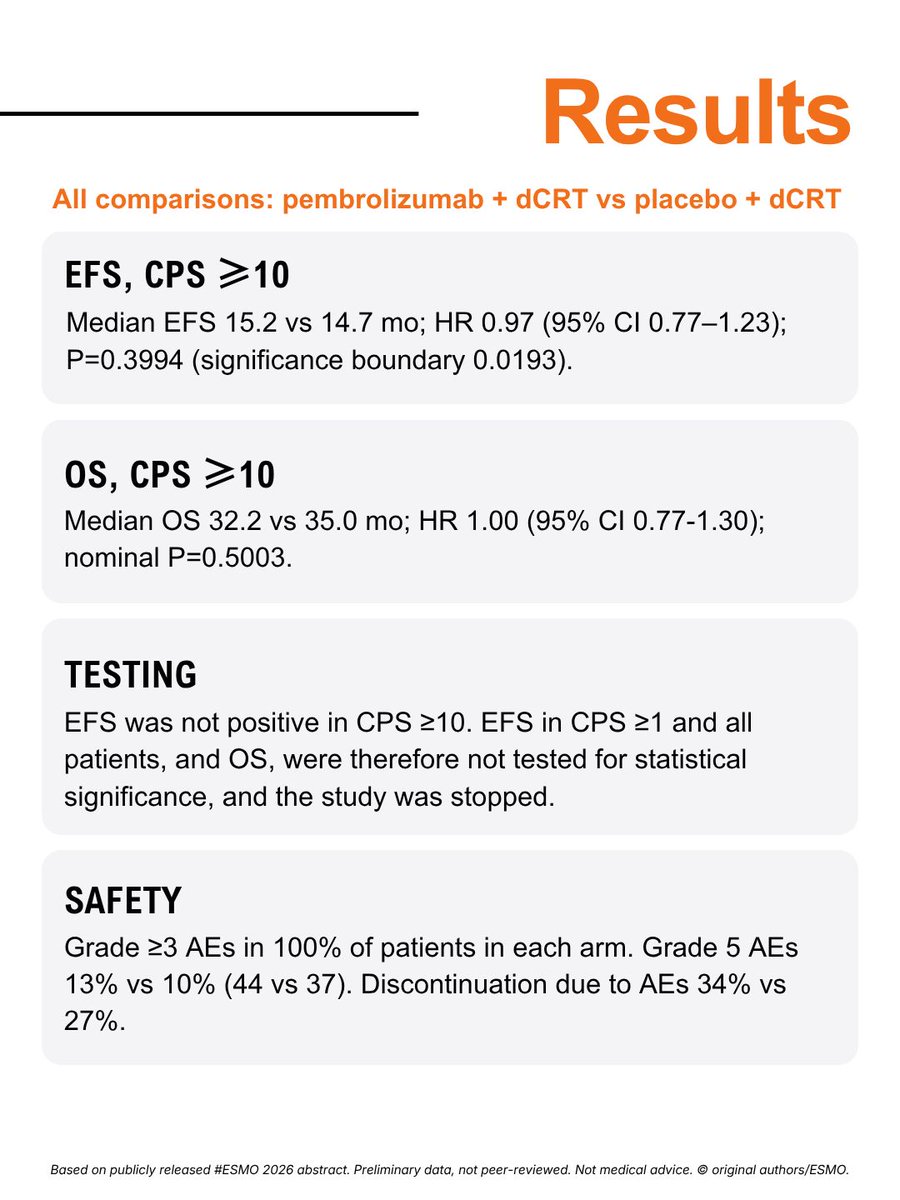
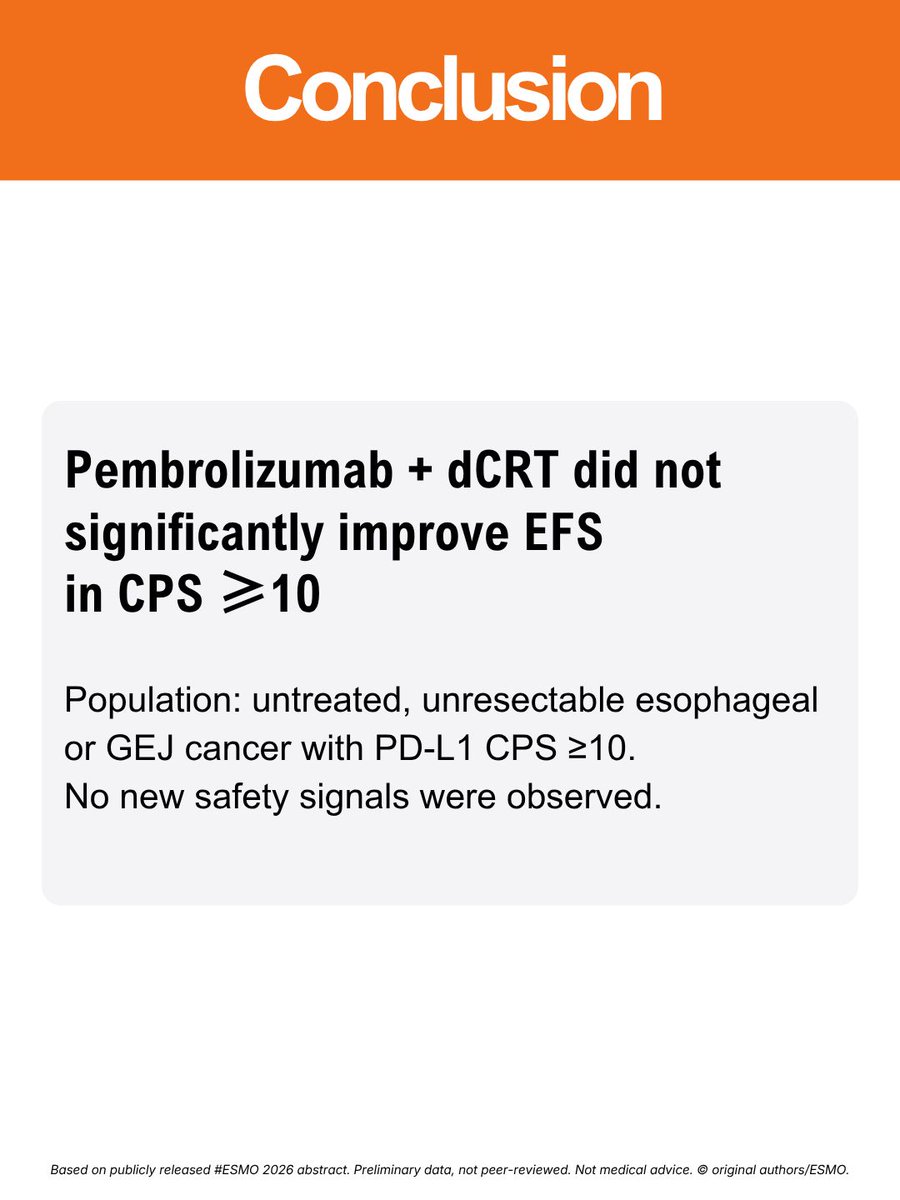
KEYNOTE-975: pembrolizumab added to definitive chemoradiotherapy fails in unresectable oesophageal/GEJ cancer even at PD-L1 CPS ≥10
Adding pembrolizumab to definitive chemoradiotherapy did not improve EFS or OS even at PD-L1 CPS ≥10, and it added fatal toxicity and discontinuations. The statistical hierarchy stopped after EFS, so OS was not formally tested. Radiation dose was also not randomized, with sites choosing between FP + 50 Gy, FP + 60 Gy and FOLFOX + 50 Gy. Commentators call it a clean negative at a cost and debate why checkpoint blockade helps after chemoradiotherapy in PACIFIC and CheckMate 577 but not concurrently, pointing to timing, lymphopenia or patient selection.
Key numbers: EFS 15.2 vs 14.7 mo, HR 0.97 · OS 32.2 vs 35.0 mo, HR 1.00 · Grade 5 AEs 13% vs 10% · Discontinuation 34% vs 27%
Discussed by: @ChandrakanthMv, @jryckman3, @ozdogan_md, @nataliagandur, @DraMartinezLago, @ArndtVogel, @weoncologists
HERIZON-GEA-01 second interim OS: the zanidatamab doublet now wins over trastuzumab, and the tislelizumab triplet misses significance by a hair
At the second interim analysis, zanidatamab plus chemotherapy now has its own overall survival win over trastuzumab, and adding tislelizumab extended median OS further. However, the triplet's advantage over the doublet was statistically borderline. Critics note that the control arm received no pembrolizumab, which most PD-L1 CPS ≥1 US patients would get, and that the triplet's gain in the TAP ≥1 subgroup was exploratory and not significant. Considering toxicity, clinicians ask which patients actually need tislelizumab added.
Key numbers: Median OS 27.0 vs 22.9 vs 19.6 mo · 3-year OS 39.8% vs 31.5% vs 22.9% · Doublet vs trastuzumab HR 0.76 · Triplet vs doublet HR 0.81, p=0.0502
Discussed by: @GIMedOnc, @dr_yakupergun, @DrVilmaPBarcia, @OncBrothers, @ArndtVogel, @Dr_Oncologista
COMPANION-002 in JCO: tovecimig plus paclitaxel improves response and PFS in second-line biliary tract cancer but not overall survival
Tovecimig plus paclitaxel improved response and more than halved progression risk, but showed no overall survival difference. Clinicians say crossover makes the OS analysis uninterpretable. Toxicity was substantial, including frequent severe hypertension and discontinuations, and the debate is whether this justifies second-line use or whether development should move to first line.
Key numbers: ORR 18.0% vs 5.3% · PFS 4.7 vs 2.6 mo, HR 0.44 · OS HR 1.05 · Grade ≥3 TEAEs 93.5% vs 64.2% · Discontinuation 40% vs 15%
Discussed by: @graokane, @ArndtVogel, @ilyassahinMD, @UGrewalMD, @nataliagandur, @DraMartinezLago
Sources cited: ASCO Publications
Real-world prognostic model in biliary tract cancer: no benefit continuing chemotherapy beyond 6 months, and CisGem outperforms GEMOX
Real-world data from patients treated with chemotherapy for biliary tract cancer showed no benefit to continuing chemotherapy beyond 6 months. CisGem outperformed GEMOX, and in ECOG 2 patients CisGem gave better OS than gemcitabine alone. Clinicians called these important real-world questions, and the debate is whether to stop at 6 months by default and abandon GEMOX even in ECOG 2 patients.
Discussed by: @ronanhsieh, @ArndtVogel
Sources cited: Elsevier · JAMA Network
Temab-A plus bevacizumab published in Annals of Oncology: c-Met ADC outperforms FTD/TPI plus bevacizumab in refractory colorectal cancer
The c-Met ADC Temab-A with bevacizumab produced responses where FTD-TPI plus bevacizumab produced none, along with longer PFS and OS, although the OS confidence interval crossed 1. Haematological toxicity, including frequent severe neutropenia, matters to clinicians. Lisa Salvatore asked what bevacizumab adds, whether c-Met can guide selection and what the optimal dose is, pending phase 3 validation.
Key numbers: mOS 14.7 vs 10.2 mo, HR 0.62 · ORR 30% vs 0% · Median PFS 6.8 vs 4.2 mo
Discussed by: @ArndtVogel, @CathyEngMD, @DraMartinezLago, @EvelynWongYT
DEWI phase II: dostarlimab with watch-and-wait achieves organ preservation in localized dMMR/MSI-H gastroesophageal adenocarcinoma
Dostarlimab produced a 1-year clinical complete response rate of 62.5% (15/24) at the first interim analysis. Later reporting showed 67.4% (29/43) achieving cCR with organ preservation and no relapse or death among watch-and-wait patients, at 14.9 months of follow-up. Grade 3–4 dostarlimab-related AEs occurred in 21%, and all patients who went to surgery achieved R0 resection. Clinicians frame this as the next frontier after rectal cancer despite interim, small-n data, and ask how a complete response can be confirmed without gastrectomy before offering watch-and-wait outside a trial.
Discussed by: @dr_yakupergun, @GIMedOnc, @DrVilmaPBarcia, @jryckman3, @nataliagandur, @DraMartinezLago
KC-WISE updated OS: anbenitamab plus chemotherapy doubles survival in HER2-positive gastric cancer after trastuzumab
Anbenitamab plus chemotherapy doubled overall survival over chemotherapy after trastuzumab in HER2-positive gastric/GEJ cancer, with large gains in PFS and response and no unexpected safety signal. Clinicians note the bar was not high because the control was single-agent chemotherapy, but the result supports sequential HER2 targeting. The open question is whether a second biparatopic HER2 antibody still works in second line once zanidatamab moves to first line, or whether that slot belongs to trastuzumab deruxtecan.
Key numbers: OS 19.6 vs 9.6 mo, HR 0.39 · PFS 7.1 vs 2.7 mo · ORR 56% vs 14% · G≥3 TEAEs 74.2% vs 54.5%
Discussed by: @GIMedOnc, @DraMartinezLago, @ArndtVogel
RAMIRIS final results: FOLFIRI plus ramucirumab misses co-primary endpoints but improves PFS in taxane-pretreated gastroesophageal adenocarcinoma
FOLFIRI plus ramucirumab missed its co-primary OS and response endpoints against paclitaxel plus ramucirumab but significantly lengthened PFS. Clinicians say paclitaxel-ramucirumab remains standard, and some argue the trial should have been designed for non-inferiority. FOLFIRI-ramucirumab is seen as a reasonable option for patients with limiting neuropathy, and the debate is whether to reserve it for that group only.
Key numbers: OS 8.7 vs 7.5 mo, HR 0.95 · ORR 25.3% vs 22.6% · PFS 5.5 vs 3.7 mo, HR 0.70 · G≥3 AEs 70% vs 68%
Discussed by: @DraMartinezLago, @ArndtVogel, @nataliagandur, @RyanAugustinMD
🔥 Top Ranked Tweets
Allan Pereira, MD, PhD @DrAllanPereira
🔥 FDA approves dostarlimab for dMMR/MSI-H locally advanced rectal cancer
🎯 Untreated stage II/III dMMR or MSI-H rectal cancer
💊 Up to 9 doses q3w over 6 months, PD-1 alone
👥 AZUR-1 phase 2, 154 patients (interim) - NCT05723562
✅ Almost three-fourths had not needed surgery, radiotherapy or chemotherapy at a median follow-up beyond 2 years
⚠️ Accelerated approval: durable benefit still has to be shown
This has already been our standard of care for a while....
#GIOnc #RectalCancer #dMMR #MSIH
https://t.co/43MOvYwo7w
🔖 0 ❤️ 2 🔁 0 👁 191
OncoAlert @OncoAlert
RT @weoncologists: An important negative trial to be presented at #ESMO26
Pembrolizumab + dCRT didn’t improve EFS or OS in esophageal/GEJ cancer, even with PD-L1 CPS ≥10.
⏱️Timing and patient selection for IO with chemoradiation remain open questions.
🔖 3 ❤️ 13 🔁 8 👁 1,033
OncoAlert @OncoAlert
OncoAlert 4Sight Abstracts to be Presented at #ESMO26
2875O: Pembrolizumab or Placebo Plus Concurrent Definitive Chemoradiotherapy in Esophageal and Gastroesophageal Junction (GEJ) Cancer: The Phase 3 Randomized KEYNOTE-975 Study
@MDmanishshah
@BennounaJaafar
@cbcbc1971
🔬 Phase 3, double-blind trial (n=703): pembrolizumab or placebo plus definitive chemoradiotherapy in untreated, unresectable esophageal/GEJ cancer. Dual primary endpoints: EFS and OS.
➡️ CPS ≥10 EFS: median 15.2 vs 14.7 mo; HR 0.97 (0.77–1.23); P=0.3994
➡️ CPS ≥10 OS: median 32.2 vs 35.0 mo; HR 1.00 (0.77–1.30); nominal P=0.5003
➡️ Grade 5 AEs 13% vs 10%; discontinuation due to AEs 34% vs 27%
✅ Pembrolizumab + dCRT did not significantly improve EFS in PD-L1 CPS ≥10; no new safety signals observed.
🎙️ Manish Shah
👥 Jaafar Bennouna · Toshihiko Doi · Lin Shen · Ken Kato · Antoine Adenis · Harvey Mamon · Markus Moehler · Xiaolong Fu · Byoung Chul Cho · Sonal Bordia · Pooja Bhagia · Chie-Schin Shih · Anjali Desai · Peter Enzinger
(4Sight Made from Abstracts publicly available at the ESMO website)
Pinging OncoAlert Faculty
@CathyEngMD, @BenWestphalen, @graokane, @NiuSanford,
, @GillSharlene, @pashtoonkasi, @DrVilmaPBarcia, @Erman_Akkus, @GIMedOnc, @UOzkerim, @MarioBalsaMD, @p_ciracimd, @DraMartinezLago, @DaisukeKotani, @Aiims1742, @ARosen380, @realbowtiedoc, @KoheiShitara,
🔖 2 ❤️ 18 🔁 8 👁 2,450

Oncology Brothers @OncBrothers
RT @weoncologists: An important negative trial to be presented at #ESMO26
Pembrolizumab + dCRT didn’t improve EFS or OS in esophageal/GEJ cancer, even with PD-L1 CPS ≥10.
⏱️Timing and patient selection for IO with chemoradiation remain open questions.
🔖 3 ❤️ 13 🔁 8 👁 1,033
Gil Morgan, MD @weoncologists
RT @MarioBalsaMD: 🚨 This is the kind of approval that genuinely changes the conversation!
Dostarlimab in untreated dMMR/MSI-H locally advanced #RectalCancer brings organ preservation much closer to routine reality for selected patients, potentially sparing chemoRT and surgery!
Still, accelerated approval means durability and longer follow-up matter…⏳
AZUR-1 may be turning a very blue-sky idea into clinical practice 💙
@OncoAlert
@_SEOM @GrupoTTD
🔖 0 ❤️ 17 🔁 5 👁 1,288
OncoAlert @OncoAlert
RT @MarioBalsaMD: 🚨 This is the kind of approval that genuinely changes the conversation!
Dostarlimab in untreated dMMR/MSI-H locally advanced #RectalCancer brings organ preservation much closer to routine reality for selected patients, potentially sparing chemoRT and surgery!
Still, accelerated approval means durability and longer follow-up matter…⏳
AZUR-1 may be turning a very blue-sky idea into clinical practice 💙
@OncoAlert
@_SEOM @GrupoTTD
🔖 0 ❤️ 17 🔁 5 👁 1,288
Nicholas Hornstein @GIMedOnc
RT @OncoAlert: 🚨 FDA NEWS |
AZUR 1 Update in #RectalCancer
FDA grants accelerated approval to dostarlimab (Jemperli) for previously untreated stage II/III dMMR/MSI-H locally advanced rectal cancer.First immunotherapy in this setting — may allow some patients to avoid chemo, radiation, and surgery.AZUR-1: 68% cCR12, 76% no evidence of disease ≥1 year, no recurrences in responders (median FU >2 yrs). Nearly ¾ of patients avoided surgery/RT/chemo
@CathyEngMD @BenWestphalen @graokane @NiuSanford @AndresC27622123 @GillSharlene @pashtoonkasi @DrVilmaPBarcia @Erman_Akkus @GIMedOnc @UOzkerim @MarioBalsaMD @p_ciracimd @DraMartinezLago @DaisukeKotani @Aiims1742 @ARosen380 @realbowtiedoc @KoheiShitara @GaiaGriguolo @scocmem
🔖 4 ❤️ 37 🔁 16 👁 5,512
OncoAlert @OncoAlert
RT @OncoAlert: 🚨 FDA NEWS |
AZUR 1 Update in #RectalCancer
FDA grants accelerated approval to dostarlimab (Jemperli) for previously untreated stage II/III dMMR/MSI-H locally advanced rectal cancer.First immunotherapy in this setting — may allow some patients to avoid chemo, radiation, and surgery.AZUR-1: 68% cCR12, 76% no evidence of disease ≥1 year, no recurrences in responders (median FU >2 yrs). Nearly ¾ of patients avoided surgery/RT/chemo
@CathyEngMD @BenWestphalen @graokane @NiuSanford @AndresC27622123 @GillSharlene @pashtoonkasi @DrVilmaPBarcia @Erman_Akkus @GIMedOnc @UOzkerim @MarioBalsaMD @p_ciracimd @DraMartinezLago @DaisukeKotani @Aiims1742 @ARosen380 @realbowtiedoc @KoheiShitara @GaiaGriguolo @scocmem
🔖 4 ❤️ 37 🔁 16 👁 5,512
Grainne O'Kane @graokane
RT @OncoAlert: 🚨 FDA NEWS |
AZUR 1 Update in #RectalCancer
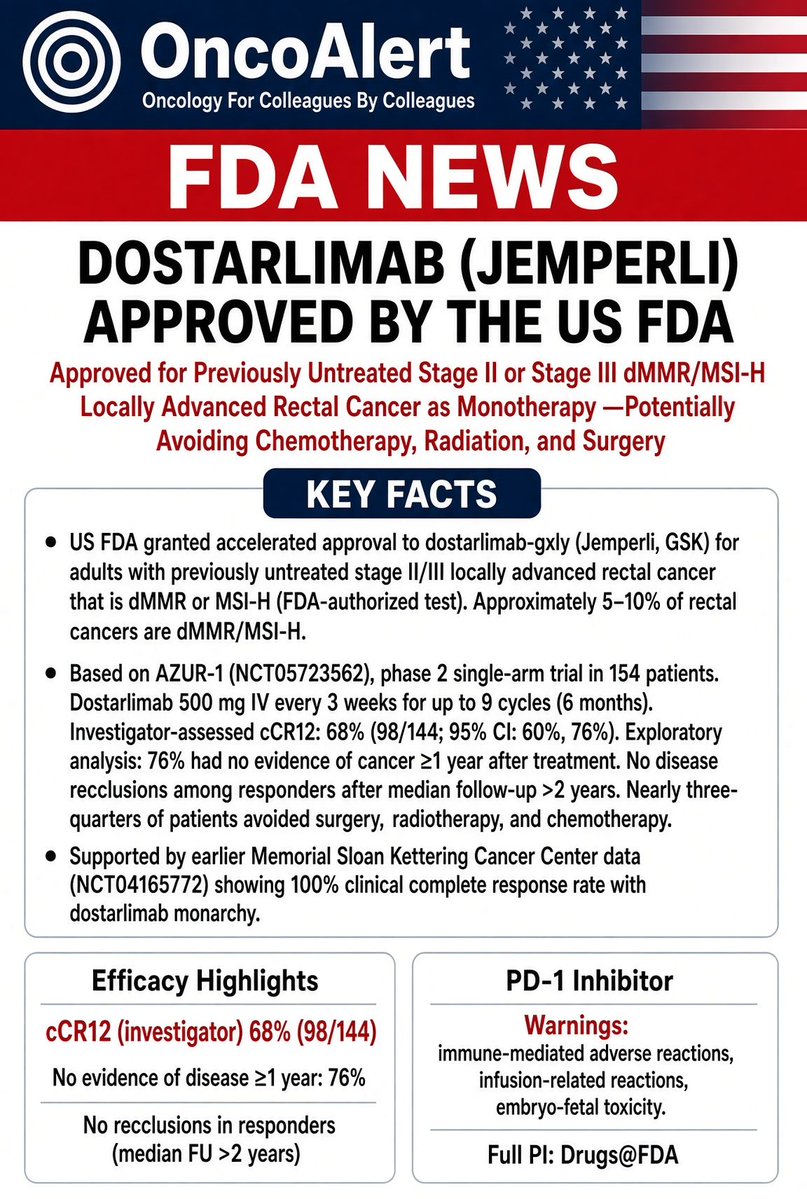
FDA grants accelerated approval to dostarlimab (Jemperli) for previously untreated stage II/III dMMR/MSI-H locally advanced rectal cancer.First immunotherapy in this setting — may allow some patients to avoid chemo, radiation, and surgery.AZUR-1: 68% cCR12, 76% no evidence of disease ≥1 year, no recurrences in responders (median FU >2 yrs). Nearly ¾ of patients avoided surgery/RT/chemo
@CathyEngMD @BenWestphalen @graokane @NiuSanford @AndresC27622123 @GillSharlene @pashtoonkasi @DrVilmaPBarcia @Erman_Akkus @GIMedOnc @UOzkerim @MarioBalsaMD @p_ciracimd @DraMartinezLago @DaisukeKotani @Aiims1742 @ARosen380 @realbowtiedoc @KoheiShitara @GaiaGriguolo @scocmem
🔖 4 ❤️ 37 🔁 16 👁 5,512
OncoAlert @OncoAlert
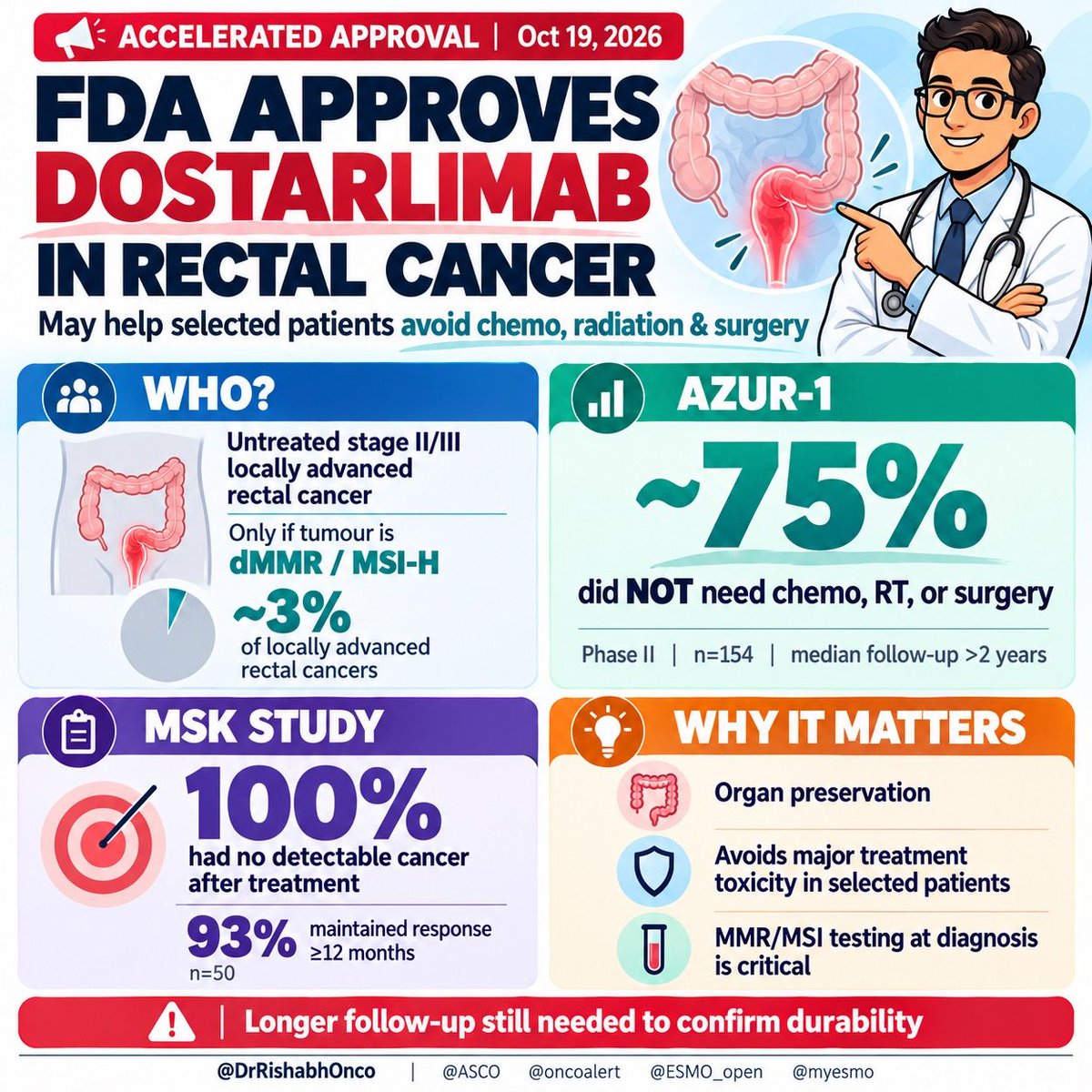
RT @DrRishabhOnco: 🚨 FDA APPROVES DOSTARLIMAB IN RECTAL CANCER!
Could chemotherapy, radiation and surgery become unnecessary for selected patients?
✅ Accelerated approval: Previously untreated stage II/III dMMR/MSI-H rectal cancer.
🔬 AZUR-1 (n=154):
Nearly 75% avoided chemotherapy, radiation and surgery at >2 years median follow-up.
🔬 MSK study (n=50):
100% had no detectable cancer after treatment.
93% maintained this status for ≥12 months.
⚠️ Longer follow-up is needed to confirm durable benefit.
💡 A major milestone: Treat the tumour. Preserve the organ.
@ASCO @oncoalert @ESMO_open @myesmo
#RectalCancer #Immunotherapy
🔖 12 ❤️ 40 🔁 14 👁 2,804
OncoAlert @OncoAlert
🚨 FDA NEWS |
AZUR 1 Update in #RectalCancer
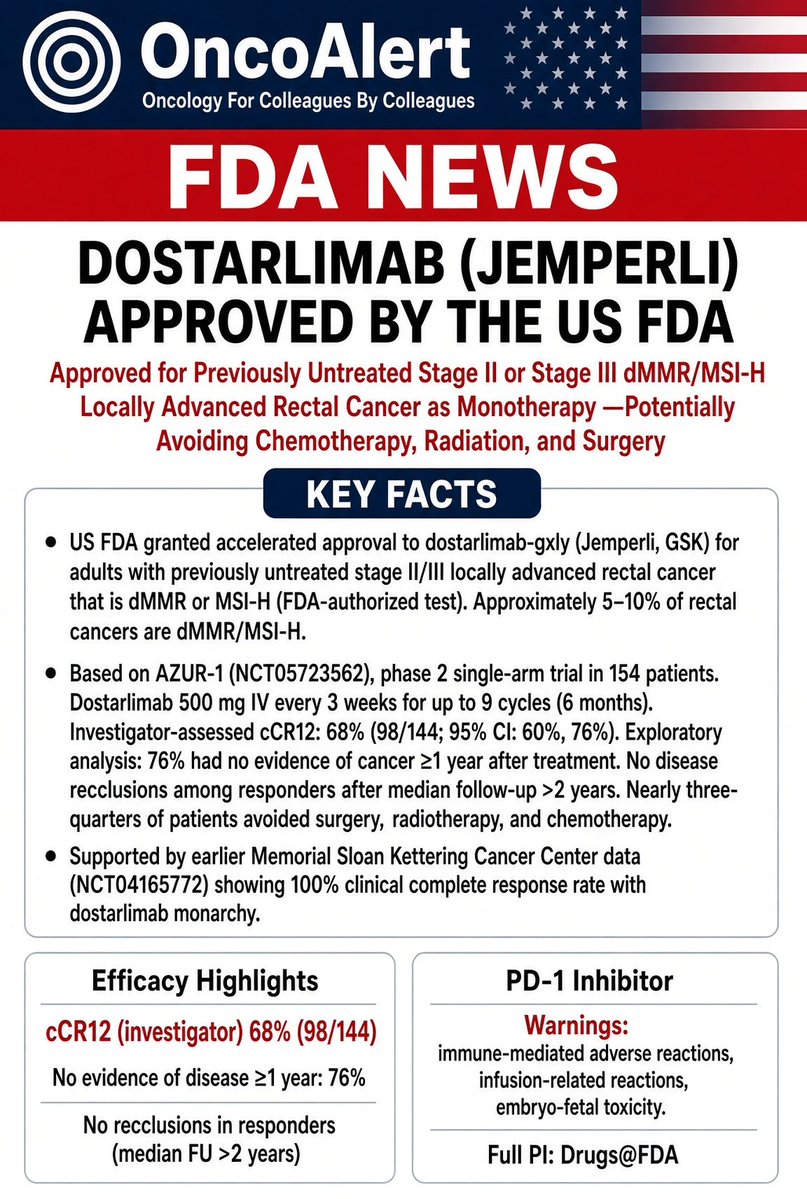
FDA grants accelerated approval to dostarlimab (Jemperli) for previously untreated stage II/III dMMR/MSI-H locally advanced rectal cancer.First immunotherapy in this setting — may allow some patients to avoid chemo, radiation, and surgery.AZUR-1: 68% cCR12, 76% no evidence of disease ≥1 year, no recurrences in responders (median FU >2 yrs). Nearly ¾ of patients avoided surgery/RT/chemo
@CathyEngMD @BenWestphalen @graokane @NiuSanford @AndresC27622123 @GillSharlene @pashtoonkasi @DrVilmaPBarcia @Erman_Akkus @GIMedOnc @UOzkerim @MarioBalsaMD @p_ciracimd @DraMartinezLago @DaisukeKotani @Aiims1742 @ARosen380 @realbowtiedoc @KoheiShitara @GaiaGriguolo @scocmem
🔖 4 ❤️ 37 🔁 16 👁 5,512
Nieves Martinez Lago MD PhD @DraMartinezLago
RT @OncoAlert: 🚨 FDA NEWS |
AZUR 1 Update in #RectalCancer
FDA grants accelerated approval to dostarlimab (Jemperli) for previously untreated stage II/III dMMR/MSI-H locally advanced rectal cancer.First immunotherapy in this setting — may allow some patients to avoid chemo, radiation, and surgery.AZUR-1: 68% cCR12, 76% no evidence of disease ≥1 year, no recurrences in responders (median FU >2 yrs). Nearly ¾ of patients avoided surgery/RT/chemo
@CathyEngMD @BenWestphalen @graokane @NiuSanford @AndresC27622123 @GillSharlene @pashtoonkasi @DrVilmaPBarcia @Erman_Akkus @GIMedOnc @UOzkerim @MarioBalsaMD @p_ciracimd @DraMartinezLago @DaisukeKotani @Aiims1742 @ARosen380 @realbowtiedoc @KoheiShitara @GaiaGriguolo @scocmem
🔖 4 ❤️ 37 🔁 16 👁 5,512
OncoAlert @OncoAlert
RT @MSKCancerCenter: 🚨: The @FDA has granted accelerated approval to the immunotherapy Jemperli (dostarlimab) for adults with stage 2 or 3 rectal cancer whose tumors have specific genetic characteristics known as mismatch repair-deficient (MMRd) or microsatellite instability-high (MSI-H).
The approach, developed at MSK by gastrointestinal medical oncologists Dr. Andrea Cercek (@AndreaCercek) and Dr. Luis Diaz Jr. (@ldiaz1971), uses immunotherapy alone to harness the body’s own immune system to fight cancer.
This allows some patients to skip standard treatment for rectal cancer, which includes surgery, radiation, and chemotherapy, and can have life-altering consequences for bowel and urinary function, as well as fertility.
Learn more: https://t.co/KBSqnPjL5s
🔖 14 ❤️ 117 🔁 24 👁 9,454

Kristina Jankovic, MD @JankovicK
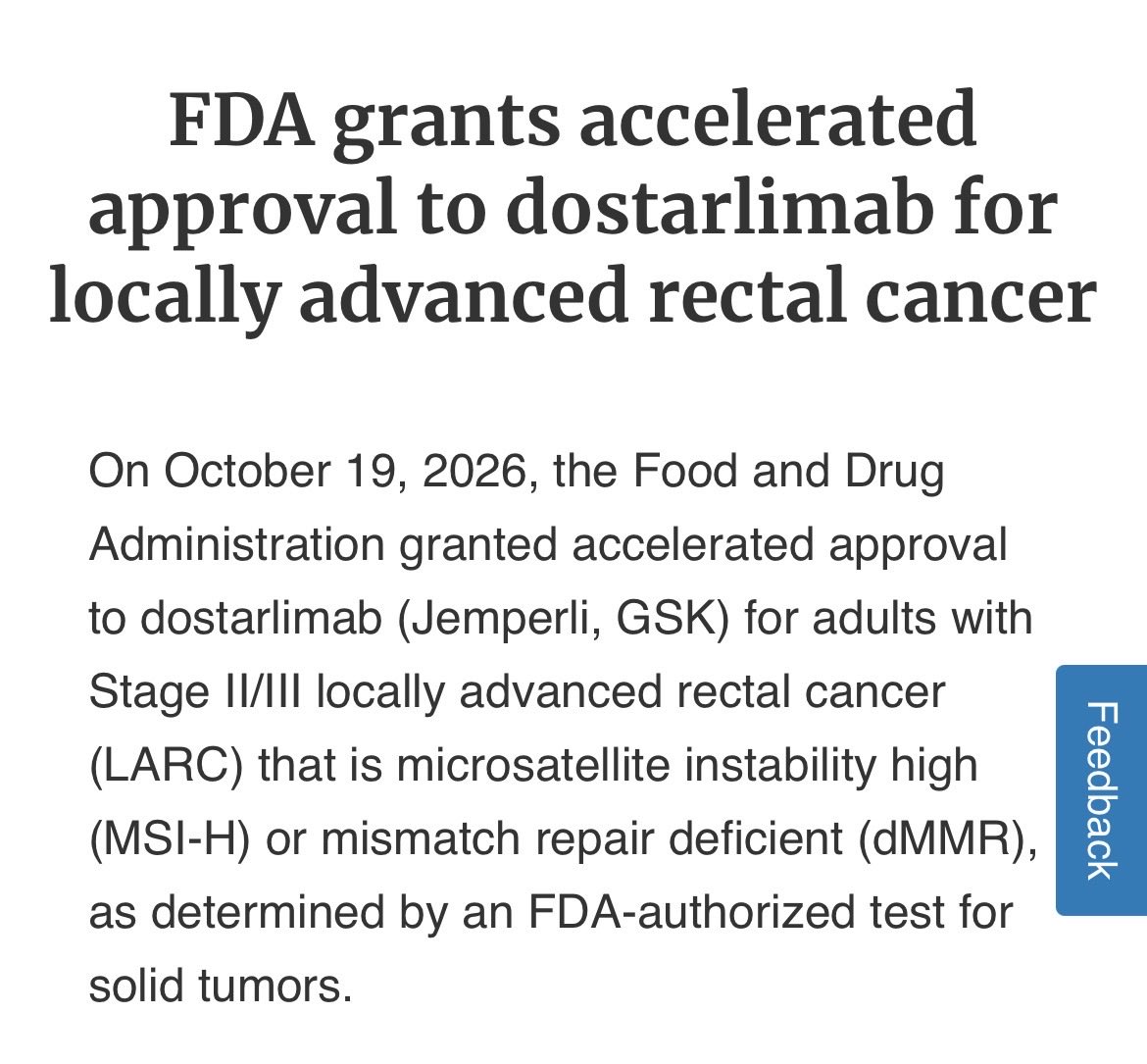
🆕 FDA grants accelerated approval to #dostarlimab for stage II/III MSI-H/dMMR locally advanced rectal cancer ✨
AZUR-1: 79% ORR, 47% sustained cCR at 12 months
A major step toward organ preservation and chemotherapy-free treatment! 🎯
#RectalCancer @OncoAlert
🔗 https://t.co/FaTo2r386Q
🔖 1 ❤️ 4 🔁 5 👁 531
OncoAlert @OncoAlert
RT @JankovicK: Dostarlimab approved by the FDA for stage II/III MSI-H/dMMR locally advanced rectal cancer! ✨ 🆕
👇
🔖 0 ❤️ 3 🔁 2 👁 449
🧪 Newly Recruiting Trials
7 trials (3 phase II, 3 phase I, 1 device/procedure) opened this week, testing ANO31905, PF-07220060, porustobart, STRO-006, FH-A11KRASG12V-TCR T cells, [225Ac]Ac-AKY-2519 and histotripsy
Phase 1/2 · Anova Innovation Limited · ANO31905 · California, Florida, Texas · CT.gov ↗
Phase 1/2 · Pfizer · PF-07220060 · California, Connecticut, Massachusetts, Michigan, Tennessee, Texas · CT.gov ↗
Phase 2 · Solstice Oncology, Inc. · porustobart · California, Florida, Illinois, Maryland, Massachusetts, New York +3 more · CT.gov ↗
Phase 1 · Sutro Biopharma, Inc. · STRO-006 · Florida, Massachusetts, Oklahoma, Texas, Virginia · CT.gov ↗
Phase 1 · Fred Hutchinson Cancer Center · FH-A11KRASG12V-TCR T cells · Washington · CT.gov ↗
Phase 1 · Aktis Oncology, Inc. · [225Ac]Ac-AKY-2519 · Florida · CT.gov ↗
Phase N/A · NYU Langone Health · histotripsy · New York · CT.gov ↗
Open all 7 on the trials page →
Agent descriptions from the NCI Thesaurus.
Prepared by Rafael Santana-Davila, M.D. Questions or feedback? Just reply to this email.
Disclaimer: This digest is AI-generated. Content may contain errors -- always verify with original sources.
Know a colleague who would find this useful? Just forward them this email.
☕ Not funded by anyone — no sponsors, no pharma. Buy me a coffee if it's useful.